
Gas Leak Detection Sydney: Winter Warning Signs & 2026 Costs
By the team at Tradetek Solutions
A faint rotten egg smell drifts across the kitchen bench in an inner west terrace on a cold Sydney morning. The gas cooktop is off. The heater in the hallway kicked on twenty minutes ago. Somebody opens the pantry door and the smell is stronger inside than out. That is the moment a Sydney household stops wondering and starts moving. The problem is that most people have no idea what to do in the next five minutes, and the wrong move can turn a small fitting leak into a serious incident.
Sydney has roughly 1.3 million homes connected to the natural gas network run by Jemena, plus tens of thousands more on bottled LPG in the northern beaches and outer suburbs. Every winter the gas heater, cooktop and hot water system all work harder, joints flex with the temperature swing, and old flexible connectors start weeping. This guide covers what a gas leak actually smells and sounds like in a Sydney home, exactly what to do in the first five minutes, what a professional leak detection costs in 2026, and how to stop the problem coming back next winter.
Why Gas Leaks Spike in Sydney Between June and August
A Sydney gas system is quiet in summer. The cooktop runs for twenty minutes at dinner. The hot water heats a couple of showers. Everything else is idle. In winter that same system is running the ducted heater, a portable radiant heater in the kids room, longer showers and slower cooking, often eight to ten hours a day of active gas flow. Every threaded fitting and every rubber seal cycles through repeated thermal expansion and contraction.
Three things then combine to make the leak noticeable:
- Doors and windows stay shut. A small leak that would ventilate away in January accumulates inside a closed kitchen or laundry in July.
- Cold air holds odour lower. Mercaptan, the sulphur compound added to natural gas so it can be smelled, is denser than warm air. It pools at floor level on a cold morning instead of dispersing.
- Appliances run at higher loads. A cracked flexible connector behind the cooktop that sits harmlessly at low flow starts hissing under full winter demand.
This is why the emergency line at Jemena Gas Networks takes its heaviest call volume between mid-June and early August, and why licensed Sydney gasfitters book out fastest during that window.
What a Sydney Gas Leak Actually Smells and Sounds Like
Natural gas from the mains is odourless in its raw state. Every gas distributor in Australia adds a mercaptan odorant so the human nose can detect concentrations well below the lower explosive limit. What you smell is not the gas itself. It is a sulphur compound designed to punch through a stuffy room in seconds.
Learn to grade the smell, because it changes the response:
- Faint and local, near one appliance. Usually a fitting, an isolation valve or a flexible connector on that appliance. Book a gasfitter the same day. Do not evacuate.
- Noticeable in one room but not others. Often a pipe joint inside a wall cavity or under the kitchen bench. Shut the appliance isolation valve, ventilate the room, book a same day trace.
- Strong across the whole house or in the roof cavity. Treat as an emergency. Evacuate, shut the meter, call 131 909 from outside.
- Audible hiss at a fitting or meter. Confirms an active leak large enough to hear. Evacuate and call the emergency line regardless of smell strength.
LPG is heavier than air and will pool at the lowest point of a room, so bottled gas leaks in a garage or laundry can be very serious even without a strong smell higher up. If the property is on bottled LPG, treat any smell at floor level as an emergency.
The First Five Minutes: Exactly What to Do
The order matters. Every step below is designed to remove ignition sources, ventilate the space and stop the flow of gas without triggering a spark. Read this once now, so you can act without hesitation later.
- Do not touch any electrical switch. No light switches, no rangehood, no doorbell, no fridge door with an internal light. A small spark from a switch is enough to ignite an accumulated gas cloud.
- Open doors and windows on your way out. Cross ventilation clears the mix below the lower explosive limit within minutes.
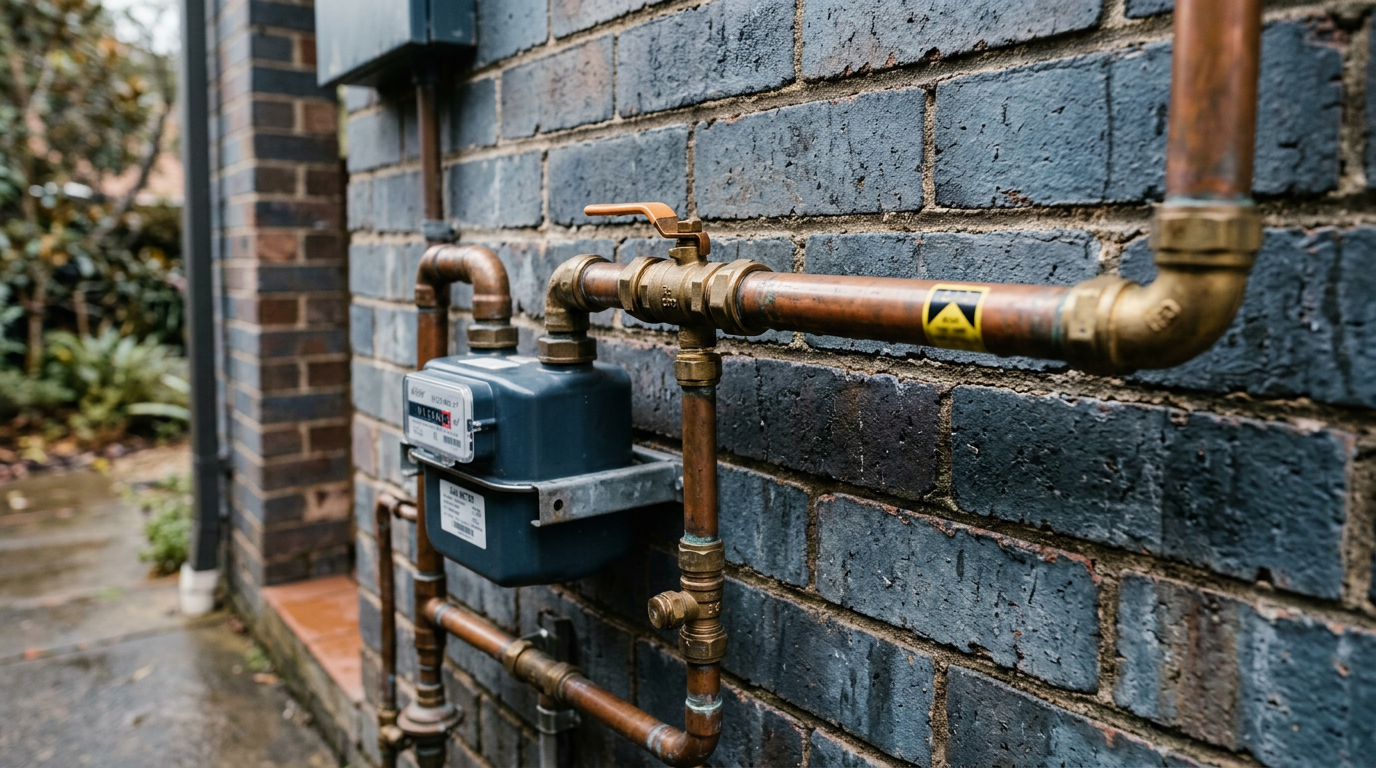
- Turn off the gas at the meter. The meter lives on an outside wall or in a purpose built box. Rotate the quarter turn lever 90 degrees so the handle sits across the pipe.
- Move everyone outside. Get to the footpath, at least 10 metres from the house. Keep pets clear. Do not go back inside for phones or bags.
- Call the emergency line from outside. Natural gas across most of Sydney: Jemena on 131 909. Bottled LPG: your bottle supplier printed on the cylinder.
- Book a licensed gasfitter for the repair. Emergency crews make the site safe and cap the leak. A licensed gasfitter is still needed to trace, repair and certify the work before the meter is reopened.
If anyone in the household has headache, nausea, dizziness or confusion, treat that as a separate carbon monoxide concern from a burning appliance, get them into fresh air, and call triple zero. The NSW Health carbon monoxide factsheet covers the symptoms and first aid steps in plain language.
How a Licensed Sydney Gasfitter Traces a Leak
A professional gas leak trace is a structured test, not a sniff around the appliances. It follows the sequence set out in AS/NZS 5601.1, the gas installations standard that every Australian gasfitter works to.
- Isolate every appliance. Cooktop, oven, hot water, heater and any outdoor barbecue point are all shut at their isolation valves.
- Pressure decay test at the meter. The gasfitter isolates the system and watches the manometer over a fixed time window. Any drop confirms a leak somewhere in the pipework.
- Section isolate to narrow the fault. Sections of the system are re-opened one at a time to identify which branch is losing pressure.
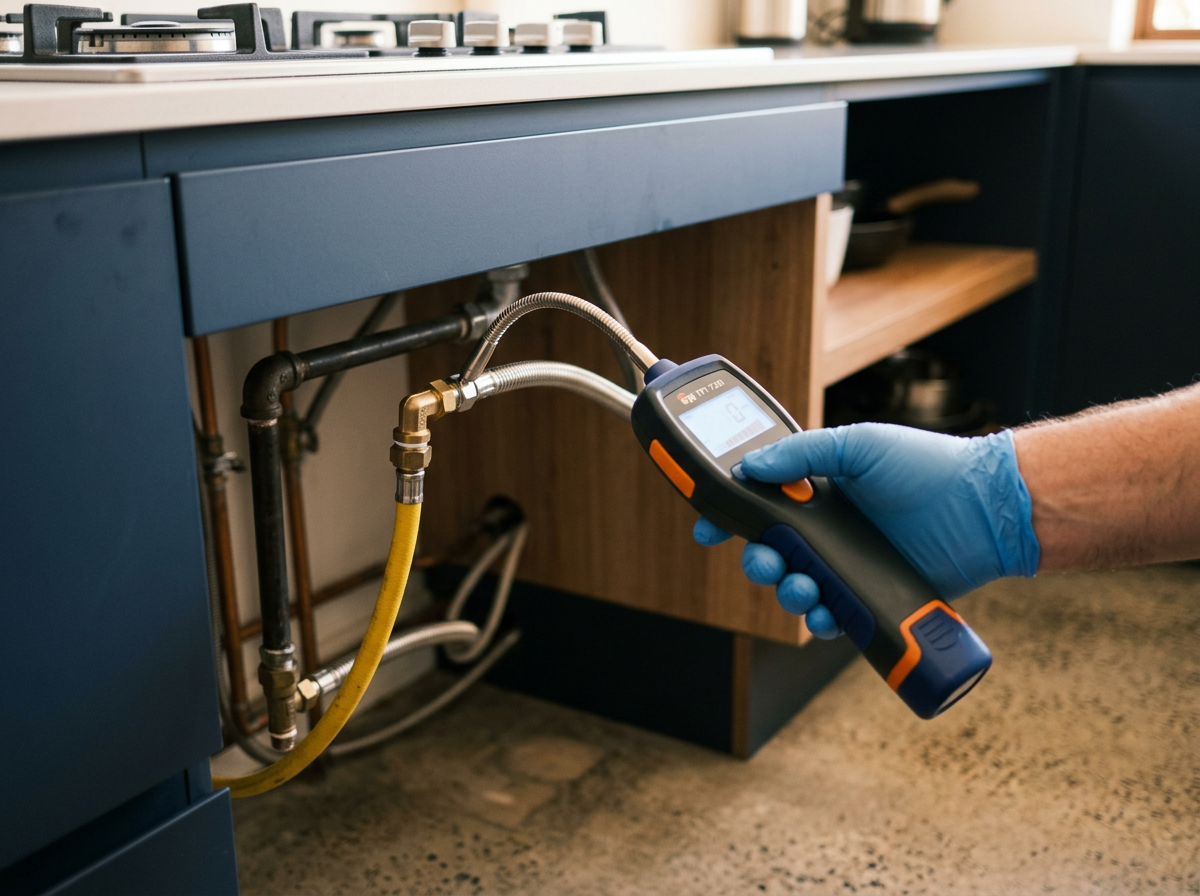
- Electronic sniffer at fittings and joints. A calibrated hydrocarbon detector confirms the exact fitting.
- Soapy water confirmation at the suspected joint. Bubbles at a fitting under pressure are the final visual confirmation before repair.
- Repair, re-test and certify. The faulty section is repaired, the pressure decay test is repeated to confirm the system holds, and a Certificate of Compliance is issued.
What Gas Leak Detection Actually Costs in Sydney in 2026
Pricing across Sydney metro has been stable through the first half of 2026. The numbers below are for a licensed gasfitter attending a residential property in normal hours, and include the compliance certificate.
- Single fixture leak trace and confirm. 220 to 380 dollars, including electronic sniffer and soapy water confirmation on the identified fitting.
- Full house pressure decay soundness test. 380 to 620 dollars, covering meter to every appliance across the whole gas installation.
- Flexible connector replacement behind cooktop or oven. 140 to 240 dollars on top of the trace, materials included.
- Isolation valve or elbow fitting swap. 90 to 180 dollars.
- Pipe section replacement inside a wall or floor cavity. 320 to 780 dollars depending on access and length.
- After hours emergency callout (nights, weekends, public holidays). Add 160 to 280 dollars over the standard rate.
- Post repair re-certification and meter turn on. Included in the repair invoice, but budget an extra visit if the network operator has already locked the meter.
A properly quoted job also includes a written scope, before and after pressure readings, and the dated compliance certificate that insurers and future buyers will ask for.
Why DIY Gas Work is Illegal in NSW
Every gas fitting job inside a Sydney property, from a cooktop flexible hose swap to a full pipe replacement, is licensed work. It has to be performed by a gasfitter who holds a current NSW Fair Trading gas fitting endorsement. This is set out plainly in the NSW Fair Trading gas work licensing rules. The penalties for unlicensed gas work run to tens of thousands of dollars, and insurance policies will refuse a claim on a property where uncertified gas work is present.
The technical rules that fail the most DIY gas jobs on Sydney insurance claims are:
- Approved flexible hose only. A generic hardware store braided line is not a WaterMark approved AGA gas hose.
- Correct sealing compound on threaded fittings. Plumbers tape is not rated for gas. A proprietary gas rated sealant or approved thread tape is required.
- Post-install pressure test. Any new gas work must be pressure tested to prove the system is tight before the meter is reopened.
Full technical detail on domestic gas installations sits inside the Plumbing Code of Australia, published by the ABCB as NCC 2025 Volume Three.
The Sydney Homes at Highest Risk This Winter
Not every Sydney property carries the same risk profile. Book a preventative gas soundness test now if any of the following describe your home:
- Built before 1985 with original galvanised or black steel gas pipework. Corrosion at threaded joints is common after four decades.
- Cooktop flexible connector older than five years. Rubber and braided flexible hoses have a manufacturer service life of five years, printed on the sleeve.
- Recent kitchen renovation with a cooktop moved or replaced. New joints and rushed installs are a common weak point.
- Unflued gas heater used regularly inside living areas. Higher combustion load, and a separate carbon monoxide concern covered in our gas heater safety checklist for Sydney homes.
- Storage gas hot water system older than 8 years. The gas train and pilot assembly weep more with age.
- LPG bottle install with regulator older than 10 years. The regulator diaphragm perishes and starts to weep at the vent.
- Any smell in the roof cavity, laundry cupboard or subfloor. Confined space leaks are the highest priority category.
Bundling the Gas Leak Trace With the Rest of a Winter Check
A gas leak trace call is one of the smart moments to bundle other winter safety work. The licensed gasfitter is already on site, the appliances are already isolated, and the labour minimum is already covered.
- Gas heater and flue safety check. Covered end to end in our gas heater safety checklist.
- Hot water system service. A gas storage cylinder pilot and tempering valve check adds under an hour. See the winter hot water system checklist.
- Tempering valve replacement. Five year replacement cycle, same visit. Read our tempering valve replacement guide.
- Cooktop flexible connector renewal. A ten minute job during the same visit. Booked through gas fittings.
- Smoke and carbon monoxide alarm audit. Legal minimum smoke alarms plus a CO alarm near sleeping areas. See Sydney smoke alarm laws 2026.
- Bathroom exhaust fan pressure check. Prevents winter mould that often gets blamed on gas condensation. Detail in bathroom exhaust fan Sydney.
- Heat pump hot water quote. If the gas cylinder is nearing end of life, ask for a comparison. Read the heat pump hot water Sydney 2026 rebates guide.
- Emergency plumbing readiness. Confirm mains water, gas meter and electrical isolation locations. See our emergency plumbing service.
Landlords, Stratas and Buyers: What the Paperwork Should Look Like
For rental homes, a gas leak that causes injury or fire is a foreseeable risk. NSW residential tenancies obligations require the property to be safe, and property managers are increasingly requesting a dated gas soundness certificate at each new lease. For stratas, common gas risers and gas hot water plant sit under the executive committee, and a periodic soundness test should be on the maintenance schedule.
For buyers, the gas installation is one of the cheapest pre-purchase safety checks. Ask the vendor for any gas compliance certificates from the last five years, walk to the meter and check the flexible hoses behind the cooktop for a legible date. If the paperwork is missing and the hoses look older than five years, budget a full soundness test in the first month after settlement.
Frequently Asked Questions
Book the Trace Before the Next Sydney Cold Snap
July and August are the months when Sydney gas leak calls peak. The safest homes this winter are the ones that book a soundness test in the same week they notice a faint smell, not the ones that call at midnight after the smell has taken over the house. Booked ahead, the job is a two hour visit and a modest invoice. Booked as an after-hours emergency, the same job costs more and lands during the coldest week of the year.
For a written quote across your Sydney home, contact the Tradetek Solutions team. The visit covers a full pressure decay test, an electronic sniffer sweep of every appliance, replacement of any failed flexible connectors, and a dated compliance certificate for the work.