
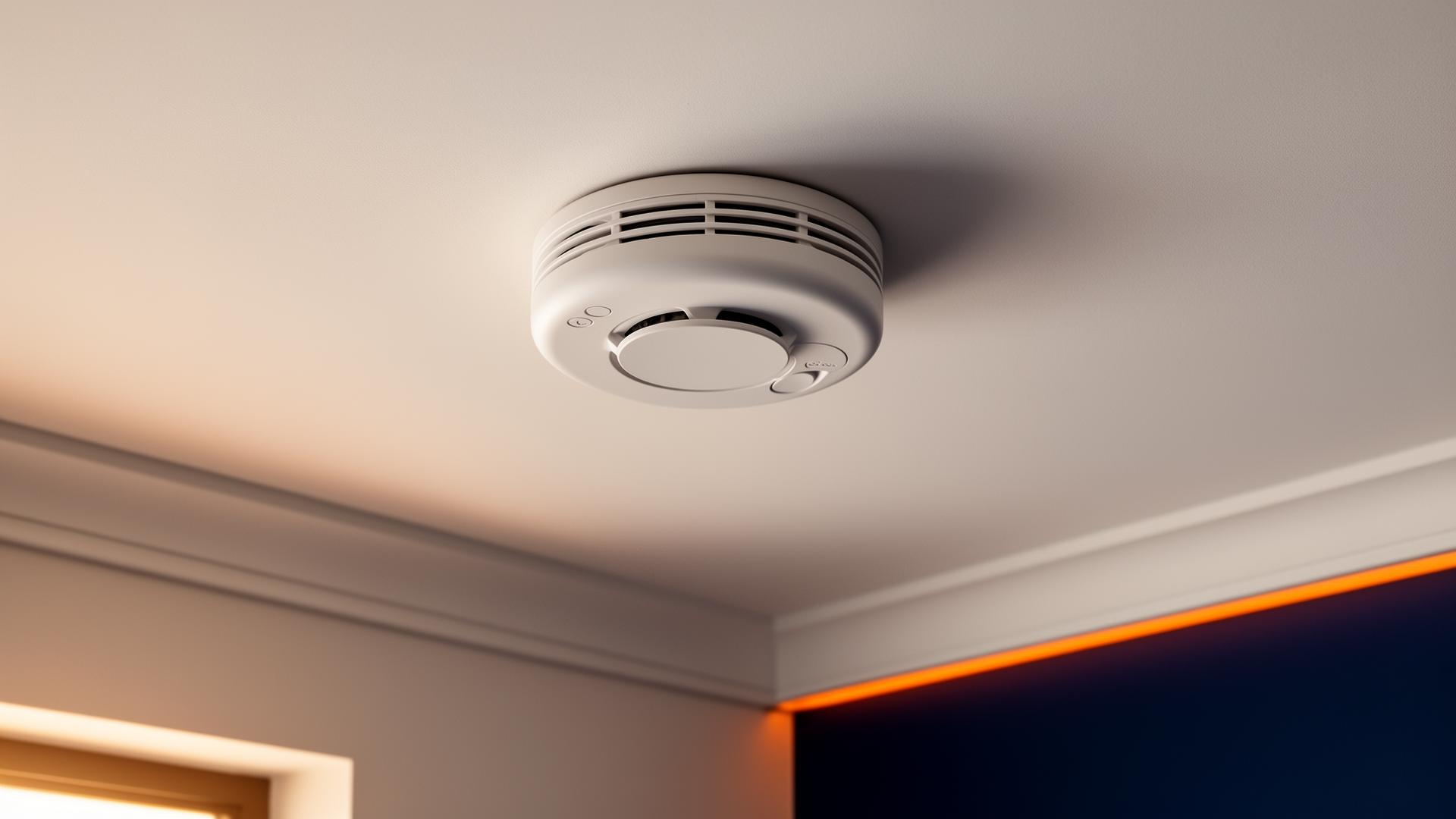
Sydney Smoke Alarm Laws 2026: Homeowner & Landlord Guide
By the team at Tradetek Solutions
Every Sydney winter, Fire and Rescue NSW crews answer the same call. A heater left on overnight in a Western Sydney bedroom. An unattended pot on a stovetop in a Surry Hills terrace. An overloaded powerboard behind a TV in a Northern Beaches granny flat. Most of those fires are survivable. The ones that turn fatal almost always share one detail: the smoke alarm was missing, disabled, expired, or sounded only in the wrong end of the house.
NSW smoke alarm law has tightened steadily since the original 2006 rules, and a fresh round of clarifications around 10-year sealed alarms and rental compliance now applies to every Sydney home in 2026. Most homeowners have no idea where they stand. Most landlords assume the property manager has it covered. Both groups find out the truth only after an incident, when the insurer asks for proof of compliance and the answer is no.
This guide covers exactly what the law requires in 2026, where alarms must be installed in a Sydney home, the difference between battery and hardwired units, landlord obligations under the Residential Tenancies Regulation, what a compliant install costs, and how to get the work done before the next East Coast Low rolls through. The team at Tradetek Solutions handles dozens of these every June and July.
Why Sydney Winter Is the Worst Month for House Fires
Residential fire callouts across NSW climb sharply between June and August. Cold nights bring out portable heaters, electric blankets, gas heaters and clothes drying near radiant elements. Older Sydney housing stock layers on extra risk: terrace homes with original wiring, weatherboard cottages with no ceiling cavity barriers, and 1970s brick veneers with porous insulation that lets fire travel fast above the ceiling.
The deadly statistic is not how often fires start, but how quickly they kill. A flaming polyurethane couch can fill a Sydney living room with toxic smoke in under three minutes. A sleeping occupant has roughly that long to wake, locate the exit and leave. A working photoelectric alarm placed correctly buys back two of those three minutes. An expired or missing alarm gives back none.
Fire and Rescue NSW publishes annual data showing that the majority of fatal residential fires in the state involve a property where the smoke alarm was not working at the time. Sydney metro suburbs, the Central Coast and the Hunter all sit in the same risk band through winter.
What NSW Smoke Alarm Law Actually Says in 2026
Two layers of regulation set the rules. The Environmental Planning and Assessment Regulation sets the building-level requirements (see the Fire and Rescue NSW smoke alarm requirements), and the NSW smoke alarm rules for rental properties set the landlord obligations. Both reference AS 3786 as the technical standard every alarm sold for residential use must meet.
The simple version for a Sydney home in 2026:
- At least one working smoke alarm on every storey of the dwelling.
- An alarm in the hallway or area outside every separate sleeping area.
- Alarms must comply with AS 3786 and be photoelectric type.
- Any alarm older than 10 years from its manufacture date must be replaced, regardless of whether it still beeps.
- Homes built or substantially altered after 1 May 2006 must have 240V hardwired alarms with battery backup.
- Battery-only alarms in pre-2006 homes must now be 10-year sealed lithium photoelectric units.
- Rented properties must have alarms checked annually by the landlord or their agent, with batteries replaced as needed.
- Tampering with, removing or disabling a working alarm in a residential dwelling can attract penalty notices.
The National Construction Code, published by the Australian Building Codes Board, sits underneath this and is referenced by every Sydney council during DA approvals. New builds and major renovations are signed off against NCC clauses on smoke alarm placement before an Occupation Certificate is issued.
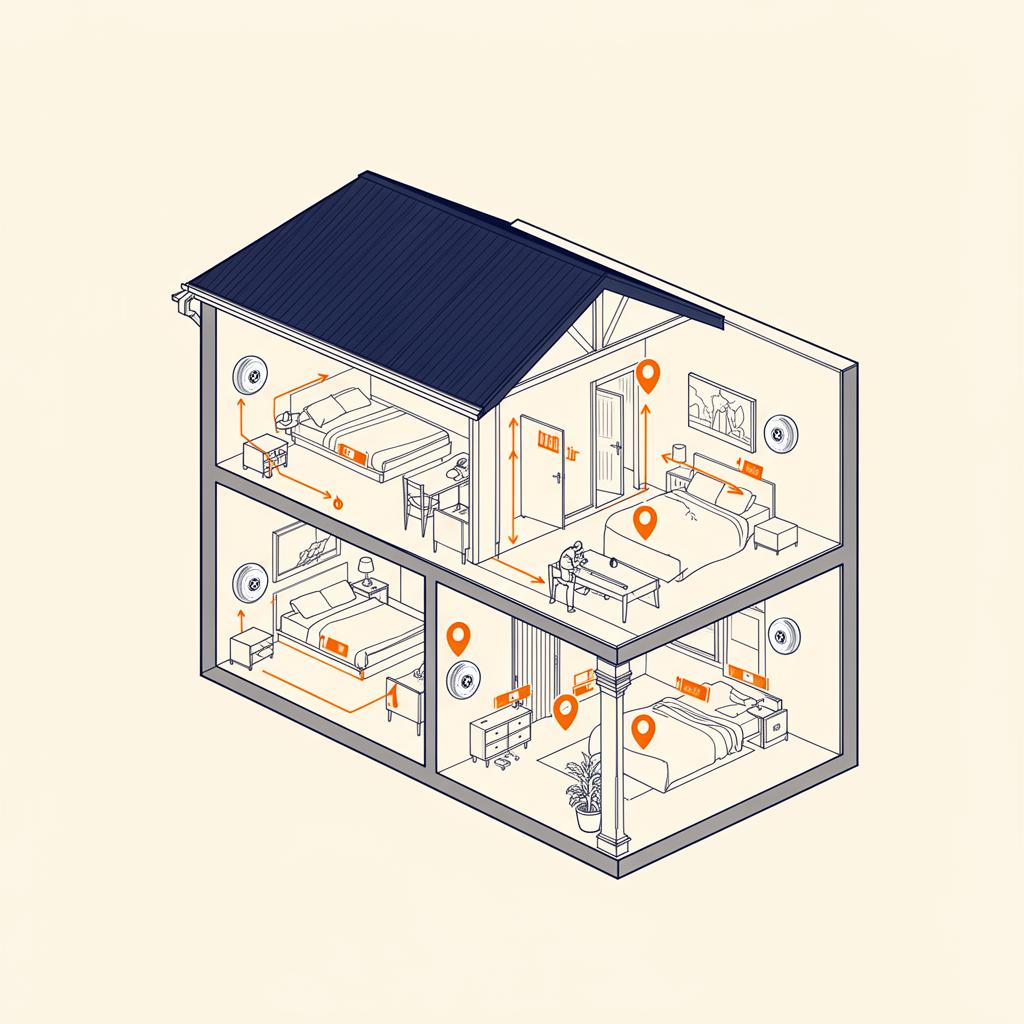
Where to Install Smoke Alarms in a Typical Sydney Home
The regulation sets the legal minimum. Fire and Rescue NSW recommends going further, because the legal minimum only protects sleeping occupants if every door in the house is open at night, which is rarely true on a cold winter evening with bedroom doors closed for warmth.
Single-storey three-bedroom home
- One alarm in the hallway outside the bedrooms (legal minimum).
- One alarm inside each bedroom (recommended for closed-door sleeping).
- One alarm in the living room, especially where a heater or electric blanket is used.
- No alarms in the kitchen, bathroom or laundry. Mount the nearest alarm at least 3 metres from a stovetop.
Two-storey home or terrace
- One alarm at the top of every internal stairwell.
- One alarm on each storey in the hallway outside bedrooms.
- One alarm inside each bedroom used by a child, elderly resident or anyone who sleeps with the door closed.
- Avoid mounting on a pitched ceiling more than 300mm below the apex, where hot smoke layers above the alarm.
Granny flats and dual occupancies
- Each self-contained dwelling needs its own alarm coverage to the same standard as a primary residence.
- Interconnection between the main house and granny flat is not required by law, but is strongly recommended for elderly parents or teenagers sleeping in a separate building.
Battery vs Hardwired: Which One You Are Allowed to Use
240V hardwired with battery backup
Required by NSW law for any home built or substantially renovated after 1 May 2006. The alarm draws mains power continuously and falls back to an internal battery during a blackout. Hardwired alarms can also be interconnected, so a kitchen alarm triggers the bedroom alarm at the other end of the house at the same time. Installation and replacement is licensed electrical work under the NSW electrical licensing rules.
10-year sealed lithium battery
The standard option for pre-2006 Sydney homes that do not have hardwired alarms. The lithium cell is sealed inside the unit and lasts the full 10-year service life, so there are no batteries to replace and no late-night chirping. Removable 9V battery alarms are being phased out and should be replaced at end of life with 10-year sealed units.
Interconnected alarms
Wireless interconnection is the single biggest safety upgrade available to an existing Sydney home. When one alarm detects smoke, every alarm in the house sounds within seconds. For homes with elderly residents, children sleeping behind closed doors, or a multi-storey layout, this is the difference between waking up and not. Interconnection can be retrofitted to either hardwired or 10-year sealed battery units without lifting floorboards.
Landlord Smoke Alarm Duties (and the Fines for Getting It Wrong)
Since the 2020 rental reforms, NSW landlords carry specific written duties under the Residential Tenancies Regulation. A property manager handling the lease does not transfer the legal responsibility; it stays with the owner.
- Install compliant alarms before a new tenancy starts.
- Check every alarm is in working order at the start of each new tenancy and at least once every 12 months.
- Replace removable batteries annually or when an alarm signals a low-battery warning.
- Replace any alarm within 10 years of its manufacture date, or sooner if it fails a test.
- Repair or replace a faulty alarm within 2 business days of being notified by the tenant.
- Provide the tenant with written notice before entering the property for an alarm check (at least 2 business days).
A landlord who fails these duties can face enforcement from NSW Fair Trading, and a non-compliant alarm at the time of a fire can reduce or void an insurance claim. Most Sydney property managers now book an annual compliance check with a licensed electrician across the whole portfolio in autumn so the work is done before the winter heating season.
Common Sydney Mistakes That Make an Alarm Useless
Even compliant alarms fail when they are installed in the wrong spot or never tested. The Tradetek electrical team sees the same patterns across Sydney homes every winter.
- Alarm mounted within 300mm of a wall or cornice. Smoke layers move along the ceiling apex first, leaving a dead-air corner where the alarm sits.
- Alarm directly above a kitchen stovetop. Cooking steam triggers constant nuisance alarms, the homeowner removes the battery, and the alarm stays disabled for years.
- Painted-over alarm grilles. Renovation painters often spray straight over the louvres, sealing them shut. The alarm cannot draw smoke through a sealed grille.
- Expired alarms that still beep. A 12-year-old alarm may pass the test button but its sensor has degraded and will not detect a real fire reliably.
- Single alarm in a multi-bedroom home. One hallway alarm does not wake a child sleeping behind a closed door at the far end of the house.
- Alarms near ceiling fans or air vents. Airflow disperses smoke away from the sensor and delays activation by critical minutes.
These same failure patterns show up alongside the electrical issues covered in our guides on eight signs you need a switchboard upgrade and the home electrical safety inspection guide. A combined safety visit catches the lot.
2026 Sydney Smoke Alarm Installation Costs
These ranges reflect what Sydney homeowners and landlords are paying in winter 2026 for licensed work that comes with a Certificate of Compliance Electrical Work and a written warranty.
- Supply and fit a 10-year sealed photoelectric alarm: $140 to $220 per alarm.
- Replace an existing 240V hardwired alarm like-for-like: $190 to $280 per alarm.
- Install a new 240V hardwired alarm on an existing circuit: $280 to $450 per alarm, including ceiling fixings and testing.
- Wireless interconnection across a typical three-bedroom home: $580 to $920 supplied and installed for the full set.
- Annual rental compliance check (per dwelling): $90 to $160, plus parts if any alarm needs replacement.
- Whole-home upgrade for a 4-bedroom two-storey house: $1,200 to $2,400 depending on interconnection, ceiling type and switchboard condition.
If a switchboard is already due for an upgrade, bundling the smoke alarm work into the same callout cuts the total cost because the electrician only isolates and tests the circuits once.
Testing, Cleaning and Lifespan
An alarm is only useful if it works on the night a fire starts. A 60-second monthly habit catches most failures.
- Press and hold the test button on each alarm for at least 5 seconds until it sounds.
- Vacuum the grille with a soft brush every 6 months to clear dust and cobwebs.
- Wipe the cover with a dry cloth, never solvent or aerosol cleaner.
- Check the manufacture date sticker on the back at every test. Replace at 10 years.
- Replace any alarm that chirps intermittently, fails the test or has visible smoke or water staining.
Cold winter nights are the most common time for an old alarm to chirp because lithium cell voltage drops a fraction at lower temperatures. If the chirp returns within a week of a battery change, the alarm itself is at end of life.
What a Compliance Visit Looks Like
A typical Sydney smoke alarm compliance visit on a three- or four-bedroom home takes 45 to 90 minutes. A licensed electrician will:
- Walk through every storey and room to count and check existing alarms.
- Record the manufacture date and AS 3786 compliance mark on each unit.
- Test each alarm with smoke aerosol, not just the press-button test.
- Replace any expired, faulty or non-compliant unit on the spot.
- Recommend additional placements where the legal minimum leaves a gap.
- Issue a written compliance report suitable for property managers and insurers.
- Provide a Certificate of Compliance Electrical Work for any 240V wiring.
For rental portfolios, the same electrician can be booked annually across multiple properties so paperwork stays consistent. Verify any quoting trade on the NSW licence verification tool before letting them into the property.
Book the Compliance Check Before the Next Cold Snap
Sydney winter peaks for house fires through July and August. Heater season is exactly when an undersized or expired alarm is most likely to be tested by a real event, and exactly when most homeowners discover their alarm is older than they thought. Booking a compliance check now costs less than a coffee per alarm and is the cheapest piece of household safety on the market.
Tradetek Solutions is fully licensed for electrical work across Sydney metro, the Central Coast and the Newcastle and Hunter region. Call 0488 822 794 to book a smoke alarm compliance check, a whole-home upgrade, or an annual rental compliance visit. Same-day availability across most Sydney suburbs.