
8 Signs You Need a Switchboard Upgrade in Sydney (2026)
By the team at Tradetek Solutions
Your switchboard is the nerve centre of your home's entire electrical system. Every light, power point, appliance, and air conditioner runs through it. Yet most homeowners never think about their switchboard — until something goes wrong. A tripped breaker here, a flickering light there, and before long, you're dealing with an electrical panel that can't keep up with the demands of a modern Australian household.
As autumn 2026 settles across Sydney and the Central Coast, this is precisely the time when electrical systems face increased strain. Heaters, dryers, and heated towel rails start drawing power again after summer. If your switchboard is already struggling, the added winter load can push it past its limits — resulting in nuisance tripping, overheating, or worse.
According to Fire & Rescue NSW, electrical faults remain one of the leading causes of house fires in the state. Many of these fires originate from outdated switchboards that lack modern safety devices. The good news? A professional switchboard upgrade is one of the most impactful safety improvements you can make — and it typically takes less than a day.
In this guide, we cover the eight warning signs that your switchboard needs attention, what a modern upgrade involves, how much it costs, and why autumn is the smartest time to act.
Updated June 2026
Refreshed with 2026 Sydney switchboard upgrade costs ($1,800-$3,500), EV charger & solar battery load considerations, and current Ausgrid metering rules. Related reads: Electrical Safety Inspection Guide, Home EV Charger Installation Sydney, Solar Battery Rebate Sydney 2026.
What Does a Switchboard Actually Do?
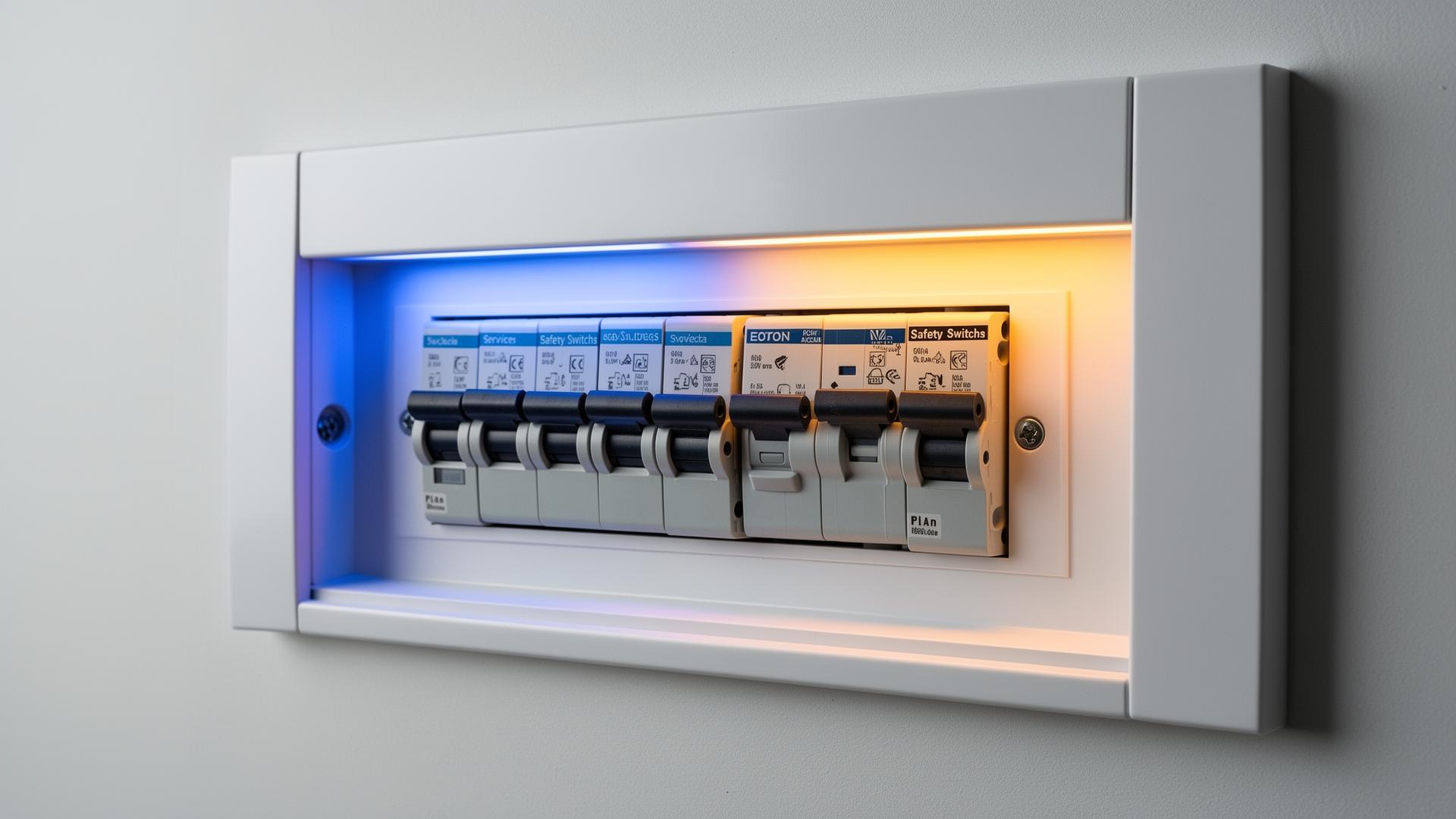
Before diving into the warning signs, it helps to understand what your switchboard does and why it matters so much. Your switchboard — sometimes called a fuse box, distribution board, or electrical panel — is the central hub that receives the main electrical supply from the grid and distributes it across separate circuits throughout your home.
A modern switchboard contains three critical types of protection:
- Circuit breakers — These automatically disconnect a circuit when the current exceeds a safe level, preventing wires from overheating and catching fire. They replace the old ceramic fuses that had to be manually replaced after blowing.
- Safety switches (RCDs) — Residual Current Devices detect dangerous current leakage to earth — the kind that causes electric shock — and disconnect the circuit in as little as 30 milliseconds. They are legally required on all power and lighting circuits in new NSW homes.
- Surge protectors — Modern switchboards can include surge protection devices that guard sensitive electronics against voltage spikes caused by lightning or grid fluctuations.
If your switchboard is missing any of these components, it cannot adequately protect your family, your home, or your appliances. Here are the eight signs that an upgrade is overdue.
8 Warning Signs Your Switchboard Needs Upgrading
1. You Still Have Ceramic Fuses or Rewirable Fuses
This is the single biggest red flag. If you open your switchboard and see round porcelain fuse holders, or bare fuse wire wrapped around screws, your switchboard predates modern electrical safety standards by decades. Ceramic fuses were standard in Australian homes built before the 1980s, but they provide far less protection than circuit breakers.
The danger is twofold: ceramic fuses can be replaced with the wrong amperage wire (a common DIY mistake that removes overcurrent protection entirely), and they offer zero protection against earth leakage or electric shock. Every major electrical safety authority in Australia, including SafeWork NSW, recommends replacing ceramic fuse boards with modern circuit breaker panels.
2. Circuit Breakers Trip Frequently
Occasional tripping is normal — it means your circuit breakers are doing their job. But if the same breaker trips weekly, or multiple breakers trip simultaneously, it's a sign of a deeper problem. The most common cause is circuit overloading: too many appliances drawing power from too few circuits.
Older switchboards were designed for the electrical loads of the 1970s and 1980s — before ducted air conditioning, induction cooktops, home offices, and EV chargers became standard. A modern Australian home typically requires 16 to 24 individual circuits. If your switchboard has only 8 to 10, it's almost certainly overloaded. An electrical panel upgrade adds the capacity your home needs and eliminates nuisance tripping.
3. No Safety Switches (RCDs) on All Circuits
Under the NSW Electrical Safety legislation, all new residential installations must have RCD protection on every circuit. However, older homes may only have a safety switch on the power circuits — or none at all. This leaves lighting circuits, hot water systems, oven hardwiring, and air conditioning circuits completely unprotected against earth leakage faults.
An earth leakage fault is what causes electric shock when you touch a faulty appliance or a live wire makes contact with a metal surface. Without an RCD, the fault continues until the main fuse blows — which can take several seconds. That's more than enough time for a fatal electric shock. Upgrading your switchboard to include RCDs on all circuits is the single most important electrical safety improvement you can make.
4. Burning Smell or Scorch Marks Near the Switchboard
If you notice a burning plastic smell, discolouration, or brown scorch marks around your switchboard, treat this as an emergency. These are signs of loose connections, arcing, or overheating wiring — all of which are serious fire hazards.
Loose terminal connections inside a switchboard generate heat through electrical resistance. Over time, this heat melts plastic components, degrades wiring insulation, and can ignite surrounding materials. If you observe any of these signs, turn off the main switch immediately and contact an emergency electrician. Do not attempt to investigate inside the switchboard yourself.
5. Flickering or Dimming Lights
Lights that flicker, dim momentarily when appliances turn on, or buzz audibly are often symptoms of voltage fluctuations caused by overloaded circuits or deteriorating wiring connections inside the switchboard. While a single flickering light might indicate a faulty fitting, widespread flickering across multiple rooms points to a switchboard or main supply issue.
This is particularly common when high-draw appliances like air conditioners, electric ovens, or heat pumps cycle on. The startup current momentarily exceeds the circuit's capacity, causing a voltage dip that affects other devices on the same circuit. An upgraded switchboard with properly distributed circuits eliminates this problem. If you're also experiencing issues with specific fixtures, a professional lighting assessment can pinpoint whether the switchboard or the fitting is at fault.
6. You're Planning a Renovation or Extension
Any significant home renovation — a kitchen upgrade, bathroom addition, granny flat, or room extension — adds substantial electrical load. New power points, lighting circuits, exhaust fans, heated towel rails, and appliance connections all require dedicated circuits. In almost every case, the existing switchboard will need upgrading to accommodate the additional capacity.
Attempting to run new circuits from an already-full switchboard is both dangerous and non-compliant with Australian Standard AS/NZS 3000 (the Wiring Rules). Your electrical inspection at the start of any renovation should include a switchboard assessment to determine whether an upgrade is needed before the fit-out begins.
7. You're Installing Solar Panels or an EV Charger
The shift toward renewable energy and electric vehicles is accelerating across Australia. Both solar panel systems and EV chargers require dedicated, correctly rated circuit breakers in your switchboard — and most older panels simply don't have the space or capacity to accommodate them.
A solar inverter typically needs a dedicated 20A or 32A circuit breaker, plus the switchboard must meet specific requirements from your energy distributor (such as Ausgrid or Endeavour Energy) for grid connection. EV chargers — particularly Level 2 units — draw up to 32 amps continuously, which demands a switchboard with adequate main switch capacity and proper load balancing. Upgrading your switchboard before installation ensures compliance and prevents overloading.
8. Your Switchboard Is More Than 25 Years Old
Even if your switchboard appears to be functioning normally, age alone is a significant risk factor. Electrical components degrade over time. Internal bus bars corrode, terminal screws loosen from thermal cycling, and plastic housings become brittle. A switchboard installed in the 1990s or earlier was designed for a fundamentally different level of electrical demand.
The average Australian household's electricity consumption has increased dramatically over the past two decades, driven by air conditioning, home entertainment systems, smart home devices, and the electrification of cooking and heating. If your switchboard is over 25 years old, a proactive upgrade is far cheaper than the emergency replacement you'll need if it fails — or the consequences if it causes a fire.
What Happens During a Switchboard Upgrade?
A professional switchboard upgrade is a structured process carried out by a licensed electrician. Here's what to expect:
- Initial inspection and assessment — Your electrician inspects the existing switchboard, tests all circuits, checks earthing and bonding, and assesses the main supply capacity. They'll identify any code violations, safety hazards, and capacity limitations.
- Design and quoting — Based on the assessment, you'll receive a detailed, itemised quote covering the new switchboard, circuit breakers, RCDs, surge protection, and any additional circuits required. At Tradetek Solutions, we provide fixed upfront pricing with no hidden costs.
- Power disconnection and old board removal — The power supply is temporarily disconnected at the meter. The old switchboard is carefully removed, and the existing wiring is inspected for damage or deterioration.
- New switchboard installation — A modern switchboard is mounted, and all circuits are terminated onto new circuit breakers and RCDs. The earthing system is tested and upgraded if necessary.
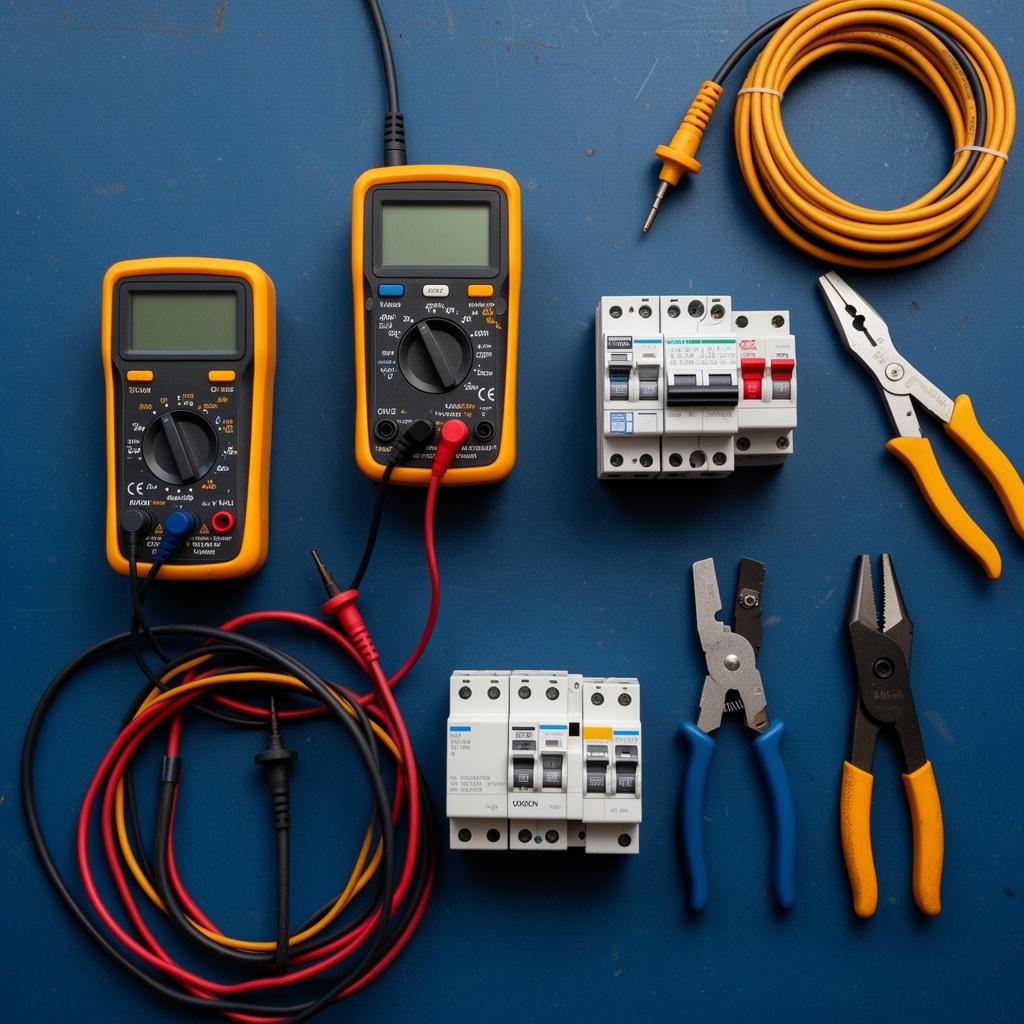
- Testing and certification — Every circuit is individually tested for insulation resistance, polarity, earth fault loop impedance, and RCD trip time. Your electrician lodges a Certificate of Compliance (CCEW) with the relevant authority.
- Power restoration and handover — Power is restored, all circuits are verified as operational, and you're walked through the new switchboard layout, including how to reset breakers and test safety switches.
Most residential upgrades are completed within a single day. During the process, power to your home will be off for approximately 4 to 6 hours.
How Much Does a Switchboard Upgrade Cost?
The cost of a switchboard upgrade in Sydney varies depending on several factors:
- Size of the switchboard — A standard single-phase residential switchboard upgrade typically costs between $1,200 and $2,500. Larger homes or three-phase upgrades can range from $2,500 to $4,500.
- Number of circuits — Additional circuits for new appliances, solar, or EV charging add to the cost. Each new circuit typically adds $150 to $300.
- Asbestos removal — Many older switchboards in Sydney homes were mounted on asbestos backing boards. Licensed asbestos removal must be arranged separately and can add $300 to $800 to the project.
- Meter board relocation — If the meter board also needs upgrading or relocating (common in homes built before the 1970s), this involves coordination with the energy distributor and additional costs of $500 to $1,500.
While these are significant costs, they're a fraction of what you'd pay for fire damage repairs, emergency rewiring, or — in a worst-case scenario — the irreplaceable cost of a family member's safety. Most homeowners find that a switchboard upgrade also reduces their home insurance premiums, as insurers recognise the reduced fire risk.
Why Autumn Is the Best Time for a Switchboard Upgrade
Timing your switchboard upgrade for autumn offers several practical advantages:
- Beat the winter rush — Winter is peak season for electricians, as heating-related call-outs surge and circuit overloads become more frequent. Booking in March or April means shorter wait times and more flexible scheduling.
- Prepare for increased load — Electric heaters, underfloor heating, and heat pump systems significantly increase your home's electrical demand. Upgrading before winter ensures your switchboard can handle the load without tripping.
- Comfortable working conditions — Your power will be off for several hours during the upgrade. Mild autumn weather means this is far more comfortable than losing heating in winter or air conditioning in summer.
- Solar preparation — Many homeowners install solar panels in spring and summer. Getting your switchboard upgrade done in autumn means you're ready to go when solar installation season arrives.
- Safety switch testing — The NSW Fair Trading recommends testing your safety switches every three months. An autumn upgrade resets this schedule, with your next test due in mid-winter when it matters most.
Switchboard Upgrade vs. Electrical Rewiring: What's the Difference?
Homeowners sometimes confuse a switchboard upgrade with a full electrical rewire — but they're very different jobs. A switchboard upgrade replaces only the distribution panel itself: the circuit breakers, safety switches, bus bars, and enclosure. The existing wiring throughout your home remains in place, provided it's in good condition.
A full electrical rewire, by contrast, involves replacing all the cabling inside your walls, ceilings, and floors. This is a much larger, more expensive, and more disruptive project — typically only necessary in homes built before the 1960s with cloth-insulated or rubber-insulated wiring that has deteriorated beyond safe use.
During your switchboard upgrade, your electrician will test the existing wiring and advise whether any circuits need attention. In most homes built after the 1970s, the wiring is still serviceable and only the switchboard needs replacing. If wiring issues are found, targeted electrical repairs can address specific circuits without a full rewire.
NSW Regulations and Compliance Requirements
Switchboard upgrades in NSW are governed by several layers of regulation:
- AS/NZS 3000:2018 (Wiring Rules) — The national standard for electrical installations. All switchboard upgrades must comply with the current edition, which specifies requirements for circuit protection, earthing, RCD placement, and labelling.
- NSW Service and Installation Rules — Published by the NSW Department of Planning and Environment, these rules govern the interface between your electrical installation and the distribution network.
- Certificate of Compliance (CCEW) — After completing a switchboard upgrade, your electrician must lodge a CCEW with the relevant network operator. This certifies that the work complies with all applicable standards and regulations.
- Licensed electricians only — All electrical work in NSW must be performed by a licensed electrical contractor. DIY electrical work is illegal and extremely dangerous. You can verify a licence on the NSW Fair Trading website.
At Tradetek Solutions, we handle all compliance documentation as part of every switchboard upgrade. Our licensed electricians ensure your new switchboard meets every requirement, and we provide you with copies of all certificates and test results for your records.
How to Choose the Right Electrician for Your Switchboard Upgrade
Not all electricians have the same experience with switchboard work. Here's what to look for when choosing a professional for your upgrade:
- Current NSW electrical licence — Verify their licence number on the Fair Trading website. They should hold a current Electrical Contractor Licence.
- Experience with switchboard upgrades specifically — Ask how many switchboard upgrades they've completed in the past 12 months. An experienced electrician will have done dozens, not a handful.
- Upfront fixed pricing — Reputable electricians provide a detailed, written quote before starting work. Be wary of anyone who gives a verbal estimate or charges by the hour for switchboard work.
- Full compliance and certification — Confirm they will lodge the CCEW and provide you with test results and documentation.
- Warranty on workmanship — Look for a minimum 12-month warranty on labour, in addition to manufacturer warranties on the switchboard components.
- Insurance — Ensure they carry current public liability insurance (minimum $10 million) and workers' compensation cover.
Frequently Asked Questions
Don't Wait for a Fault — Upgrade Your Switchboard This Autumn
Your switchboard is the guardian of your home's electrical system. If it's outdated, undersized, or missing critical safety devices, it's not just an inconvenience — it's a genuine safety hazard. Every year, preventable electrical fires destroy Australian homes because switchboard upgrades were put off for another season.
Autumn is the ideal window to act. The summer storms have passed, winter heating demands are approaching, and electricians have the availability to schedule your upgrade at a time that suits you. Whether you've spotted one of the eight warning signs above or simply want peace of mind, a professional switchboard inspection is the smartest first step.
At Tradetek Solutions, our licensed electricians specialise in switchboard upgrades across Sydney, the Central Coast, Newcastle, and Lake Macquarie. We provide honest assessments, upfront fixed pricing, and handle every aspect of the job — from the initial inspection through to compliance certification. Your family's safety is too important to leave to an outdated switchboard.
Is Your Switchboard Due for an Upgrade?
Book a professional switchboard inspection with Tradetek Solutions. Upfront pricing, same-week availability, and full compliance certification included.