
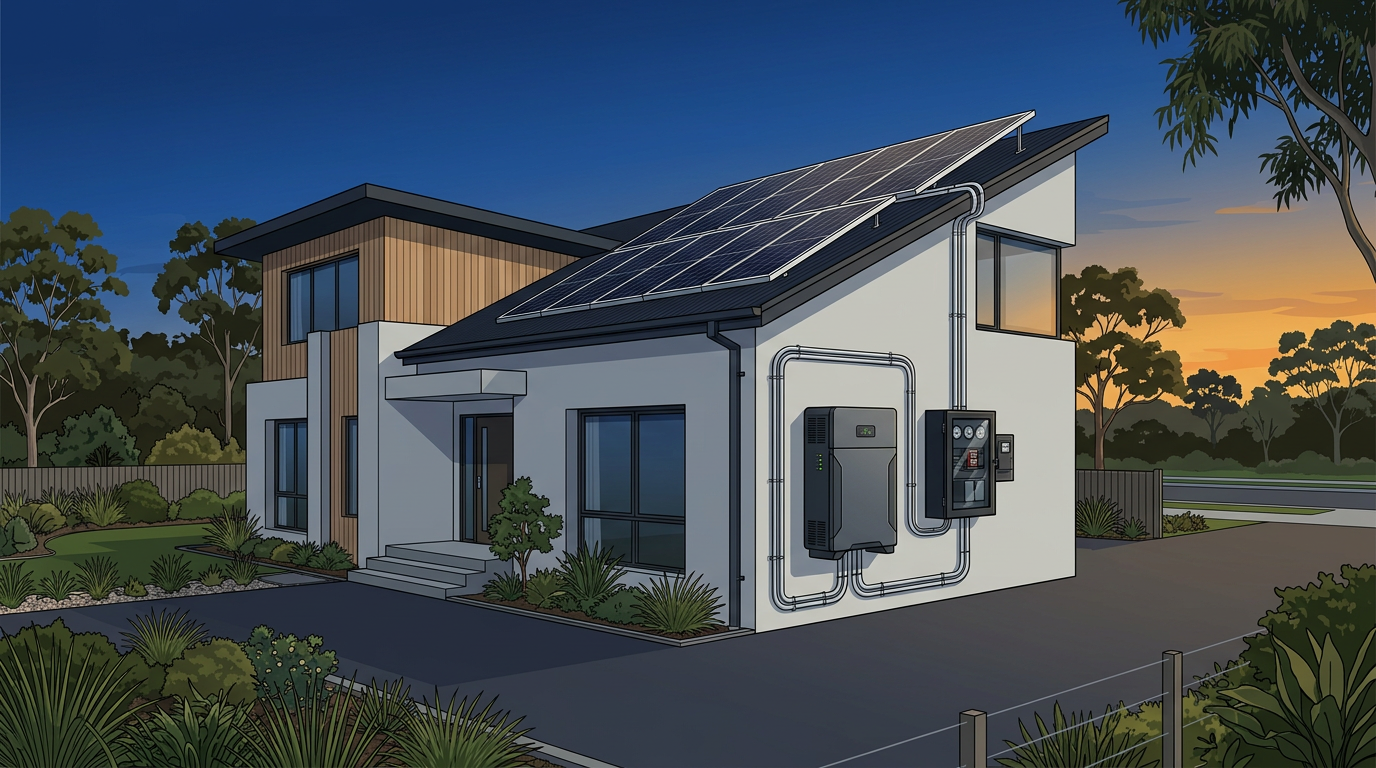
Home Solar Battery Rebate in Sydney (2026 Guide)
By the team at Tradetek Solutions
The Sydney quotes folder we keep on the office wall has changed in twelve months. A year ago it was full of inverter swaps and the odd EV charger. Today, three out of every four electrical quotes leaving our office include a home battery. The reason is not technology, which has been ready for years. The reason is money. From 1 July 2025 the federal Cheaper Home Batteries Program slashed roughly 30 percent off the up-front price of residential storage, and the NSW Peak Demand Reduction Scheme started paying installers a second incentive on top. For a North Shore homeowner who paid eighteen thousand dollars for a 13 kWh system in 2024, the same install now lands closer to twelve. That changes the maths from "nice idea, ten-year payback" to "fits inside the loan you already have on the solar".
The rebates are not a coupon you download. They are point-of-sale discounts that only flow through Clean Energy Council accredited installers, only on approved equipment, and only after Ausgrid has signed off on the connection. Get one step wrong and the discount disappears. This guide walks through what the 2026 rebate is actually worth on a Sydney house, the switchboard and inverter work that has to happen first, how to size a battery for a Sydney winter peak, and how to stack federal and state incentives without losing either.
What the 2026 Battery Rebate Is Actually Worth
The federal Cheaper Home Batteries Program is administered by the Clean Energy Regulator and funded through the same Small-scale Technology Certificate (STC) mechanism that has paid down rooftop solar for the last fifteen years. The headline number is roughly 30 percent off the up-front cost of a residential battery system between 5 and 50 kWh of usable capacity. The detail is more useful than the headline.
Three things to understand about the value:
- It is paid per kilowatt-hour of usable storage, not per battery unit. A 10 kWh usable battery attracts a larger rebate than a 5 kWh battery, but the dollars per kWh are the same. Stacking two smaller batteries to reach the same usable capacity attracts the same rebate as one larger unit.
- The rate steps down each year on 1 January. The Cheaper Home Batteries Program is designed to phase out by 2030, with the per-kWh rebate dropping in scheduled increments. A battery installed in 2026 receives a meaningfully larger discount than the same battery installed in 2028.
- It must be claimed by a CEC-accredited installer at the point of sale. The discount appears on your invoice. You do not pay full price and claim it back. If a quote shows the full price and tells you to claim the rebate yourself afterwards, the quote is wrong and you should walk away.
The official program scope and eligible equipment lists sit with the Clean Energy Regulator, which publishes the approved battery models and the certificate calculations that drive your discount.
The NSW Stack: PDRS, Connection Rules and Ausgrid Pre-Approval
NSW homeowners can layer a second incentive on top of the federal rebate. The Peak Demand Reduction Scheme (PDRS) pays installers a separate per-certificate amount when a battery is configured to discharge during the 4pm to 9pm summer peak window and the 5pm to 8pm winter peak. The PDRS rebate is assigned to the installer at quote stage and shows up as a further line-item discount on the invoice.
Three NSW-specific rules trip up Sydney installs more often than the federal scheme:
- Network pre-approval. Battery and inverter combinations above 5 kW per phase in the Ausgrid area need formal connection approval before equipment is fitted. Lodging the application takes 10 to 20 business days. Treat the Ausgrid sign-off as the long pole in the schedule, not the install day itself. The current process is documented on the Ausgrid connections page.
- Metering reconfiguration. If your home still has an accumulation meter or an old gross-metered solar configuration, you need a Type 4 smart meter and a net-metering switch before the battery can earn export credit. The retailer organises the meter swap but it takes another 10 working days.
- Eligible equipment list. The federal CER list and the NSW PDRS list are not identical. Some batteries that qualify for the federal rebate do not qualify for the NSW PDRS incentive and vice versa. A good Sydney installer quotes only equipment that appears on both lists. See the live NSW programs at Energy NSW grants and rebates.
Sizing a Battery for a Sydney Winter Peak
The biggest waste of rebate money we see is a battery sized to the brochure rather than the bill. Sydney has a different load shape to Brisbane or Melbourne, and the winter peak is what defines the right capacity.
Start with twelve months of half-hourly consumption data from your retailer. Most provide it as a free download through the customer portal or via Energy Made Easy. Plot the kWh consumed between 4pm and 10pm, every day, for July. That number is the battery work you actually need.
From two years of Sydney install data, the patterns repeat:
- Apartment or compact home, gas cooking, no EV. Evening draw of 4 to 6 kWh. A 6 to 8 kWh usable battery covers the peak with margin.
- Four-person family home, reverse-cycle heating, no EV. Evening draw of 8 to 12 kWh. A 10 to 13 kWh battery covers the peak through winter.
- All-electric family home, induction cooking, one EV charging at home. Evening draw of 14 to 20 kWh. A 16 to 20 kWh battery, or two stacked units, is required to avoid pulling from the grid during peak pricing.
- Larger Hills District or Northern Beaches home with pool pump and ducted reverse-cycle. Evening draw above 20 kWh. Two stacked batteries or a 20+ kWh modular system is the only configuration that actually pays back.
Two technical traps to avoid when comparing quotes:
- Usable versus nominal capacity. A 13.5 kWh nominal battery typically delivers 12 to 13 kWh usable. Quotes should state usable capacity explicitly, because that is the figure the rebate is calculated on.
- Continuous versus peak inverter output. A 5 kW peak inverter is not the same as 5 kW continuous. Sydney homes that run reverse-cycle and an oven at the same time will trip a 3.5 kW continuous inverter every winter night. Match the continuous rating to your half-hourly maximum, not the average.
The Switchboard and Inverter Work That Must Happen First
Two thirds of Sydney battery quotes include hidden switchboard work, and the third that do not are usually the quotes that get revised on install day. Before you sign anything, a licensed electrician needs to inspect three things.
1. Switchboard rating and protection devices
A pre-2005 ceramic-fuse switchboard cannot accept a battery circuit. AS/NZS 3000 wiring rules require residual current devices on every final sub-circuit added or modified, which usually means a full switchboard upgrade before the battery is fitted. If your home has the signs covered in our switchboard upgrade guide, expect the upgrade quote in the same conversation as the battery quote. See the standalone switchboard upgrades service for scope.
2. Inverter age and compatibility
Most solar inverters sold in Australia before 2018 cannot be paired with a modern AC-coupled battery. The battery brings its own inverter and a smart energy meter, but the existing solar inverter still needs to communicate with both. Inverters older than ten years typically need to be replaced at the same time. The cost is offset by improved efficiency and warranty restart but it is a real line item.
3. Metering and tariff readiness
Time-of-use pricing is what makes a Sydney battery profitable. Without a smart meter and a time-of-use tariff the battery has nothing to arbitrage, because flat-rate tariffs pay the same overnight as they do at 6pm. Confirm the meter type and tariff before the install, not after. Your retailer can swap both on request.
A full electrical safety check before fitting a battery is now best-practice, not optional. Our home electrical safety inspection guide covers what is checked and why.
What a Sydney Home Actually Saves
Conservative numbers from real 2026 installs, not brochure claims:
- Existing 6.6 kW solar plus new 13 kWh battery. A typical North Ryde family home cuts grid imports by 65 to 80 percent and replaces 5 to 6 kWh of peak-priced grid energy per day at roughly 55 to 70 cents per kWh. Annual saving sits between $1,400 and $1,900.
- New solar plus battery as a combined install. Self-consumption rises from the typical 30 percent of solar generation to 75 to 90 percent. On a 10 kW solar / 13 kWh battery combo, total bill reduction is commonly 80 to 95 percent across the year.
- All-electric home with EV charging. The battery shifts the EV charging window off peak, even when the car is plugged in at 6pm. Saving depends on EV usage but commonly adds another $600 to $1,000 per year on top of the appliance savings.
Payback periods on Sydney installs under the 2026 rebate sit between 5 and 8 years for most homes, dropping below 5 years for households that pair the battery with an EV. Without the rebate, those numbers add roughly three years each.
There is also a non-financial benefit worth naming. Once a battery is fitted with backup capability, the same Sydney storm that used to take out your fridge and modem for six hours becomes a non-event. Given how regularly Sydney loses power to the east-coast low storm cycle, see the related guide on claiming storm damage on insurance for the broader picture.
The Install Day Workflow
When everything has been pre-approved correctly, the install day itself is straightforward.
- Isolate and re-test. The electrician isolates the main switch, tests the existing solar export and confirms the inverter shutdown sequence.
- Switchboard work. Any switchboard upgrade or sub-board for essential-loads backup is done first. New RCBOs and isolators are fitted to AS/NZS 3000.
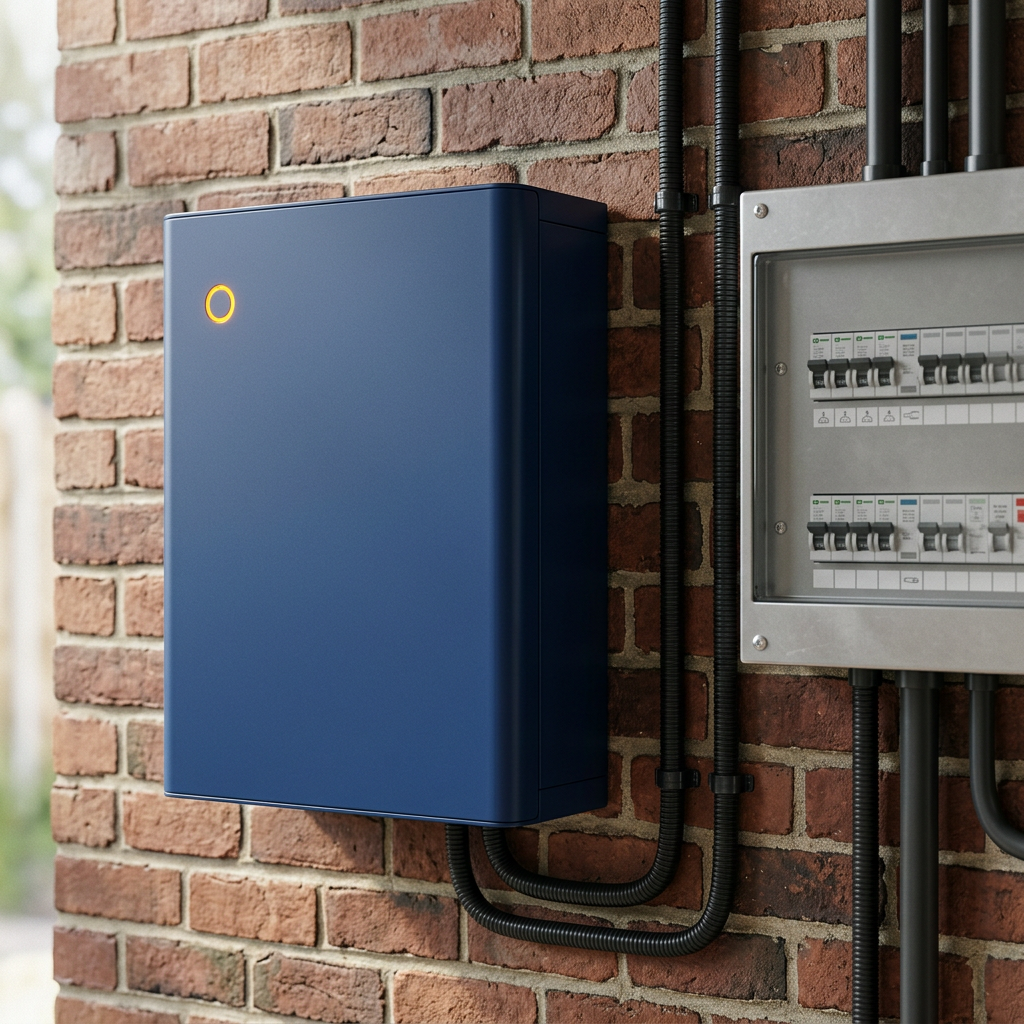
- Battery mounting. The battery cabinet is mounted on a code-compliant wall with the right clearances. Most Sydney installs go outside on a shaded south or east wall, not in the garage or under the meter box.
- Conduit, cabling and isolators. DC and AC cabling runs in rigid conduit, with battery isolator and AC isolator labelled per the network standard.
- Commissioning. The inverter and battery management system are commissioned, tariffs are programmed, and the home energy app is paired to the homeowner's phone.
- Compliance paperwork. The Certificate of Compliance for Electrical Work (CCEW) is lodged, the STC discount is generated in the Clean Energy Regulator portal and the Ausgrid commissioning notice is submitted.
- Handover. The homeowner gets a walk-through of charge / discharge windows, backup behaviour and the app dashboard.
For most Sydney homes, install day takes 6 to 9 hours from arrival to power-on, plus a half-day return visit if switchboard work was involved.
How to Vet a Sydney Installer
The rebate flows only through Clean Energy Council accredited installers. The CEC publishes a public installer search at cleanenergycouncil.org.au, and you should cross-check every quoted business there before signing. Three more checks worth doing in Sydney specifically.
- Verify the NSW electrical contractor licence on the NSW Fair Trading licence check. CEC accreditation covers solar and battery work but the electrician on site also needs a current NSW contractor licence.
- Ask for the Ausgrid pre-approval number on the quote. A genuine installer either includes the pre-approval lodgement in the price or notes that it is conditional on Ausgrid response. A quote with no mention of network approval is incomplete.
- Request the eligible-product references for both rebates. The CER eligible-product ID and the PDRS-approved equipment ID should be on the quote. If they are not, the installer cannot legally apply both discounts.
Australian Renewable Energy Agency (ARENA) projects published at arena.gov.au/projects are also worth a read for any homeowner who wants to understand how virtual power plants and battery aggregation programs interact with the rebate, because some of those programs add an extra payment for letting your battery be dispatched by the grid operator.
Common Mistakes That Cost Sydney Homeowners the Rebate
From quotes we have reviewed for second opinions over the last twelve months, five patterns repeat.
- Buying equipment that is not on the CER eligible list. Even one-month-old models sometimes lapse the approved list during certification renewal. Confirm the exact model and firmware against the current published list on the day of quote.
- Signing a quote that excludes switchboard work. If the switchboard inspection has not happened, the quote is provisional. A "from $X" price that turns into $X plus three thousand on the day is not the rebate's fault.
- Letting the installer claim the federal rebate but skip the NSW PDRS. Some installers default to the federal scheme only because the PDRS paperwork is more involved. Ask explicitly whether the PDRS is included on the quote.
- Choosing capacity by brand reputation, not by half-hourly data. Sydney homes with mismatched solar and battery sizing waste 20 to 30 percent of generation. Always size the battery to the load curve.
- Not specifying backup at quote stage. Retro-fitting essential-loads backup after install can double the labour cost. If you want lights and fridge to ride through a blackout, write it into the original scope.
Book a Battery and Switchboard Assessment
We audit your existing solar, switchboard and load curve, lodge the Ausgrid pre-approval and quote a rebate-eligible battery with both federal and NSW incentives applied at point of sale. Licensed across Sydney.
Frequently Asked Questions
Rebate values and scheme rules quoted above reflect the 2026 program year. Always confirm current rates with your installer at quote stage.