
Roof Storm Damage Insurance Claims in Sydney
By the team at Tradetek Solutions
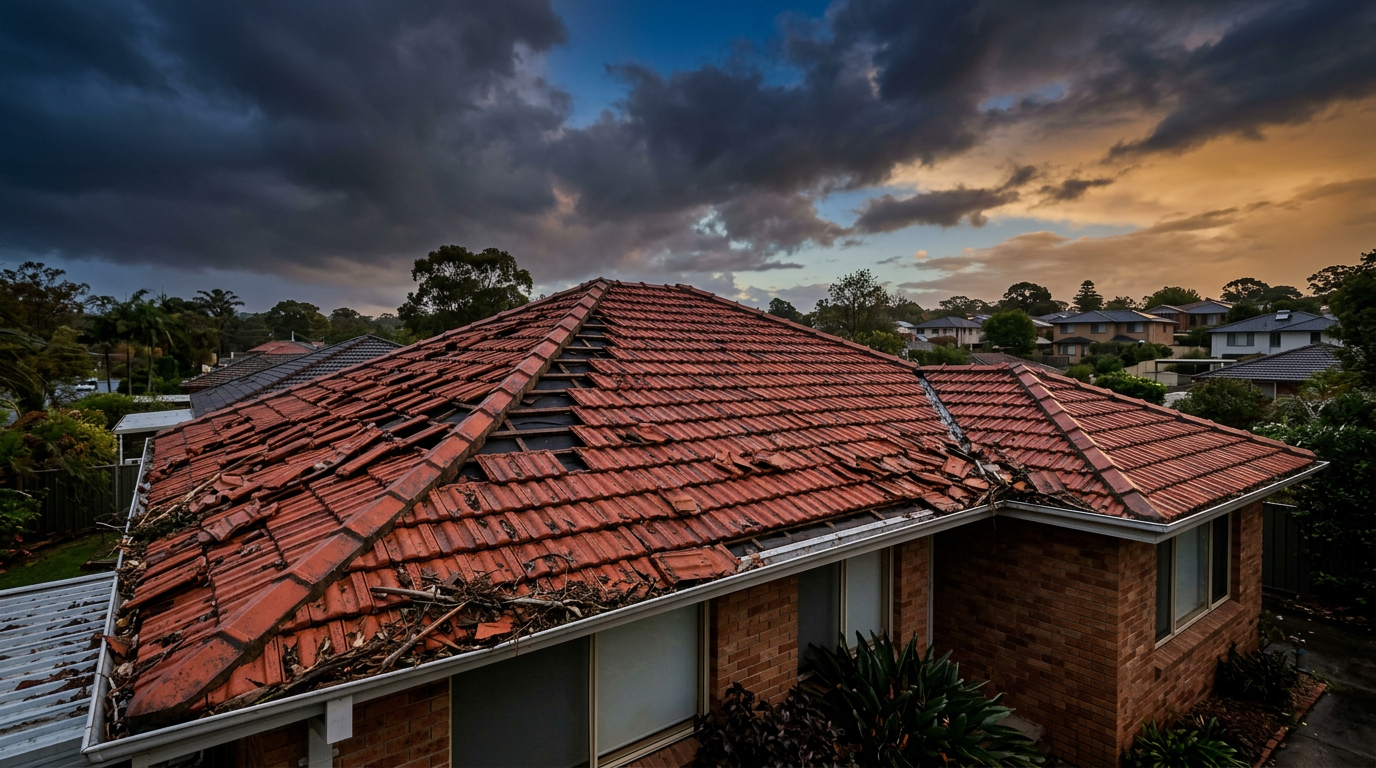
Sydney's east coast low season runs from May through August, and the 2026 outlook from the Bureau of Meteorology already points to an active winter. Streets across the Northern Beaches, the Hills District and the Central Coast woke up to broken tiles, blocked gutters and water-stained ceilings after the April squall lines, and call volumes for emergency roof work doubled overnight. If your roof took a hit, the next 48 hours decide whether your insurance claim is paid in full, paid in part, or refused outright.
Most Sydney homeowners only ever lodge one storm damage claim in their life. The insurer, on the other hand, processes thousands of them every season and has a team of assessors who know exactly which words, photos and evidence move a claim from "approved" to "declined". This guide walks you through the process the way we do it for our own clients across Mosman, Ryde, Hornsby and the Central Coast: what to do in the first hour, what to send the insurer, how to avoid the wear-and-tear trap, and how to push back if the first offer is too low.
What Sydney Insurers Actually Mean by "Storm Damage"
The first surprise for most homeowners is that "storm damage" is a much narrower term in your policy than it is in conversation. The standard NSW home and contents wording covers sudden damage caused by a defined event, usually called a storm, cyclone or rainstorm. That includes wind-lifted tiles, hail strikes, wind-driven rain entering the roof cavity, fallen branches and lightning strikes.
It does not cover three things that look identical to the untrained eye:
- Gradual water ingress from a flashing or valley iron that was already perished before the storm.
- Wear and tear on tiles, ridge capping or gutters that the storm simply exposed rather than caused.
- Resultant damage from an unmaintained roof, where the policy specifically excludes consequential mould, ceiling sag or rot.
The Insurance Council of Australia publishes its current definitions and your right to challenge them, and we recommend reading their consumer information before you call the insurer. Knowing the policy language changes how you describe the event on the phone, and the words used in that first call go straight into your claim file.
The First Hour: Make Safe, Then Document
The two jobs in the first hour are protecting the property and capturing evidence. Do them in that order, but do not skip either.
Move people and valuables away from any room with an active leak. A wet plasterboard ceiling can hold dozens of litres before it gives way, and the collapse usually happens hours after the rain stops. Place buckets and old towels under the worst drips. Cut power at the switchboard if water is anywhere near a light fitting. Do not climb onto the roof yourself, because wet tiles and torn metal sheeting are responsible for most of Sydney's post-storm injuries.
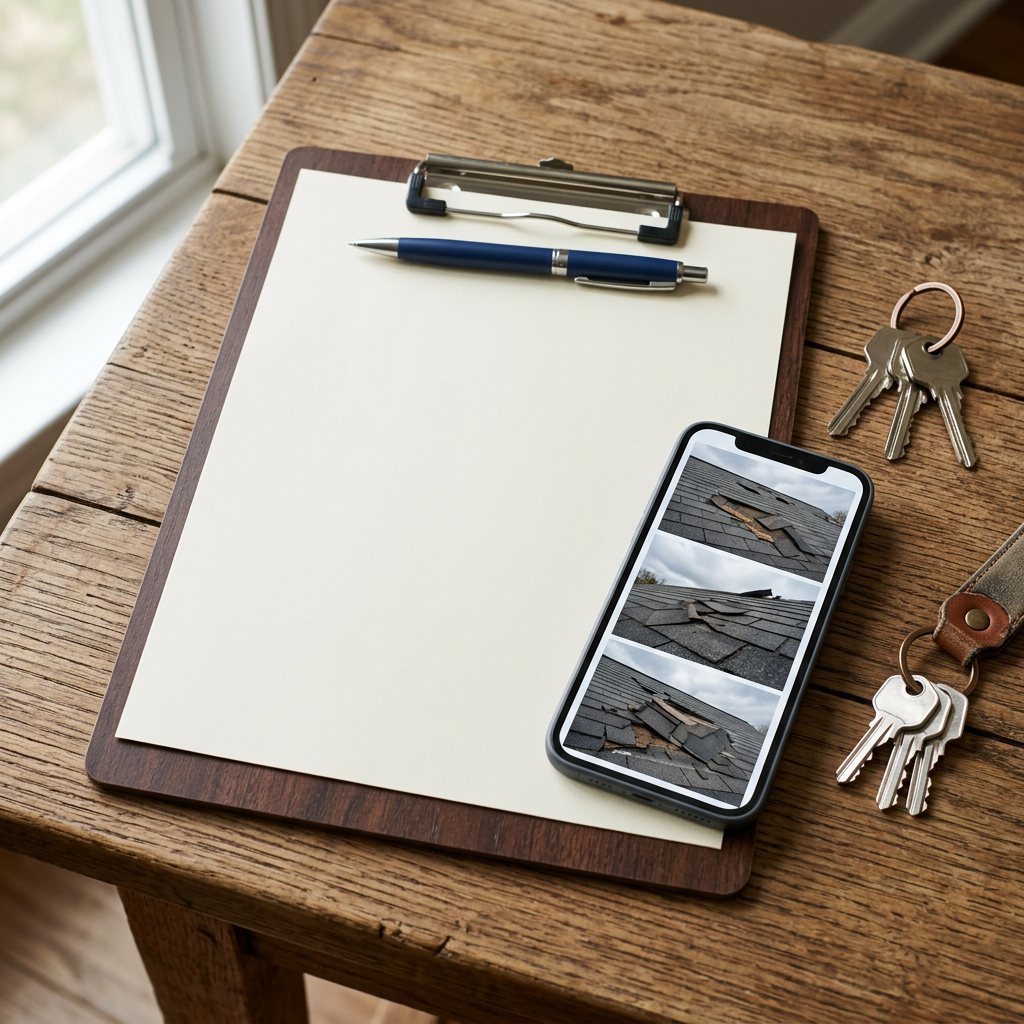
Then start photographing. Use your phone, take wide shots first so the room or roof is identifiable, then close-ups of every cracked tile, every wet patch, every piece of ceiling staining. Walk the yard and photograph fallen branches, hail debris, and any damaged outbuildings. Save the date and time stamp by checking that location services are switched on. Pull the Bureau of Meteorology severe weather warning for your suburb and screenshot it. This single step prevents more disputed claims than any other.
If water is still entering the home, call a licensed emergency roof repair team to install a tarp. Keep the invoice. Reasonable make-safe costs are covered under almost every Australian home insurance policy.
Notifying Your Insurer Without Hurting Your Claim
You should lodge the claim within 24 to 72 hours. Use your insurer's online portal if you can, because it creates a written record straight away. If you call the hotline, write down the operator's name, the time and your claim reference number.
On the call, be factual and brief. Describe what happened in plain language: the date, the time the storm hit, what you saw and heard, and what damage you can see now. Avoid speculating about cause. The phrase "I think the tiles were a bit old anyway" can sit on your file forever and reappear in a denial letter six weeks later. If you do not know the cause, say so.
Ask three questions before you hang up:
- What is my excess on this claim, and is it waived for emergency make-safe work?
- Can I appoint my own licensed roofer for the assessment quote?
- What is the timeframe for an assessor to attend, and what should I do until then?
Most insurers will dispatch an assessor within 5 to 10 business days during a major event. In the meantime, do not throw anything away. Damaged tiles, wet insulation and broken downpipes are evidence. Stack them in the garage, photograph them in place first, and label them with the room they came from.
The Wear-and-Tear Trap (and How to Beat It)
The single most common reason a Sydney roof claim is reduced or refused is the wear-and-tear exclusion. Insurers run their own assessor up the roof, find a perished flashing, a cracked ridge cap or a rusted valley iron, and class the damage as pre-existing rather than storm-caused.
The defence is documentation that pre-dates the storm. If you have ever booked a roof inspection, kept a roof maintenance receipt or had your gutters cleaned, dig out the paperwork. A signed inspection report from the previous 12 months effectively closes the wear-and-tear argument before it starts.
If you have nothing, get an independent licensed roofer onto the property before the insurer's assessor arrives. A second written opinion from a roofer who is not paid by the insurance company carries real weight, especially when the two reports are read side by side. We do these reports every winter for clients across Sydney's North Shore and the Hills, and they routinely shift settlements by tens of thousands of dollars.
What a Strong Claim Pack Looks Like
When you submit your claim, send the insurer a single tidy pack rather than a drip feed of emails. A clean pack signals a serious claim and forces the assessor to engage with the evidence properly.
Include the following:
- Cover letter with your claim number, address, date of loss and a one-paragraph summary of the event.
- Bureau of Meteorology warning for the date and suburb (screenshots are fine).
- Dated photos: 6 to 12 wide shots, 10 to 20 close-ups.
- Independent licensed roofer report describing cause, scope and recommended repair method.
- Itemised quote from the same roofer with materials and labour separated.
- Make-safe invoice (tarping, emergency plumbing if water entered the meter box).
- Any prior maintenance or inspection paperwork that proves the roof was sound before the event.
For the engineering side, the Australian Building Codes Board sets the minimum repair standards your roofer must follow, and the AS 1684 framing standard applies to any structural rebuild work. Quoting these in your claim pack lifts it out of the "tradesman versus assessor" mud and into a defensible technical position.
Choosing the Roofer Who Will Actually Do the Work
Insurers in NSW will not settle a roof claim with an unlicensed contractor. Under NSW Fair Trading rules, any residential roofing work valued over $5,000 requires a licensed builder or roofing contractor and a written contract. Make sure your chosen roofer holds:
- A current NSW Fair Trading licence covering roofing or general building.
- Public liability insurance of at least $20 million.
- Home Building Compensation cover for any contract over $20,000.
The roofer should be willing to talk directly to your insurance assessor on site. That conversation, with both technicians on the roof at the same time, is the fastest way to lock in scope and avoid weeks of email back-and-forth. Our team handles insurance roof repairs across Greater Sydney every winter and we attend assessor visits as standard, because every claim we have ever lost time on has involved an assessor visiting alone.
What to Do If Your Claim Is Denied or Underquoted
A first-pass refusal or low offer is not the end of the road. Insurers expect a percentage of policyholders to push back, and the ones who do almost always recover more.
Step one: request the assessor's report in writing. You are entitled to it under the General Insurance Code of Practice. Read it carefully. The denial usually rests on one or two specific findings, and those findings are often what your independent roofer report directly contradicts.
Step two: lodge a formal internal dispute through your insurer's complaints team. They must respond within 30 calendar days. Attach your independent report, your maintenance history and a written reply to each point in the assessor's report.
Step three: if internal review fails, escalate to the Australian Financial Complaints Authority. AFCA is free for consumers, and its determinations are binding on the insurer up to a generous monetary limit. Sydney homeowners win a meaningful share of roof storm cases at AFCA every year, and the process itself takes 4 to 6 months without legal fees.
Pre-Winter Steps That Save the Next Claim
The best roof claim is the one you never need to lodge. Before June, a quick pre-winter check prevents most of the conditions that turn a small storm into a five-figure repair.
- Clear gutters and downpipes so heavy rain has somewhere to go.
- Inspect ridge capping and flashings for cracks. Replace any that are powdering.
- Check tiles for movement, especially on the windward side of the house.
- Cut back overhanging branches that whip the roof in southerly winds.
- Test the safety switch and lighting circuits in any room with previous water staining.
If you are unsure where to start, our team carries out pre-winter inspections across the North Shore, the Northern Beaches, the Hills and the Central Coast. Booking ahead of the season also means we can attend within 24 hours when the next east coast low arrives.
Frequently Asked Questions
Damaged Roof After the Last Storm?
Get a licensed independent inspection report your insurer cannot ignore. We attend Sydney-wide, usually within 24 hours.