
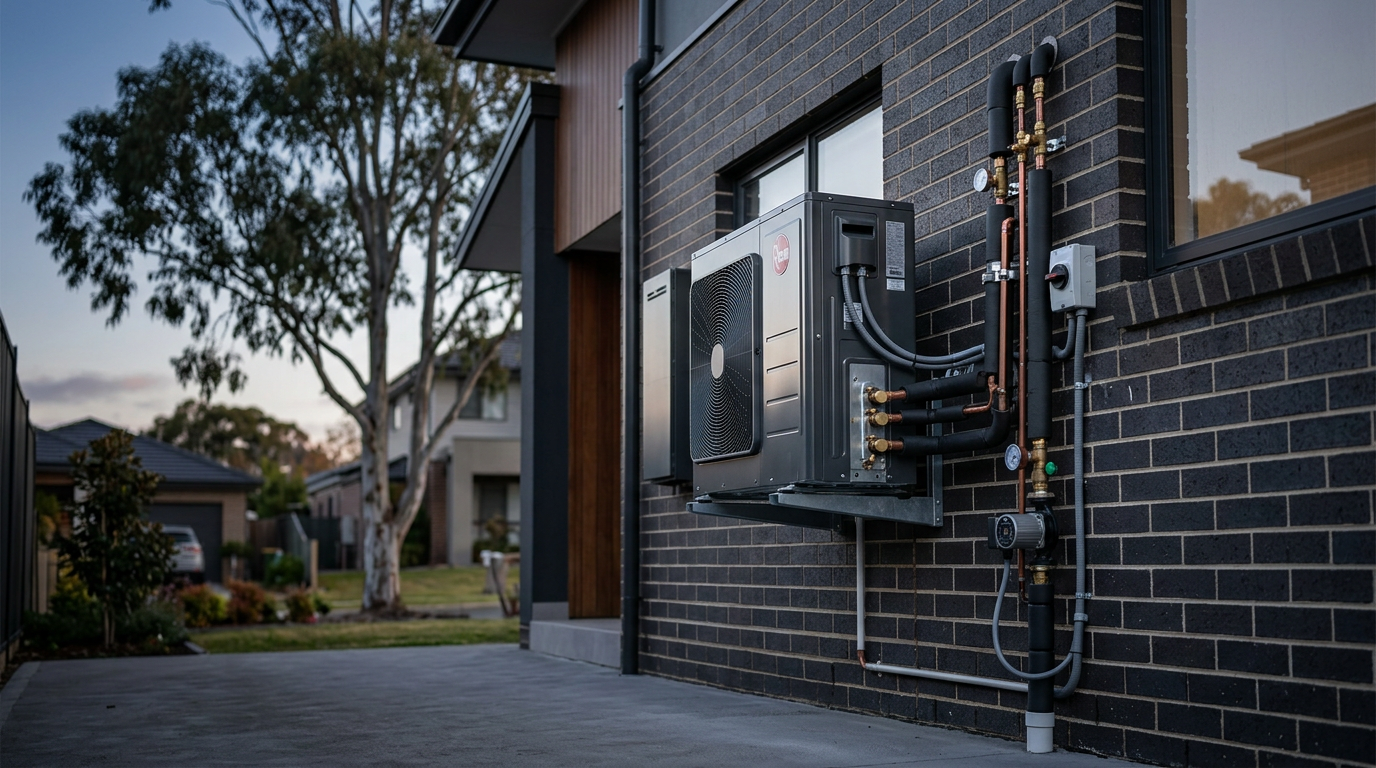
Heat Pump Hot Water in Sydney: 2026 Rebates, Costs & Switching from Gas
By the team at Tradetek Solutions
The first proper cold snap hit Sydney this week, and the phones at our Eastern Suburbs office have not stopped. Half the calls are the usual winter chorus of failing electric tanks and gas units that never quite came back from last winter. The other half are something new for 2026: homeowners asking whether the heat pump their neighbour just installed is actually worth the hype, and whether the NSW rebate is real.
Short answer: the rebates are real, the savings are real, and for most Sydney households a heat pump hot water system is now the most cost-effective replacement when an old gas or electric tank gives up. The longer answer, which is what this guide is for, is that heat pumps are not all the same, the switchboard usually matters more than the brochure admits, and a bad install will cost you the savings inside three winters.
Below is the practical 2026 buyer guide we wish more Sydney homeowners had before signing a quote. It covers how heat pumps behave in our winters, what the federal and NSW rebates actually pay, real installed pricing, what your switchboard needs, and the questions to ask before you commit. If you would rather skip ahead to a tailored quote, the team at Tradetek hot water can size and price the right unit for your home.
Why Heat Pumps Are Suddenly Everywhere in Sydney
Two things changed in 2024 and 2025 that flipped the maths. First, gas prices kept climbing while the East Coast network shifted onto more expensive supply contracts. Second, the federal government rolled the Cheaper Home Batteries scheme alongside an expanded Small-scale Renewable Energy Scheme, and NSW layered the Peak Demand Reduction Scheme on top. For a 270L heat pump install in Sydney, those two rebates can knock between 1,500 and 2,800 dollars off the upfront price.
At the same time, every gas storage tank installed in Sydney during the last housing boom is now hitting the end of its useful life. When those units fail in June or July, homeowners are choosing between a like for like gas replacement at full retail, or a heat pump at close to the same out of pocket cost with much lower running bills. Most are picking the heat pump.
You can read the official scheme rules on the federal Renewable Energy Target page and the NSW Energy Savings Scheme page. Both apply to standard residential heat pump installs across the Sydney metro area.
How Heat Pumps Actually Work (in Plain Sydney English)
A heat pump hot water system is, simply, a small reverse-cycle air conditioner aimed at a tank of water. It pulls warmth out of the surrounding air, concentrates it, and dumps that warmth into the cylinder. Because it moves heat rather than generating it, a heat pump uses roughly a quarter of the electricity a standard resistive electric tank would use to heat the same amount of water.
In Sydney's climate zone, that ratio holds up well. Our coldest reliable winter mornings sit around 4 to 7 degrees in inner suburbs and slightly lower out west. Modern heat pumps are rated to keep working efficiently down to minus 7, with some premium models pushing minus 10. There is no Sydney suburb where a properly sized heat pump will fail to heat water in winter. There are plenty of Sydney installs, though, where the unit was undersized or positioned badly, and the family ran out of hot water on a Wednesday morning in July.
The Sydney Climate Reality Check
Coefficient of Performance, or COP, is the number to watch on the spec sheet. A COP of 4 means the unit produces 4 kilowatt hours of heat for every kilowatt hour of electricity drawn. At 7 degrees ambient, most quality heat pumps in Sydney still deliver a COP between 3.5 and 4.2. At 2 degrees, that drops to around 2.8 to 3.4. Either is still dramatically cheaper to run than a resistive electric tank or instant gas.
What the 2026 Rebates Actually Pay
There are two main rebates a Sydney homeowner can stack on a heat pump install in 2026:
- Federal STCs (Small-scale Technology Certificates) under the Small-scale Renewable Energy Scheme. The number of certificates depends on the model and your climate zone. For a 270L heat pump in Sydney, you can expect between 25 and 40 STCs, currently trading at roughly 38 to 40 dollars each.
- NSW PDRS and ESS (Peak Demand Reduction Scheme and Energy Savings Scheme). These reward installs that shift load away from peak grid hours. For a household replacing electric or gas storage with a heat pump, the combined NSW incentive typically returns 400 to 1,200 dollars depending on the system.
Stacked together, a typical Sydney homeowner replacing a 270L electric tank with a 270L heat pump in June 2026 sees between 1,500 and 2,800 dollars come off the upfront install price. The installer or an Accredited Certificate Provider (ACP) does the paperwork and discounts the rebate at quote time, so you do not pay full price and wait for a refund.
The catch: you must use an installer registered to create the certificates, the equipment must be on the approved GEMS register, and the install must follow the scheme's installation standard. Any quote that does not break out the rebate clearly is one to question.
Real Installed Costs in Sydney, June 2026
Prices below are typical supplied and installed ranges for a straightforward Sydney replacement (existing tank position, no major switchboard rework). Difficult access, switchboard upgrades or relocations push the upper end higher.
- Entry-level 250L heat pump: 3,200 to 3,900 dollars installed, around 1,400 to 2,200 dollars after rebates.
- Mid-tier 270L heat pump (most common): 3,800 to 4,800 dollars installed, around 1,800 to 3,000 dollars after rebates.
- Premium 315L heat pump with low-noise compressor: 4,800 to 6,000 dollars installed, around 2,600 to 3,800 dollars after rebates.
- Switchboard upgrade if required: 1,200 to 2,500 dollars on top, sometimes attracting partial rebate support.
- Removing and disposing of an old gas tank or instant unit: 250 to 500 dollars, includes capping the gas line.
Quotes that come in well under these ranges usually leave something out: switchboard work, tempering valve replacement, tray and overflow, or relocation labour. Always ask what the price assumes.
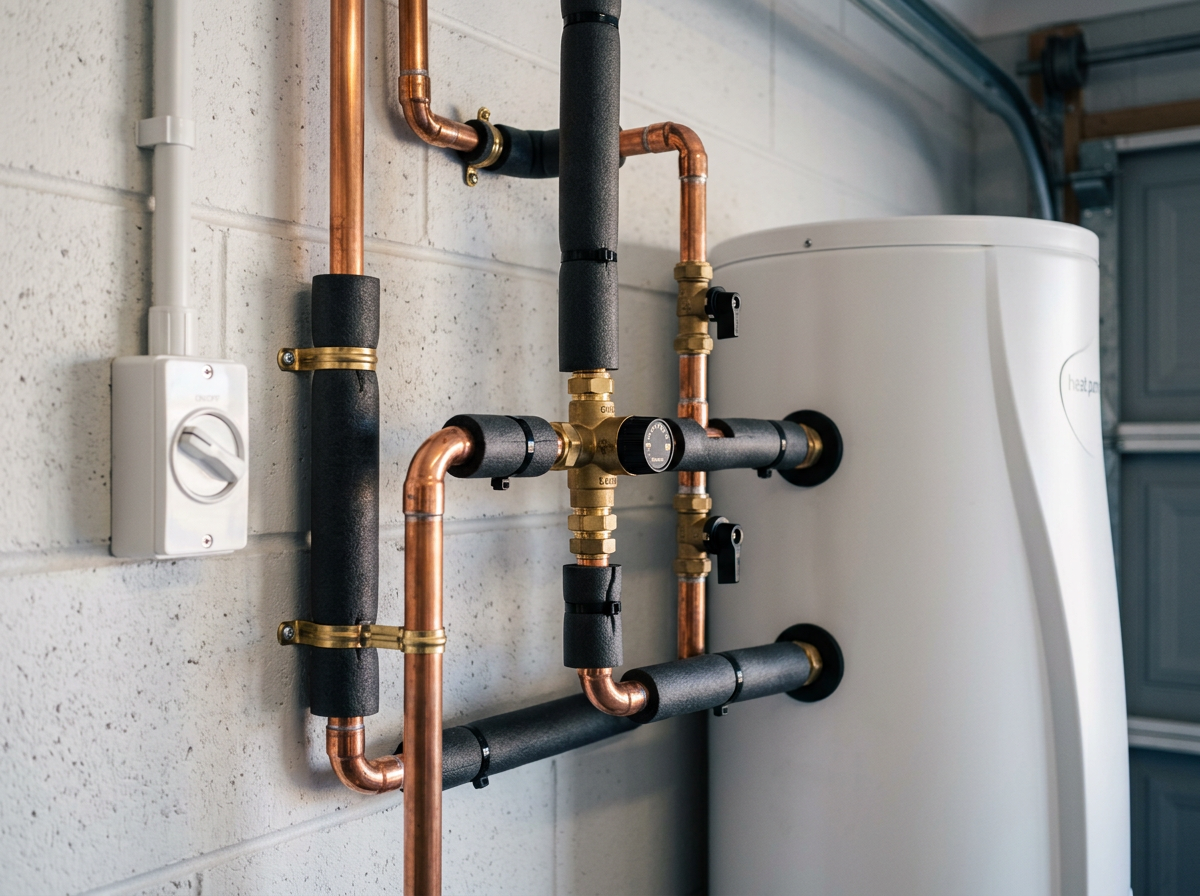
The Switchboard Question Most Quotes Skip
Heat pumps draw modest current most of the time, but the start-up surge from the compressor can trip an old or marginal circuit. In Sydney's older housing stock, that is a real risk. We see four switchboard situations come up again and again.
- Modern board with spare capacity. No work needed. The electrician adds a dedicated breaker and runs the cable to the heat pump location.
- Modern board, no spare slots. A small sub-board or breaker shuffle is usually enough. Budget 300 to 600 dollars.
- Older ceramic-fuse board with no RCD. NSW wiring rules now require RCD protection for new circuits. A partial or full switchboard upgrade is the realistic path. Budget 1,200 to 2,500 dollars.
- Three-phase property with single-phase heat pump. Easy, but worth checking phase balance if you also have a heat pump pool or EV charger.
A quick board inspection takes a licensed electrician 20 minutes and saves you from a nasty surprise on install day. Our team always combines the electrical check with the hot water quote so the price is the price.
Sizing: Get This Right or Pay for It in July
Sizing a heat pump is not the same as sizing an electric tank, because the recovery rate is slower. A 250L electric tank can reheat a depleted cylinder in roughly 90 minutes. The same 250L heat pump takes closer to 3 hours in Sydney's winter conditions. That changes how you should size for back to back morning showers.
A simple Sydney sizing guide we use:
- 1 to 2 people: 200L to 250L is usually enough.
- 3 to 4 people: 270L is the sweet spot for most Sydney households.
- 5 to 6 people: 315L, or a 270L with a more aggressive heating schedule.
- Big family, teenagers, pool: 315L plus, or twin units in parallel.
If your household runs two morning showers and a load of washing all before 8am, lean one size up. The extra 200 dollars upfront avoids a cold final shower in mid winter.
Switching from Gas: What Changes in the Home
Moving from gas hot water to electric heat pump has flow-on effects. Some are wins, some need planning.
The Wins
- You can cancel the gas supply if hot water was the only gas appliance, saving the daily supply charge (around 280 to 380 dollars a year in Sydney).
- Hot water bills usually drop 50 to 70 percent compared with instant gas, more with solar.
- No more gas safety servicing on the unit, no flue clearance issues, no carbon monoxide risk from the hot water side.
The Planning
- If you also have a gas cooktop or gas heater, keep the supply and just decommission the gas at the hot water unit. A licensed gas fitter caps the line.
- Heat pumps make a low compressor hum. Position the outdoor unit away from bedroom windows and neighbour boundaries to stay inside the NSW noise rules.
- Cylinders are taller than equivalent gas tanks. Measure the existing space before you commit.
Common Sydney Install Mistakes (And How to Avoid Them)
These are the recurring problems we see when homeowners ask us to fix someone else's install.
- Wrong tempering valve. A heat pump must deliver water at 60 degrees from the tank and 50 degrees at the tap. Old valves rated for gas tanks sometimes get reused and fail within a year.
- No condensate drain. Heat pumps produce condensate while running. Without a drain, the tray fills and the unit sits in standing water, accelerating corrosion.
- Compressor in a hot box. Mounting the outdoor unit inside a sealed cupboard or against a north-facing wall in direct sun kills efficiency.
- No isolator switch. NSW wiring rules require an accessible isolator within arm's reach of the unit. Cheap installs skip this.
- Missing the sacrificial anode service. Like any tank, the anode needs checking every 5 years. Sydney's water is moderately hard, and a neglected anode shortens cylinder life by years. Our hidden water leaks guide covers the warning signs of a tank that has started to corrode internally.
Heat Pump vs the Alternatives in 2026
For most Sydney homes replacing an old system this winter, the realistic shortlist is heat pump, instant gas or solar with electric boost. Here is how they compare.
- Heat pump: Cheapest to run after rebates. Best fit for households with rooftop solar. Slower recovery, needs sizing care.
- Instant gas: Fast recovery, endless hot water. Highest running cost in 2026 and rising. No rebate. Locks you into a gas supply.
- Solar with electric boost: Lowest running cost in the right roof orientation, but high upfront cost and slower payback than a heat pump. Best suited to north-facing roofs without shade.
- Standard electric tank: Cheap to install, most expensive to run. Only makes sense as a temporary fix in a rental where the owner is paying for hot water.
If you are weighing batteries and hot water together, the analysis in our home solar battery rebate guide covers how to think about the two rebates side by side. The short version: solve hot water first.
What a Good Quote Looks Like in 2026
A clear heat pump quote should list:
- The brand, model and tank size, with a link or reference to the GEMS-approved listing.
- The retail price, the federal STC rebate, the NSW PDRS/ESS rebate and the net out of pocket cost, line by line.
- Installation scope: removal of old unit, gas cap if applicable, tempering valve, isolator switch, tray and overflow, condensate drain.
- Switchboard scope: dedicated breaker, RCD where required, sub-board if needed.
- Warranty: cylinder warranty (usually 7 to 10 years), parts (usually 5 years), and the installer's own workmanship warranty.
If a quote is a single line item with no rebate breakdown, ask for the detail before you sign. Reputable installers, including the team at Tradetek Solutions, are happy to walk you through every line. You can also cross-check the basics against the NSW Fair Trading plumbing guidance.
When to Book a Replacement (Without Rushing)
June and July are the worst months to be without hot water in Sydney, and they are also the busiest. If your existing system is showing any of the signs below, get a quote in the next fortnight rather than waiting for it to fail on a Sunday night.
- Lukewarm water in the morning even when no one used it overnight.
- Rust-coloured water from hot taps only.
- Water pooling under the tank or rust trails down the cylinder.
- The unit is over 10 years old (gas storage) or over 12 years old (electric storage).
- Gas bills that keep climbing despite no change in usage.
For the full winter checklist, the winter hot water system checklist for Sydney homes walks through the homeowner checks. For underlying leak risk, our leak detection service can rule out concealed losses before you commit to a new system.
Frequently Asked Questions
Get a Real Heat Pump Quote for Your Sydney Home
Tradetek Solutions handles every step: sizing, switchboard check, rebate paperwork, gas cap and install. One quote, both trades, no rebate guesswork.
Related Services
Related Articles
Winter Hot Water System Checklist for Sydney Homes
Pre-winter checks before you decide repair, replace or upgrade
Home Solar Battery Rebate in Sydney (2026 Guide)
How to think about hot water and battery rebates together
How to Find Hidden Water Leaks at Home
Rule out concealed losses before committing to a new system