
Roof Ventilation & Winter Condensation in Sydney Homes
By the team at Tradetek Solutions
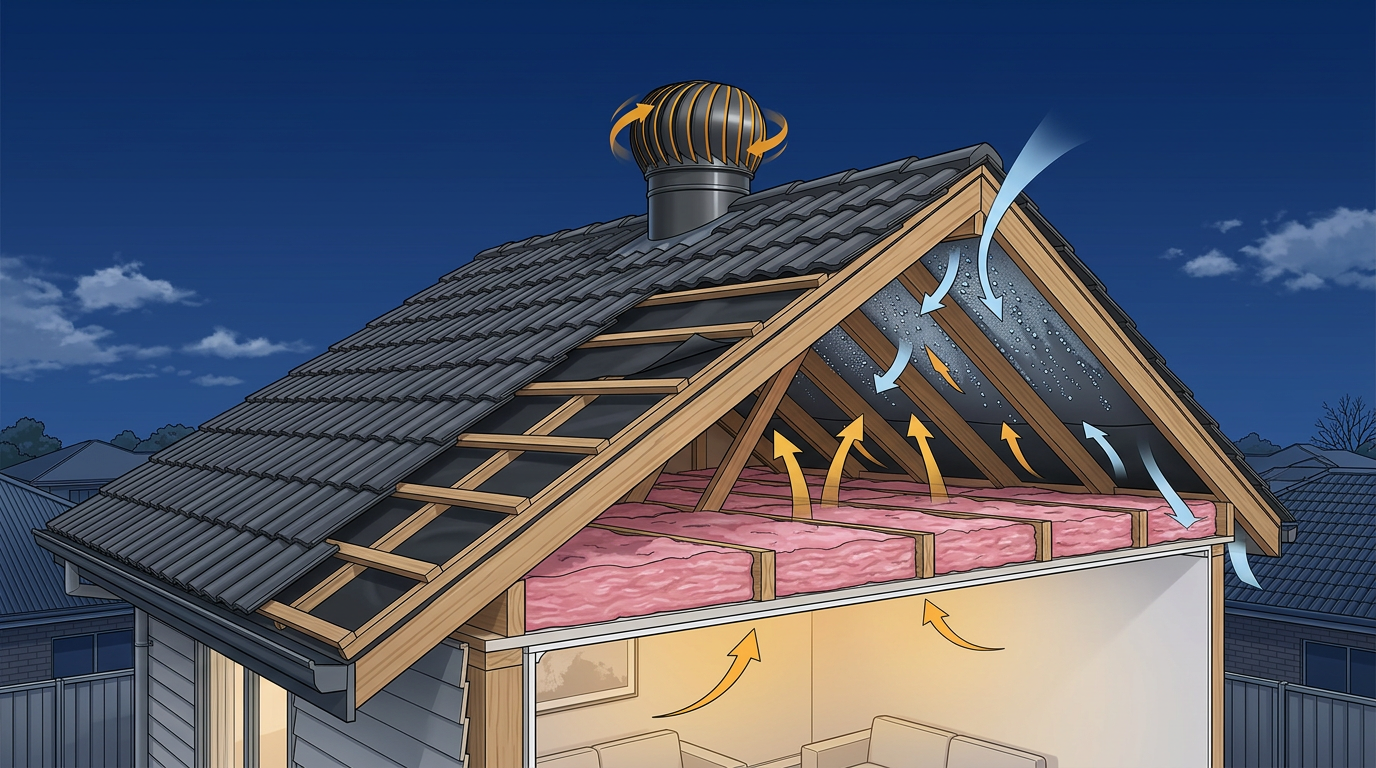
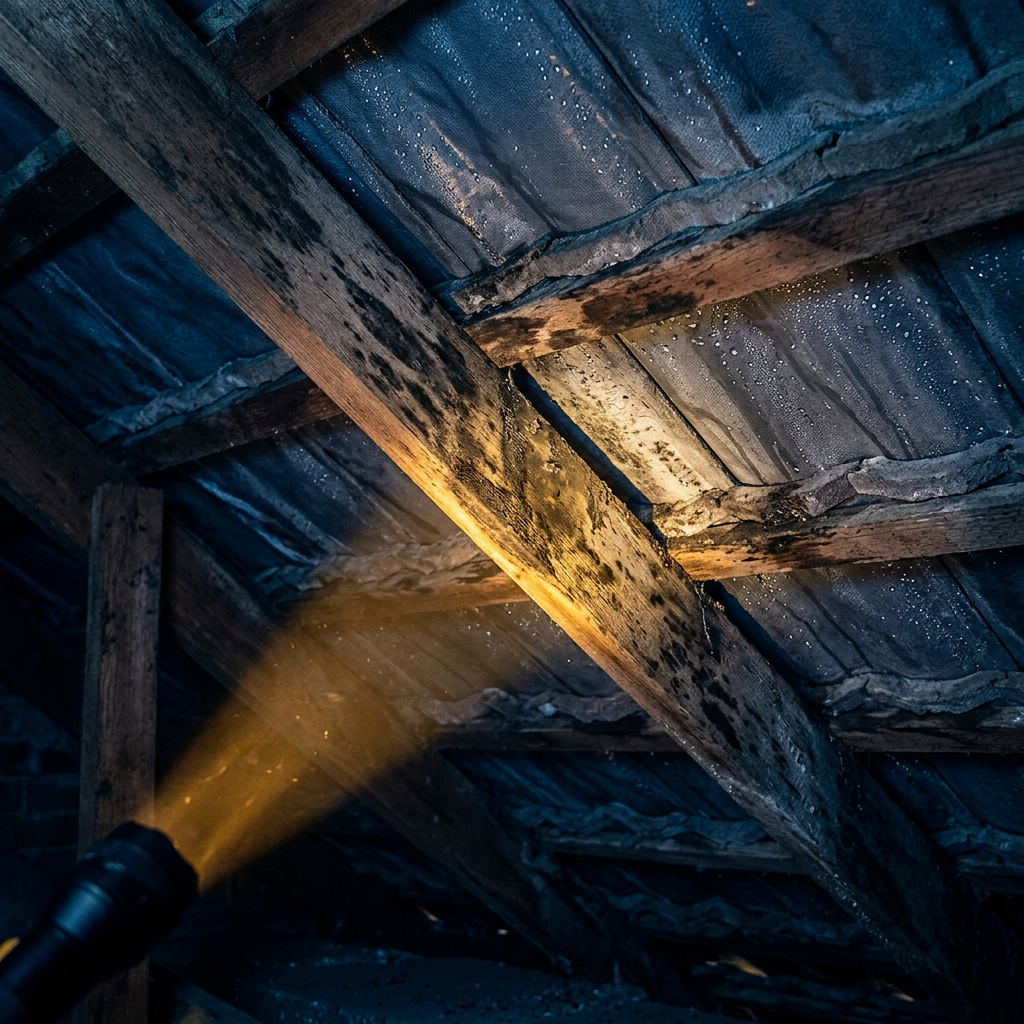
The first really cold morning of a Sydney winter has a smell. You climb into the roof cavity to chase a noise, or to retrieve the Christmas tree, and the air hits your face like the inside of a damp tent. Timber that should be dry is slick. Pink insulation batts that used to sit fat between the joists look pressed flat and the sarking above your head is dark with water beads. Nothing has leaked. The roof has been doing exactly what a sealed-up Sydney home does between June and August: turning every shower, every pot of pasta and every gas heater hour into liquid water on the inside of the tiles.
Roof condensation is the quiet failure mode of modern Australian housing. It does not announce itself with a stain on the ceiling or a puddle on the floor. It rots rafters from above, kills the R-value of your insulation and grows the kind of slow black mould that an indoor air quality test picks up months before your nose does. This guide explains why Sydney homes sweat in winter, what the National Construction Code now requires, and the ventilation work that ends the cycle for good.
Why Sydney Roof Cavities Sweat in Winter
Three things have to line up for water to form inside a roof. Sydney winter delivers all three at once.
The first is a temperature gap. Bureau of Meteorology long-term averages from Observatory Hill show Sydney's overnight winter minimums sitting between 7 and 9 degrees, with inland suburbs like Penrith and Camden routinely dropping below 5. The underside of a tile or metal roof on a clear winter night is colder again because it radiates heat to the sky. A roof cavity at 4 degrees against a heated living space at 21 degrees is a textbook condensing surface. See the Bureau of Meteorology Sydney climate averages for the underlying data.
The second is moisture supply. A four-person Sydney household releases between 8 and 12 litres of water vapour into the air every day from showers, cooking, dishwashing, drying clothes, breathing and unflued gas heating. Most of that vapour is invisible. It diffuses upward through downlight cut-outs, around exhaust fan housings, through the manhole gasket and through every cable penetration in the ceiling.
The third is a sealed cavity. Modern Sydney builds, and most renovations in the last 15 years, have closed up the eaves with insect mesh or solid soffit lining and laid foil-backed sarking that does not breathe. The cavity now has a moisture inlet (the ceiling) and no outlet. Physics does the rest.
The NCC 2022 Rules That Changed Everything
Until recently, condensation was treated as an occupant problem, something you dealt with by opening a window. That changed when the Australian Building Codes Board released the National Construction Code 2022. Part 10.8 now contains mandatory condensation management provisions for new and re-roofed Class 1 dwellings across the country.
For Sydney, which sits in NCC climate zone 5, three requirements matter most.
- Vapour-permeable sarking. The membrane under the tiles or metal sheeting must be a Class 4 vapour-permeable product. The old foil-faced reflective sarking is a vapour barrier, which means moisture rising into the cavity has nowhere to escape and condenses on its underside.
- Minimum cavity ventilation. Roof spaces must include defined intake and exhaust openings sized to the floor area of the building. The numbers are small in absolute terms (a few hundred square centimetres) but the requirement to have both intake and exhaust is what most older Sydney homes fail.
- Exhaust fan discharge. Bathroom, laundry and kitchen exhaust fans must discharge directly to the outside, not into the roof cavity. A fan that vents into the roof space is a humidifier pointed at your rafters.
The code only forces compliance on new builds and substantial re-roofs. Every existing Sydney home sits outside the rules. That is also why the problem is so widespread: hundreds of thousands of houses were built to a standard that did not require ventilation, and the building stock has only got tighter as homeowners installed insulation, sealed gaps and cranked up heating to manage rising power bills.
What an Under-Ventilated Roof Actually Costs You
Most Sydney homeowners discover a condensation problem when something else fails. The ceiling sags. A bathroom downlight starts dripping. A pest inspector for a sale flags structural mould. By that point the damage has been compounding for years. Four costs are doing the compounding.
Insulation collapse. Glass-wool and rock-wool batts lose almost all of their thermal performance once they are wet. CSIRO building physics work has shown R-value reductions of 40 to 60 percent in batts that have absorbed even moderate cavity moisture, and the loss is permanent because the fibres compact as they dry. You paid for R5 and you are running on R2.
Timber decay. Sustained moisture above 20 percent in pine framing is the threshold for fungal decay. A roof cavity that hits dew point most winter nights is sitting at or above that figure for weeks at a time. Decay is slow but it is one-way. By the time a rafter softens enough to feel it with a screwdriver, you are looking at structural repair, not maintenance.
Mould and indoor air quality. NSW Health publishes clear guidance that even small areas of indoor mould can trigger asthma, allergic reactions and respiratory infection, especially in children and older adults. Their indoor mould fact sheet recommends removing the moisture source first because cleaning visible mould without fixing the cause is a six-month reset, not a fix.
Insurance disputes. Most home and contents policies exclude damage caused by gradual deterioration, including condensation, mould and rust. A leaking roof from a storm is covered. A rafter rotted by ten winters of unaddressed condensation is not. Insurers increasingly cite the NCC condensation provisions when they decline claims on homes built or renovated after May 2023.
How to Tell Condensation Apart From a Leak
Before you call anyone, a five-minute inspection in the right weather window will tell you which problem you have.
Look at the timing
A leak shows up during or immediately after rain. Condensation shows up overnight in cold dry weather and is often worst on the morning after a clear, still winter night with no rain at all. If the wettest day in the cavity is the day after the cleanest sky, condensation is the cause.
Look at the pattern
A leak follows a single path: down one rafter, along a batten, into a defined stain. Condensation coats the underside of the sarking evenly across whole bays. Wet patches in the insulation sit directly above wet rooms (bathroom, laundry, kitchen) because that is where the moisture is rising from. If wet batts trace the floor plan below them, condensation is the cause.
Look at the timber
A leak stains timber in a darker, defined band. Condensation creates fine black spotting across whole rafter faces, the kind of pattern that looks like spray paint at a distance. If the staining is uniform across multiple bays, condensation is the cause. A licensed roofer can confirm this in 20 minutes with a moisture meter and a thermal camera. If you suspect a leak as well, our roof inspection service covers both checks in the same visit.
The Permanent Fix Sequence
When a Sydney homeowner books a licensed roofer for a sweating cavity, this is the workflow that ends the problem. Skipping any step typically means doing the next one twice.
- Cold-weather cavity inspection. A roofer enters the space on a cold morning, takes moisture readings on the rafters and sarking, photographs staining patterns and measures the existing intake and exhaust area. The report tells you whether you have a condensation problem, a leak, or both. Book this through our roof maintenance visit.
- Moisture-source control. Bathroom and laundry exhaust fans get re-ducted through the roof to outside terminations. Downlight penetrations get sealed with rated covers or swapped to integrated LED units. The ceiling manhole gets a closed-cell gasket. Indoor humidity drops by 10 to 20 percent before any roof work happens.
- Eaves intake vents. Continuous slot vents or punched-soffit panels are added along both long sides of the house. Intake low and exhaust high is the rule. Without low intake, no high exhaust can do its job.
- High exhaust. Whirlybirds, a ridge vent or paired gable vents are sized to the cavity volume. As a working rule, intake area should match or exceed exhaust area, and the two must sit on opposite faces of the cavity so air actually crosses the space.
- Sarking review. If the existing sarking is non-permeable foil and the roof is due for restoration anyway, swapping to a vapour-permeable Class 4 membrane during the next re-roof is the long-term fix. Read more about what is involved in a full roof restoration or a planned Colorbond versus tile re-roof.
- Insulation triage. Wet or compressed batts are removed and replaced. Dry batts are lifted, fluffed and re-laid clear of downlight covers and any electrical cable that needs heat dissipation. Read more about safe layout in the roof insulation service page.
- Verification visit. A second cavity inspection one cold month later confirms dry timber, dry sarking and a cavity that smells of dust rather than damp earth. Keep the moisture-meter readings and photos as evidence for any future insurance claim.
What You Can Do Tonight (and What to Leave Alone)
There are three useful things any Sydney homeowner can do this week without calling a tradesperson, and three common mistakes worth avoiding.
Helpful actions:
- Run bathroom exhaust fans for 20 minutes after every shower, not just during. Most fans clear less than 50 percent of shower steam during the shower itself.
- Lid your pots when cooking and run the rangehood on full through to the end of the steam, not the end of the cooking.
- Dry laundry outside or in a vented dryer. A single load of wet washing dried indoors releases two to three litres of water vapour into the house.
Common mistakes to avoid:
- Do not open the ceiling manhole to ventilate the roof. It pulls warm indoor moisture straight into the coldest space in the house and accelerates the problem.
- Do not install a single whirlybird without eaves intake. Without low intake the whirlybird draws air from the only path it can, which is the conditioned interior of your home.
- Do not bury wet insulation under fresh batts. The wet layer keeps decaying timber wet underneath and the new layer hides the evidence until something fails.
When to Bring in a Licensed Roofer
Roof cavity work in Sydney touches three regulated areas at once: roofing, electrical (for downlights and exhaust fans) and structural timber. A roofer holding a current NSW contractor licence is required for any work that disturbs the roof covering, sarking or structural battens. NSW Fair Trading maintains the public licence check service so you can verify any trade before they quote. Anyone offering to fit roof vents without that licence is working outside the law, and any insurance claim later will be rejected on the same grounds.
Bring a professional in when:
- You can see standing water beads on the underside of the sarking on more than one cold morning.
- Insulation batts above wet rooms are visibly compressed or stained.
- You can smell a damp, earthy odour in the roof space at any time of year.
- Ceiling cornices, downlight rims or bathroom architraves are showing brown spotting.
- Your home was built or last re-roofed before May 2023, and no one has ever inspected the cavity.
If a recent storm has also cracked tiles, lifted ridge capping or torn flashing, those issues compound a condensation problem because every new gap is another moisture pathway. See the related guide on claiming storm damage on insurance in Sydney and the storm damage repair service for the right order of works after a wet winter.
Sydney Suburb Patterns We See Every Winter
Geography matters. The same house design behaves differently across Sydney depending on aspect, tree cover and ambient humidity. A few patterns repeat every June.
- North Shore (Pymble, Gordon, Hornsby). Heavy tree canopy keeps roofs cooler and damper than the BOM averages suggest. Tile roofs with foil sarking show the worst condensation across the city.
- Inner West and Eastern Suburbs. Tight Federation and Californian-bungalow rooflines with tongue-and-groove eaves seal the cavity completely. Adding eaves vents alone resolves most cases.
- Hills District and Western Sydney. Larger newer homes with cathedral ceilings and downlight-heavy plans concentrate moisture rise points. Sealing penetrations is usually the first big win.
- Northern Beaches. Salt air corrodes metal vents fastest. Marine-grade stainless or coated whirlybirds are worth the upgrade, especially within 1 km of the coast.
Across all of those zones, the diagnostic order is the same: confirm the problem, control the moisture source, then balance the cavity airflow.
Closing Thoughts: Treat the Cavity as a System
A Sydney roof cavity is not a forgotten attic. It is the buffer between a heated, humid living space and a cold sky, and it works only when air can move through it. The homes that quietly fail in winter are the ones where everything else got upgraded (insulation, downlights, sarking, sealed eaves) without anyone asking how the moisture was meant to leave.
Fixing it is rarely glamorous work. Eaves vents, whirlybirds, ducted exhaust fans, a sealed manhole, and a vapour-permeable membrane the next time the roof comes off. None of it shows from the street. All of it adds 20 to 30 years to the structure underneath your tiles and removes a major hidden cause of the high winter power bills you have been blaming on the heater.
If you are not sure whether your roof is breathing, do not wait for a sagging ceiling to make the decision for you. A 30-minute cavity inspection in cold weather is the cheapest piece of preventive work in residential roofing.
Book a Winter Roof Cavity Inspection
We inspect the roof space, measure cavity moisture, photograph any condensation or mould pattern and quote the exact ventilation work your home needs. Licensed across Sydney.