
Stormwater Runoff Disputes in Sydney: Your Legal and Drainage Options (2026)
By the team at Tradetek Solutions
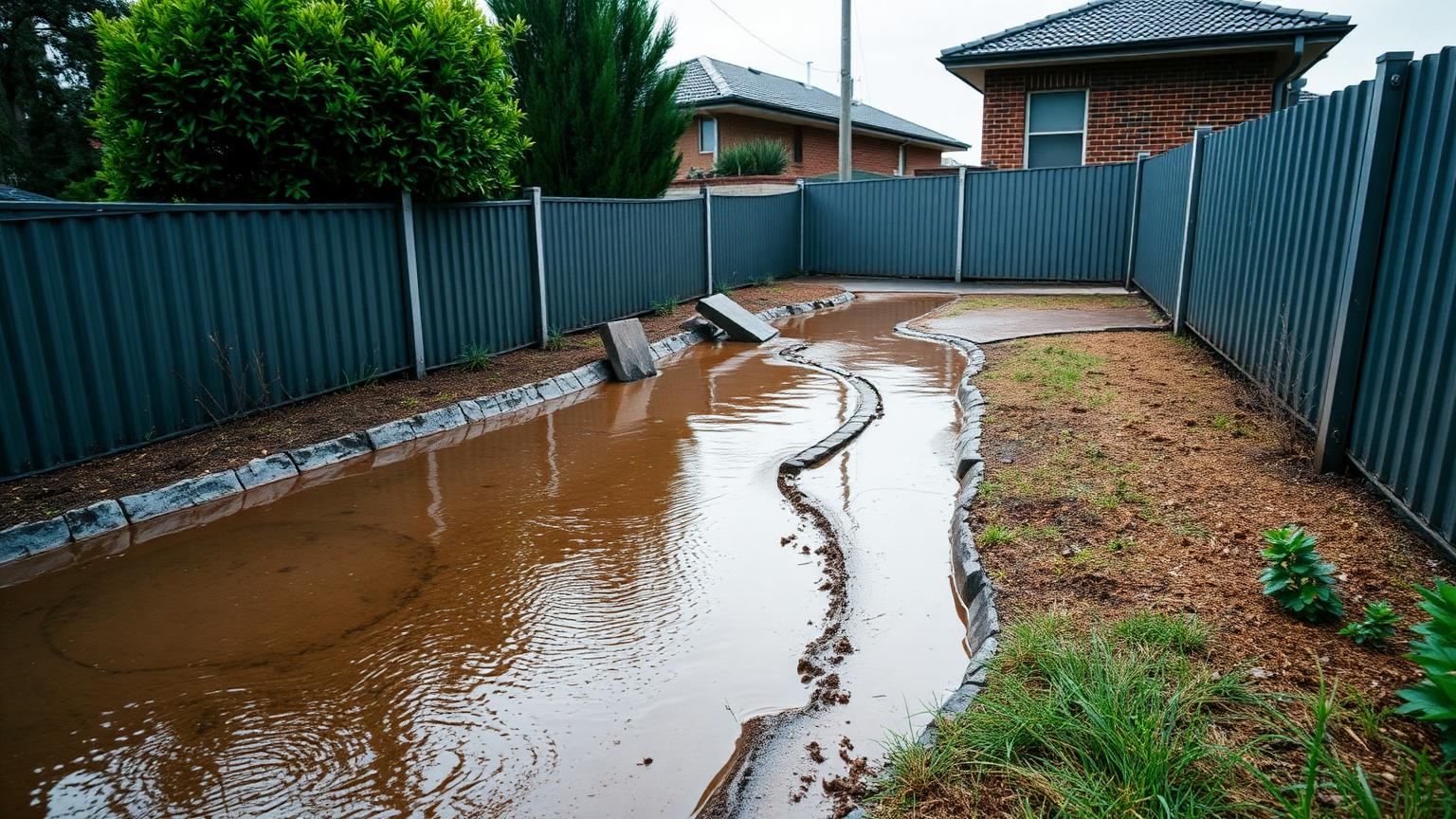
Every Sydney winter, the same call comes through. A homeowner in Hornsby, Hurstville, or Penrith stands at the back fence watching brown water sheet off the neighbour's regraded yard into theirs. The retaining wall is sagging, the lawn has died, the slab edge is wet, and a polite text message to next door has gone unanswered for two weeks. The question is always the same: what are my actual rights, and what does the fix look like?
Stormwater disputes are one of the most common civil matters local councils and the NSW Civil and Administrative Tribunal deal with each year. The law is clearer than most people think, but the practical fix almost always combines a drainage upgrade with a written agreement. This guide walks through both the NSW legal framework and the drainage solutions a licensed Sydney plumber installs to make the problem stop.
The team at Tradetek Solutions handles stormwater investigation and remediation across Sydney, the Central Coast and Newcastle.
Who Is Legally Responsible for Stormwater in NSW?
The starting rule under NSW law is simple. Every property owner is responsible for the stormwater that lands on their own land. That water must be discharged to a lawful point: the street kerb, an inter-allotment drainage easement, or the council stormwater main. You cannot legally concentrate runoff and direct it onto a neighbouring property.
The exception is natural overland flow. Water that runs across yards along its historic, natural path because of topography is not actionable. The trouble starts when an owner changes the flow: a new driveway, an extension, fresh paving, a swimming pool, a regraded backyard, or a blocked easement pit suddenly pushes water that used to soak in or flow elsewhere directly into the lower property.
The NSW Conveyancing Act 1919 and the common law of nuisance both give the affected owner a remedy when this happens. Most councils also have local stormwater drainage policies that require any new work — paving, hard surfaces over 25m², extensions, granny flats — to demonstrate it will not worsen runoff to neighbours.
Step 1: Document the Damage During the Rain Event
The single biggest mistake homeowners make is waiting for a dry day to take photos. The evidence that wins these matters is footage taken while it is actively raining. Stand under cover, record a 30-second video showing where the water is coming from and where it is going, then take five or six still photos. Repeat for every rain event. Note the date and the rough rainfall (the Bureau of Meteorology publishes daily totals for every Sydney suburb).
Photograph any damage as it appears: erosion trails, dead lawn, swollen skirting boards, lifting tiles, mould growth on the lower wall, or cracking in retaining walls. If a CCTV drain inspection later proves the neighbour's downpipe is the source, the dated footage corroborates the link. Without it, the matter becomes one homeowner's word against another's.
Step 2: Raise It in Writing With the Neighbour
NCAT and the local court will both ask whether you tried to resolve the matter directly before escalating. A short, polite letter or email — not a text — referencing the dates of recent rain events, attaching one or two photos, and asking for a meeting on site is usually enough. Keep a copy. If the neighbour engages, a written agreement to share the cost of a drainage upgrade is often the fastest path to a real fix.
Step 3: Lodge a Stormwater Complaint With Council
If direct contact fails, every Sydney council accepts stormwater complaints through its customer service portal. The council will inspect, identify whether the neighbour has done unapproved drainage work, and issue an order under section 124 of the Local Government Act if required. This step costs nothing and frequently resolves the matter without legal proceedings.
The NSW Fair Trading Community Justice Centres also offer free mediation between neighbours, which is often quicker than a council notice and avoids the relationship damage of a formal complaint.
Step 4: The Drainage Fixes That Actually Work
Legal action stops the cause; drainage work removes the symptom. In Sydney, four solutions cover almost every residential stormwater problem.
French drain along the affected boundary
A French drain is a slotted PVC pipe wrapped in geotextile and buried in a gravel-filled trench along the low side of the yard. It intercepts surface and shallow sub-surface water and pipes it to a lawful discharge point. Typical cost in Sydney is $2,800–$5,500 for a 10–15m run depending on access, slope and disposal.
Soakage pit or absorption trench
On sandy Northern Beaches and Sutherland Shire soils, a soakage pit lets stormwater infiltrate back into the ground rather than flow to the kerb. A standard 1500L pit installed at $1,800–$3,500 handles roof water from a typical extension. Clay soils in Western Sydney usually rule this option out — the water simply pools in the pit.
New kerb adaptor and council stormwater connection
The textbook fix when a property has never had a proper stormwater connection is a new kerb adaptor or council main connection. Expect $3,500–$7,000 for a 20m run, plus council application fees of $350–$650. A licensed drainer must perform the cut into the kerb under council inspection.
Inter-allotment easement upgrade
Older Sydney subdivisions often share a stormwater easement along the rear or side boundary. These pipes block, collapse or get built over surprisingly often. A CCTV drain inspection identifies the failure, and either pipe relining or excavation and replacement restores capacity. Costs run $4,000–$15,000 depending on depth and length.
Step 5: When the Neighbour Refuses to Cooperate
If the source of the runoff is on the neighbour's land and they refuse to act, the next step is either a stormwater easement application under section 88K of the Conveyancing Act, or a private nuisance claim in the Local or Supreme Court. Both require legal advice. In practice, the existence of a strong drainage report and documented rain-event evidence usually settles the matter before filing.
Insurance: What Home Policies Actually Cover
Most home and contents policies cover sudden storm damage but exclude gradual water ingress and damage caused by a neighbour's poor drainage. Always notify the insurer within 30 days of a damaging rain event, even if you are not yet sure whether to claim. A delayed notification gives the insurer grounds to deny.
Where the source is clearly a neighbour's modification, some insurers will pay the loss and then pursue the neighbour for recovery through subrogation. That is usually a better outcome than waiting on a civil case.
Frequently Asked Questions
Can I sue my neighbour for stormwater runoff in NSW?
Yes, in some circumstances. If they have changed the natural flow of stormwater and caused damage, you may have a claim in nuisance or under the Conveyancing Act. Most matters resolve through council, NCAT mediation or a new easement before reaching court.
Who is responsible for stormwater on my land?
You are. NSW law requires every owner to manage stormwater falling on their property and discharge it lawfully to the kerb, an easement, or the council stormwater system.
What does a stormwater drainage fix cost in Sydney?
French drains $2,800–$5,500. Soakage pits $1,800–$3,500. New kerb adaptor connections $3,500–$7,000. CCTV inspection $350–$550. Inter-allotment easement repair $4,000–$15,000.
Get a Drainage Assessment Before the Next East Coast Low
Sydney's wettest period runs March to August. A stormwater problem that is annoying in autumn becomes destructive in winter. The fastest path forward is a site visit, a CCTV inspection if an easement is suspected, and a written report you can use with the neighbour, the council and your insurer.
Call Tradetek Solutions on 0488 822 794 or visit our drainage solutions page to book an assessment. We service Sydney, the Central Coast and Newcastle, and provide written drainage reports suitable for council and insurance use.