

Your Complete Autumn Roof & Gutter Maintenance Checklist (2026 Update)
By the team at Tradetek Solutions
Updated June 2026
Refreshed with current 2026 Sydney pricing for gutter cleans and roof repairs, plus links to our latest winter guides on roof leak repair costs, winter roof condensation and storm damage insurance claims.
Every autumn, thousands of Australian homeowners face the same costly surprise: a roof leak they didn't see coming, a gutter that overflows during the first heavy rain, or storm damage to tiles that had been cracked for months without anyone noticing. The truth is, most roof and gutter failures aren't sudden — they're the result of months or years of neglected maintenance that finally catches up when the weather turns.
As March 2026 marks the beginning of autumn across Sydney, the Central Coast, Newcastle, and Lake Macquarie, this is the critical window to prepare your roof and gutters before winter's heavy rainfall, strong winds, and east coast lows arrive. The Bureau of Meteorology consistently identifies the April-to-August period as the wettest and most storm-prone for eastern NSW — and a poorly maintained roof is a direct pathway for water damage.
According to the Insurance Council of Australia, storm and flood damage claims cost Australian homeowners more than $2.5 billion annually, with roof and gutter failures consistently among the most common claim categories. The good news? Most of this damage is preventable with a straightforward autumn maintenance routine.
This comprehensive checklist covers everything you need to inspect, clean, and repair before winter hits — from gutter clearing and downpipe testing to tile inspection and tree management. Whether you're a hands-on homeowner or prefer to leave it to the professionals, this guide will help you protect your home and avoid costly emergency repairs.
Why Autumn Is the Most Important Season for Roof Maintenance
Australia's autumn season — March through May — occupies a unique position in the roofing maintenance calendar. Summer's intense UV radiation, heat expansion, and occasional storm activity have just finished stressing your roof materials. Meanwhile, winter's sustained rainfall, cold temperatures, and damaging winds are weeks away. This brief window is your best opportunity to identify and address problems before they escalate.
The Summer Damage You Might Not See
Summer heat causes metal roofing to expand and contract daily, which can loosen screws, pop rivets, and degrade sealant around flashings. On tiled roofs, UV exposure makes pointing compound brittle, leading to cracked bedding on ridge caps and hip tiles. These issues are often invisible from ground level but create direct pathways for water during heavy rain.
The 2025-2026 summer brought above-average temperatures to most of NSW, according to the Bureau of Meteorology's seasonal outlook, meaning roofing materials have been under greater thermal stress than usual. An autumn inspection catches these heat-related issues before they become winter leaks.
What's Coming in Winter
Eastern NSW typically experiences its heaviest and most sustained rainfall between May and August. East coast lows — intense low-pressure systems that develop rapidly off the coast — can deliver destructive wind gusts exceeding 100 km/h alongside torrential rain. A roof that's already compromised from summer damage and clogged with autumn leaves is a disaster waiting to happen.
By completing your maintenance in March or April, you ensure your roof is in peak condition before the storm season begins. You also avoid the rush — roofing professionals are typically busiest during and immediately after winter storms, when emergency call-outs spike dramatically.
Your Complete Gutter Cleaning Checklist
Gutters are the first line of defence in your roof's drainage system. When they're blocked, water has nowhere to go except over the edge — or worse, back under your roofing material. Here's how to ensure your gutters are ready for winter.
Step 1: Remove All Debris by Hand
Start at the end farthest from the downpipe and work toward it. Remove all leaves, twigs, bark, dirt, and sediment using a gutter scoop or gloved hands. For homes near eucalyptus trees, expect a heavy build-up of bark strips and seed pods. Properties near deciduous trees will have dense leaf accumulation through autumn.
Bag all debris as you go — don't push it off the roof onto garden beds, as gutter sediment often contains mould spores and decomposing organic matter that can affect garden health.
Step 2: Flush the Entire System
After removing solid debris, use a garden hose to flush remaining sediment through the gutter system. Start at the high end and work toward the downpipe. Watch carefully for:
- Standing water that doesn't drain — indicates incorrect gutter fall or a low point
- Water overflowing at joints — suggests corrosion holes or failed sealant at joins
- Slow drainage at the downpipe — likely a partial blockage in the downpipe itself
- Water leaking behind the gutter — the back edge may have separated from the fascia board
Step 3: Clear Downpipes
Blocked downpipes are the most common cause of gutter overflow. Disconnect the downpipe at the bottom (if accessible) and flush from the top with a hose. If water doesn't flow freely, you'll need a plumber's snake or high-pressure water jet to clear the blockage. For persistent blockages, particularly in underground stormwater connections, a professional hydro-jetting service can clear the entire drainage line.
Step 4: Inspect Gutter Condition
While the gutters are clean, inspect them for:
- Rust and corrosion — Look for brown staining, pitting, or holes in metal gutters. Surface rust can be treated, but perforated gutters need replacement.
- Sagging sections — Gutters should maintain a consistent fall toward the downpipe (approximately 1:500 gradient). Sagging indicates failed brackets or rotting fascia boards.
- Failed joints — Pop-riveted or soldered joints can fail over time. Look for daylight between gutter sections or water staining below joints.
- Bracket condition — Ensure all brackets are secure and spaced no more than 900mm apart. Loose brackets allow gutters to pull away from the fascia during heavy rain.
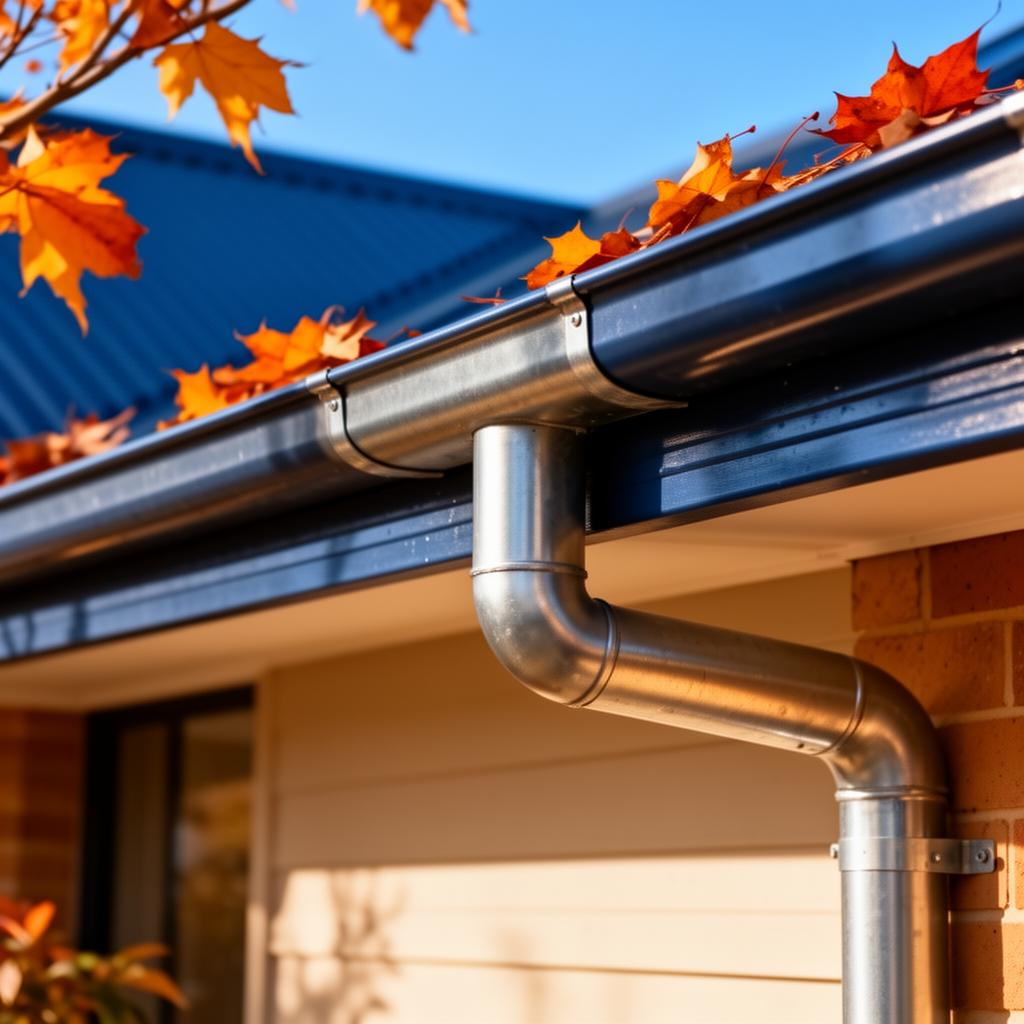
If your gutters and downpipes show significant wear, autumn is the ideal time for replacement — before winter rains test them to failure.
Roof Inspection Checklist: What to Look For
A thorough visual roof inspection should be part of your autumn maintenance routine. While some checks can be done from ground level with binoculars, a comprehensive professional roof inspection provides a complete picture of your roof's condition.
Tile Roofs
- Cracked or broken tiles — Even hairline cracks allow water penetration. Look for tiles with visible fracture lines, chips, or pieces missing.
- Displaced tiles — Tiles that have slipped, lifted, or rotated create gaps in the roof's weather barrier. This commonly occurs after summer storms.
- Deteriorated pointing — Ridge caps and hip tiles are bedded in morite or flexible pointing compound. Check for cracked, crumbling, or missing pointing that exposes the underlying bedding.
- Moss and lichen growth — While cosmetic in the short term, moss retains moisture against the tile surface and accelerates deterioration. Heavy growth can also lift tile edges. A professional roof clean removes growth and restores surface integrity.
Metal Roofs
- Rust spots — Even Colorbond and Zincalume roofing can develop corrosion at cut edges, screw holes, and areas where the coating has been scratched or damaged.
- Loose or missing screws — Metal roof sheets are secured with tek screws that include rubber washers. Over time, the rubber degrades and screws can back out due to thermal movement.
- Lifted or buckled sheets — Check for sheets that have lifted at the edges or show signs of wind damage. This is particularly common on older roofs with undersized or corroded fixings.
- Faded or chalking surface — While not immediately dangerous, significant colour fading indicates the protective coating is degrading. Roof painting restores both appearance and weather protection.
Flashings and Penetrations
Flashings — the metal strips that seal junctions between the roof and walls, chimneys, vents, skylights, and other penetrations — are one of the most common sources of roof leaks. Check all flashings for:
- Lifted or separated edges
- Rust and corrosion
- Degraded or missing sealant
- Gaps between the flashing and the surface it's sealed against
Failing flashings are a leading cause of roof leaks. They're also relatively inexpensive to repair compared to the water damage they cause when neglected.
Tree Management and Overhanging Branches
Trees are one of the biggest contributors to roof and gutter maintenance issues. Overhanging branches create multiple problems:
- Continuous leaf and bark drop — Particularly from eucalyptus species, which shed bark year-round and drop heavy leaf litter in autumn
- Branch damage in storms — Branches that contact or overhang the roof can scrape tiles, dislodge metal sheets, and cause catastrophic damage if they break in high winds
- Blocked gutters — Properties with large overhanging trees may need gutter cleaning three to four times per year instead of twice
- Moss and algae promotion — Shade from trees keeps roof surfaces damp, accelerating moss growth and tile deterioration
- Pest access — Branches touching the roof provide a direct pathway for possums, rats, and other pests to enter the roof cavity
The general rule is to maintain a minimum two-metre clearance between tree branches and your roof. Before trimming large trees, check with your local council — many tree species are protected under local environmental plans. NSW Planning provides guidelines on tree preservation orders by local government area.
Roof Cavity and Internal Inspection
While external inspections reveal visible damage, an internal inspection of the roof cavity can identify hidden problems that aren't apparent from outside.
What to Check Inside the Roof Cavity
- Water stains on rafters or battens — Brown discolouration or damp patches indicate active or historical water penetration. Trace the stain to its highest point to identify where water is entering.
- Daylight visible through the roof — If you can see light through the roof covering from inside the cavity, water can get in through the same gaps.
- Insulation condition — Wet, compressed, or displaced insulation loses its effectiveness and can harbour mould. Check that roof insulation is evenly distributed and dry.
- Timber condition — Look for signs of timber rot, termite damage, or borer activity in rafters, battens, and the ridge beam. Soft, discoloured, or crumbling timber needs immediate professional attention.
- Ventilation — Adequate roof ventilation prevents moisture build-up and condensation. Check that eave vents, ridge vents, or whirlybirds are unobstructed and functioning.
Safety Warning
Roof cavities can contain hazards including exposed electrical wiring, asbestos-containing materials (in homes built before 1990), weak ceiling joists that won't support body weight, and vermin. If you're not confident navigating a roof cavity safely, this inspection is best left to a qualified professional.
When to Call a Professional
While basic gutter cleaning and visual inspections can be performed by capable homeowners, many aspects of roof maintenance require professional expertise and equipment. Call a licensed roofer if you identify any of the following:
- Cracked, broken, or displaced roof tiles
- Significant rust or corrosion on metal roofing
- Failed or deteriorated flashings
- Ridge capping with cracked or missing pointing
- Sagging or structurally compromised roof sections
- Active leaks or water stains inside the roof cavity
- Gutters that are severely rusted, perforated, or pulling away from the fascia
- Any damage to fascia or soffit boards
A professional roof maintenance service combines inspection, cleaning, minor repairs, and a written condition report — giving you a complete picture of your roof's health and a prioritised list of any work needed. This proactive approach is far more cost-effective than waiting for an emergency.
For homes that have experienced recent storm damage, a professional assessment is essential before winter arrives. Even apparently minor storm damage — a few displaced tiles, a small dent in metal sheeting — can create vulnerabilities that escalate dramatically under sustained winter rainfall.
The Real Cost of Neglecting Roof and Gutter Maintenance
Deferred maintenance is a false economy. Here's what neglecting your roof and gutters can actually cost:
- Blocked gutters → Water damage: Overflowing gutters send water cascading down walls, saturating window frames, damaging paintwork, and potentially penetrating the wall cavity. Internal water damage repairs typically start at $2,000 and can exceed $15,000 for severe cases involving plaster replacement and mould remediation.
- Cracked tiles → Roof leaks: A single cracked tile left unrepaired can allow hundreds of litres of water into the roof cavity over a winter season. The resulting damage to insulation, ceilings, electrical wiring, and structural timber far exceeds the $50–$100 cost of replacing the tile.
- Failed flashings → Structural damage: Water that enters through failed flashings often runs along internal timber structures, causing rot in locations that are difficult and expensive to access. Structural timber repairs can cost $5,000 to $20,000+.
- Blocked downpipes → Foundation issues: When stormwater can't drain away from the property through the drainage system, it pools around foundations. Over time, this can cause subsidence, cracking in slab foundations, and rising damp. Foundation repairs are among the most expensive remediation works a homeowner can face.
Compare these costs to professional gutter cleaning ($200–$500) or a comprehensive roof inspection ($250–$450), and the value of preventive maintenance becomes overwhelming. The Insurance Council of Australia notes that many storm damage claims are reduced or denied when the insurer determines that the damage resulted from lack of maintenance — a powerful financial incentive to keep your roof in good condition.
Gutter Guards: Are They Worth the Investment?
Gutter guards are mesh, foam, or brush inserts designed to prevent debris from entering your gutters while allowing water to flow through. They're particularly popular in leafy suburbs across Sydney and the Central Coast, where gutter blockages are a constant battle.
Types of Gutter Guards
- Aluminium mesh guards — The most common and effective type. Fine mesh prevents leaves, twigs, and larger debris from entering the gutter. Quality products last 15–20 years.
- Micro-mesh guards — Ultra-fine mesh that also blocks seeds, pine needles, and pollen. More expensive but highly effective for properties with heavy tree coverage.
- Foam inserts — Polyurethane foam that sits inside the gutter channel. Less effective than mesh options and can deteriorate in UV exposure, requiring replacement every 3–5 years.
- Brush inserts — Cylindrical brushes that fill the gutter, allowing water through while trapping debris on top. Easy to install but need regular cleaning and replacement.
The Bottom Line on Gutter Guards
Quality aluminium or micro-mesh gutter guards are a worthwhile investment for most homes, particularly those surrounded by trees. They reduce gutter cleaning frequency from 2–4 times per year to once annually, and they significantly reduce the risk of gutter overflow and associated water damage. However, they don't eliminate the need for maintenance entirely — annual inspections and cleaning are still recommended. Discuss your options with your roofer during your autumn roof inspection.
Frequently Asked Questions
Protect Your Home This Autumn — Book a Roof Inspection Today
Your roof is your home's most important structural defence against the elements. A few hours of maintenance in autumn can prevent thousands of dollars in emergency repairs during winter. Whether you're clearing gutters yourself or booking a professional service, the key is to act now — before the first heavy rain exposes every vulnerability that summer created and autumn leaves have been hiding.
At Tradetek Solutions, our licensed roofers and plumbers provide comprehensive autumn roof and gutter maintenance services across Sydney, the Central Coast, Newcastle, and Lake Macquarie. From gutter cleaning and downpipe clearing to full roof inspections and roof repairs, we deliver honest assessments, upfront pricing, and workmanship you can trust. We also handle emergency roof repairs when the unexpected happens.
Don't wait for a leak to tell you there's a problem. Get ahead of winter and give your roof the attention it deserves.
Ready for an Autumn Roof Check-Up?
Book a professional roof and gutter inspection with Tradetek Solutions. Upfront pricing, same-week availability, and full condition report included.