
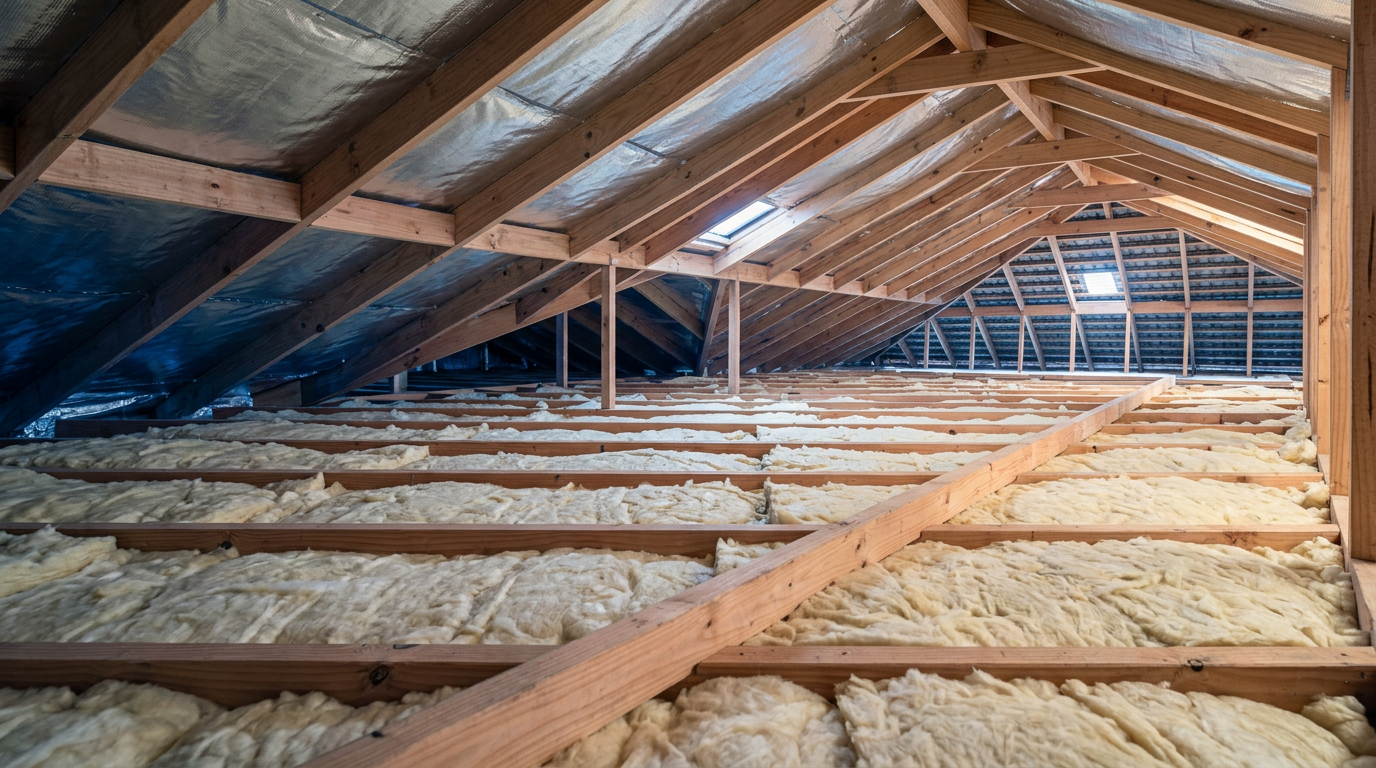
Ceiling Insulation Sydney: Stop Winter Heat Loss
By the team at Tradetek Solutions
Late July in Sydney is the stretch where the reverse cycle unit runs all evening and the lounge room still feels cold by nine o'clock. Most homeowners blame the heater, the windows or the draught under the front door. In a brick veneer in Ryde, a semi in Marrickville or a 1970s project home out at Baulkham Hills, the real culprit is almost always sitting a metre above your head. Warm air rises, hits an under insulated ceiling, and keeps going into a roof cavity that is only a few degrees warmer than the street.
The frustrating part is how cheap this problem is to fix compared with everything else people try first. New curtains, a bigger heater, double glazing quotes. All of that comes after the ceiling, not before it. This guide covers what R value actually suits Sydney conditions, why downlight gaps quietly wreck a good insulation job, what a proper install costs in 2026, and how insulation and roof ventilation have to be planned together so you do not trade a cold house for a damp one.
Why Sydney Ceilings Leak So Much Winter Heat
Sydney does not get the sustained cold that forces builders in Canberra or Melbourne to obsess over the thermal envelope. That mild reputation is exactly the reason so much of the housing stock is under insulated. Homes built through the 1960s, 70s and 80s often went up with a thin layer of batts or nothing at all above the ceiling plaster, and plenty of them have never been touched since.
A roof cavity on a July night in Sydney sits close to outside temperature. The Bureau of Meteorology seasonal climate summary for NSW shows overnight minimums across the metro area that regularly sit in single digits from June through August, with the western suburbs consistently colder than the coast. Your ceiling is the boundary between a room you are paying to heat and a space that is effectively outdoors.
Three things make the loss worse in typical Sydney homes:
- Old thin batts. A 90mm batt from the 1980s is roughly R2.0, and after decades of settling and dust it performs below that.
- Gaps and bare patches. Air moves through gaps, and a gap around a manhole or a run of downlights defeats the batts either side of it.
- Cavity air movement. Wind driven air through eave vents and tile gaps strips heat off the top of loose or poorly seated batts.
What R Value Actually Suits a Sydney Ceiling
R value measures resistance to heat flow. Higher is better, but the useful range depends on climate zone, and Sydney sits mostly in zone 5 with parts of the upper north west and Blue Mountains fringe running colder. The performance requirements sit in the National Construction Code, published as NCC Volume Two for houses.
Practical Sydney targets in 2026
- R5.0 ceiling batts. The sensible target for a full replacement in a Sydney home with a standard pitched roof and reasonable cavity depth.
- R4.0 top up. Laid across existing sound batts at right angles, this closes seams and lifts a tired ceiling back to a strong overall figure.
- R2.5 to R3.0. Only worth considering where cavity depth is genuinely restricted, such as a low pitch skillion.
- Above R6.0. Rarely pays for itself in Sydney. Money is better spent closing gaps, sealing the manhole and fixing ventilation.
Product classification and installation practice for bulk insulation is covered by AS 3999, which sets out clearance rules, fixing methods and the safe treatment of services inside the ceiling space. A crew that quotes without mentioning clearances is quoting a job you do not want.
The Downlight Problem Nobody Quotes For
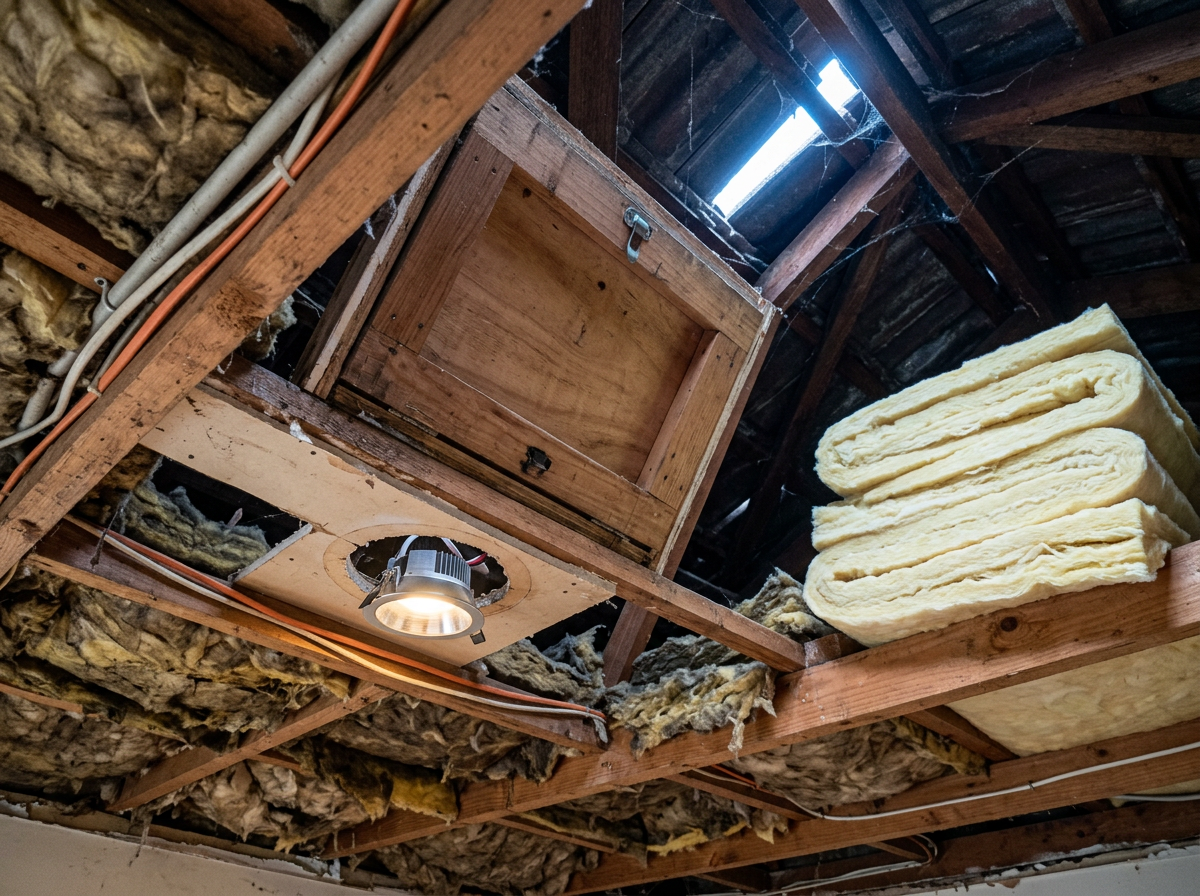
Walk any Sydney kitchen renovated between 2000 and 2015 and count the ceiling downlights. Twelve is common. Eighteen is not unusual. Every non rated fitting needs a clearance zone around it, which means a circle of bare plaster where heat pours straight out of the room.
Twelve fittings with a 200mm clearance each can strip well over a square metre of insulation coverage out of one room, and that missing area behaves like a hole rather than a thin patch. Modern IC-4 rated LED fittings can be covered by insulation, which is why the fix is usually two trades on the same day.
- Licensed electrician converts the fittings. Non rated halogen or early LED fittings are swapped for IC-4 rated LED units that can sit under batts safely. All ceiling wiring work is licensed work under NSW Fair Trading electrical rules.
- Exhaust fans and ducts are checked. Bathroom and laundry fans that vent into the roof space need to be ducted to outside air before insulation is laid over the top of them.
- Insulation is laid continuous. With rated fittings in place, batts run edge to edge with no clearance islands.
- The manhole is sealed and insulated. A bare manhole is one of the largest single gaps in the average ceiling and takes ten minutes to fix.
Our full walk through of the lighting side sits in the LED downlight upgrade guide for Sydney homes, including the rebate detail.
Insulation and Ventilation Have to Be Planned Together
Here is where a lot of well meaning insulation jobs go wrong in Sydney. Thick batts keep heat in the house, which means less heat reaching the underside of the roof. In a cavity with poor airflow, that colder surface becomes the spot where moist air condenses on winter nights. Homeowners then find damp sarking, stained batts and mould on the ceiling above the bathroom, and assume they have a roof leak.
The Australian Building Codes Board covers this directly in its Condensation in Buildings handbook. The short version for a Sydney home is that bulk insulation, cavity ventilation and moisture sources inside the house all need to be addressed as one system.
- Whirlybirds or ridge vents. Passive extraction at the ridge, paired with clear eave intake, keeps cavity air moving.
- Clear eave vents. Batts pushed hard into the eave line block the intake that makes ridge venting work.
- Ducted bathroom fans. Every fan dumping steam into the cavity is adding litres of moisture a week in winter.
- Sarking condition. Torn or missing sarking under tiles lets wind driven rain and dust reach the batts.
We covered the mechanics of this in detail in roof ventilation and winter condensation in Sydney homes, and the practical install work sits under roof ventilation.
What Ceiling Insulation Costs in Sydney in 2026
Pricing across Sydney metro has held reasonably steady through the first half of 2026. Figures below are supply and install by a licensed crew during normal hours on a single storey home with reasonable manhole access.
- R4.0 glasswool batts, supply and install. 22 to 32 dollars per square metre.
- R5.0 glasswool batts, supply and install. 28 to 40 dollars per square metre.
- Polyester batts, allergy friendly option. Add roughly 15 to 25 percent over glasswool.
- Removal and disposal of old batts. 8 to 14 dollars per square metre, higher where vermin contamination is present.
- Typical 150 square metre Sydney home, R4.0 full install. 3,300 to 4,800 dollars.
- Downlight conversion to IC-4 rated LED. 55 to 95 dollars per fitting when done during the same visit.
- Manhole seal and insulated cover. 120 to 220 dollars.
- Whirlybird supply and install. 350 to 550 dollars each, usually two for a standard roof.
- Difficult access loading (two storey, tight manhole, low pitch). Add 10 to 20 percent.
On heating spend, a Sydney home going from tired R2.0 to properly laid R5.0 with gaps closed typically sees winter heating run time drop by a quarter to a third. On a household spending 400 dollars across a Sydney winter quarter on heating, the ceiling work usually pays back over four to six winters, before you count the summer side of the ledger.
Rebates, Schemes and the Jobs Worth Bundling
Insulation is not currently a headline consumer rebate in NSW, but the trades visit that installs it often is. Lighting upgrades and hot water replacements both sit inside the NSW Energy Savings Scheme and Peak Demand Reduction Scheme. Current eligibility and product lists are published on the NSW Government rebates, grants and schemes page, and they change each year.
Because the crew is already on site with the manhole open and the ceiling space accessible, these are the jobs worth pricing at the same time:
- LED downlight conversion. Required anyway for continuous insulation coverage. See LED lighting.
- Roof and gutter inspection. Wet batts are a leak symptom, so confirm the roof is sound first through roof inspection.
- Bathroom exhaust fan ducting. Detail in bathroom exhaust fan installation in Sydney.
- Smoke alarm replacement. Ceiling access is already open, and the rules are set out in Sydney smoke alarm laws 2026.
- Heat pump hot water quote. Highest value rebate available to most Sydney homes right now. Read heat pump hot water Sydney 2026 rebates and costs.
- Insulation supply and install. Booked through roof insulation.
CSIRO has run long term work on residential energy performance and thermal comfort through its energy research program, and the consistent finding is that the building envelope beats appliance swaps for comfort per dollar.
Which Sydney Homes Should Move First
Not every property is equally exposed. Push the job up your list this winter if any of the following describe your home:
- Built before 1990 with original batts. Thin, settled and often displaced by decades of trades work in the cavity.
- Tile roof with no sarking. Common across the inner west and southern suburbs, and it lets wind and dust straight onto the batts.
- Kitchen or living area with twelve or more downlights. Coverage is almost certainly broken across those rooms.
- Rooms above a garage or a low pitch extension. Frequently skipped entirely during the original build.
- Recent solar or air conditioning install. Batts get walked on and pushed aside during cavity work and are rarely put back properly.
- Visible mould on ceiling corners. A ventilation and moisture problem that needs solving before new batts go in.
- Rental property with rising tenant complaints about cold. Cheaper to insulate once than to argue about heating costs every winter.
What a Proper Install Day Looks Like
A good crew treats the ceiling as a system rather than a delivery of batts. On a standard Sydney home the sequence runs like this.
- Cavity inspection. Moisture check, vermin check, wiring condition, sarking condition and confirmation the roof is watertight.
- Removal where required. Contaminated or waterlogged batts are bagged and removed rather than covered over.
- Electrical clearance work. Downlights converted, fans ducted, any damaged cable flagged for repair before covering.
- Batt install. Friction fit between joists, no compression, no gaps at the wall plate, eave intake kept clear.
- Manhole and penetrations. Sealed, weighted cover fitted, ducts and pipes packed around rather than crushed.
- Handover. Photos of the finished cavity, product documentation with the R value, and a note of anything found on the roof that needs follow up.
Ask for the cavity photos before and after. They are the only practical way for a homeowner to verify work in a space they will never see.
Frequently Asked Questions
Book the Ceiling Check While Sydney Is Still Cold
August is the last useful window. Book the work now and you get the back half of winter with a ceiling that holds heat, plus a roof cavity that has been checked before the spring storm season starts throwing water at it. Leave it until October and the job becomes a summer comfort project competing with everyone else's air conditioning install.
For a written quote on ceiling insulation, downlight conversion and a roof cavity assessment across Sydney, contact the Tradetek Solutions team. The visit covers moisture and vermin checks, an R value recommendation for your climate zone, clearance work around lighting and fans, and photos of the finished cavity so you can see exactly what you paid for. Start with a roof inspection or get in touch through our contact page.