
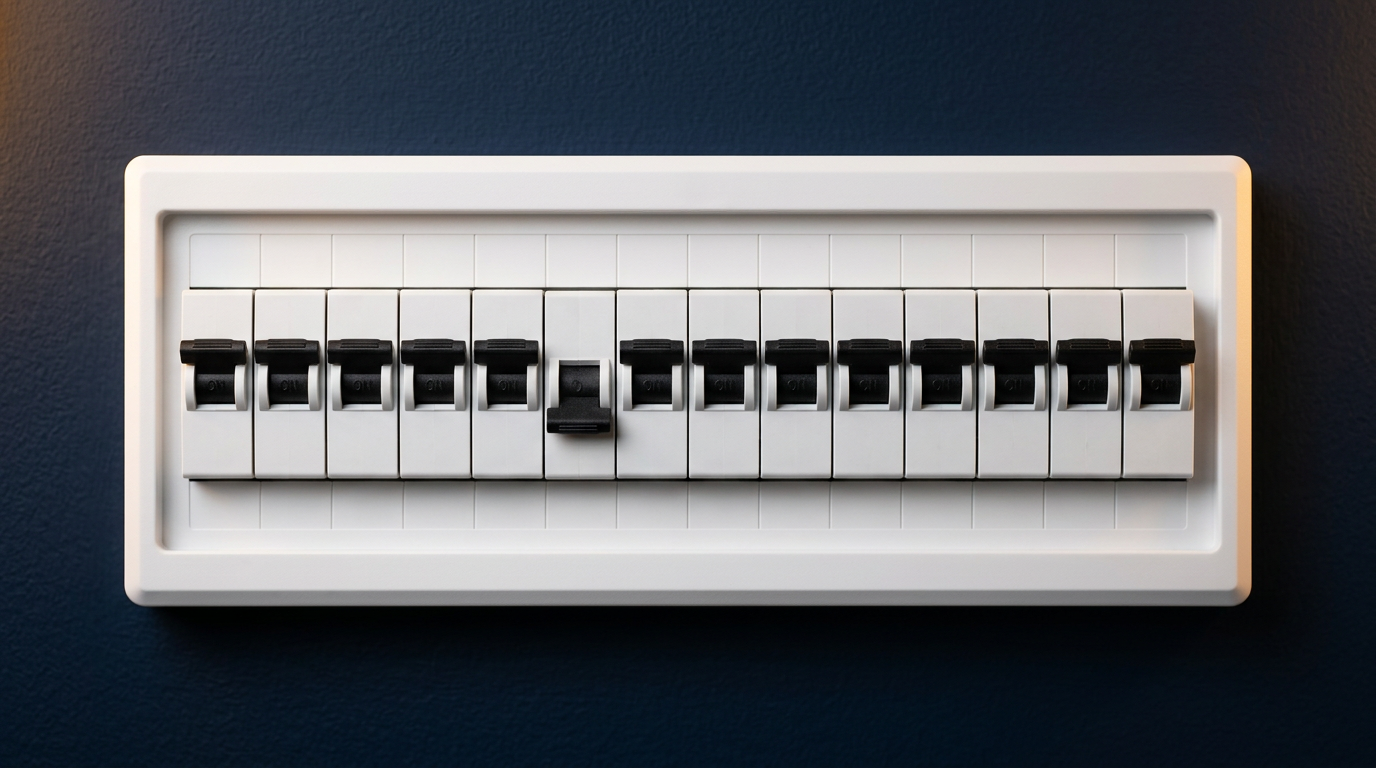
Safety Switch Keeps Tripping in Sydney: Winter Causes and Fixes
By the team at Tradetek Solutions
It is 6.40 pm in late July, the oil heater has been running in the lounge for twenty minutes, someone puts the kettle on, and half the house goes dark. You walk out to the meter box with your phone torch, find one switch sitting halfway down, push it back up, and everything works again until tomorrow night. That sequence plays out in thousands of Sydney homes every winter, from 1950s brick veneers in Bexley to 2008 townhouses in Rouse Hill.
A safety switch that keeps tripping is not being fussy. It is doing exactly the job it was installed to do, which is cutting power the instant current starts leaking somewhere it should not. Winter simply gives it far more to detect. Heaters, dryers and electric blankets load up circuits that sit idle for eight months of the year, and east coast rain pushes moisture into outdoor power points, eaves lights and rooftop solar isolators. This guide explains what is actually happening behind the meter box, the elimination test you can safely run yourself tonight, what repairs cost in Sydney in 2026, and the point where the answer stops being an appliance and starts being the switchboard.
What a Safety Switch Actually Does
A safety switch, known technically as a residual current device or RCD, constantly compares the current flowing out on the active wire with the current returning on the neutral. Those two numbers should match. When they do not, the missing current is going to earth, which usually means it is passing through wet insulation, a corroded terminal, a damaged appliance element, or a person.
The trip threshold in Australian homes is 30 milliamps, and the switch operates in about 30 milliseconds. To put that in context, the current needed to stop a heart is roughly 50 milliamps, and the current needed to blow a 20 amp circuit breaker is 20,000 milliamps. That gap is the whole point. A breaker protects your wiring. A safety switch protects the people in the house.
This matters when you are deciding how urgently to act. A breaker that trips under load is usually an overload problem. A safety switch that trips is telling you there is a live path to earth in the house right now.
Why Sydney Safety Switches Trip More in Winter
Callout data across Sydney metro follows the same curve every year. Fault finding jobs climb from the second week of May, peak through late July and August, then drop away in October. There are five reasons behind that shape.
- Heating load on old circuits. A 2400 watt column heater draws around 10 amps. Two of them on the same power circuit as a kettle and a dryer takes an old cable close to its limit, and heat accelerates the breakdown of already tired insulation.
- Moisture in outdoor points and eaves lighting. Sydney winter rain arrives sideways. Weatherproof covers that have cracked in the summer UV let water sit against the terminals, and the leakage shows up on the first cold wet night.
- Condensation in rooftop solar isolators. Cold nights and warm sunny mornings create condensation inside older DC isolators, which is why so many solar homes trip at sunrise rather than in the evening.
- Appliances coming out of storage. Electric blankets folded in a cupboard for eight months, fan heaters kept in the garage and dehumidifiers pulled out for the mould season are all high risk items with damaged flex.
- Water heaters and dishwashers reaching end of life. Heating elements fail by leaking to earth long before they stop working, which is why the trip often happens at the same time each night when the dishwasher hits its heat cycle.
None of these are unusual faults. They are ordinary wear that only becomes visible when the house asks more of the wiring than it does in February.
The Ten Minute Test You Can Run Tonight
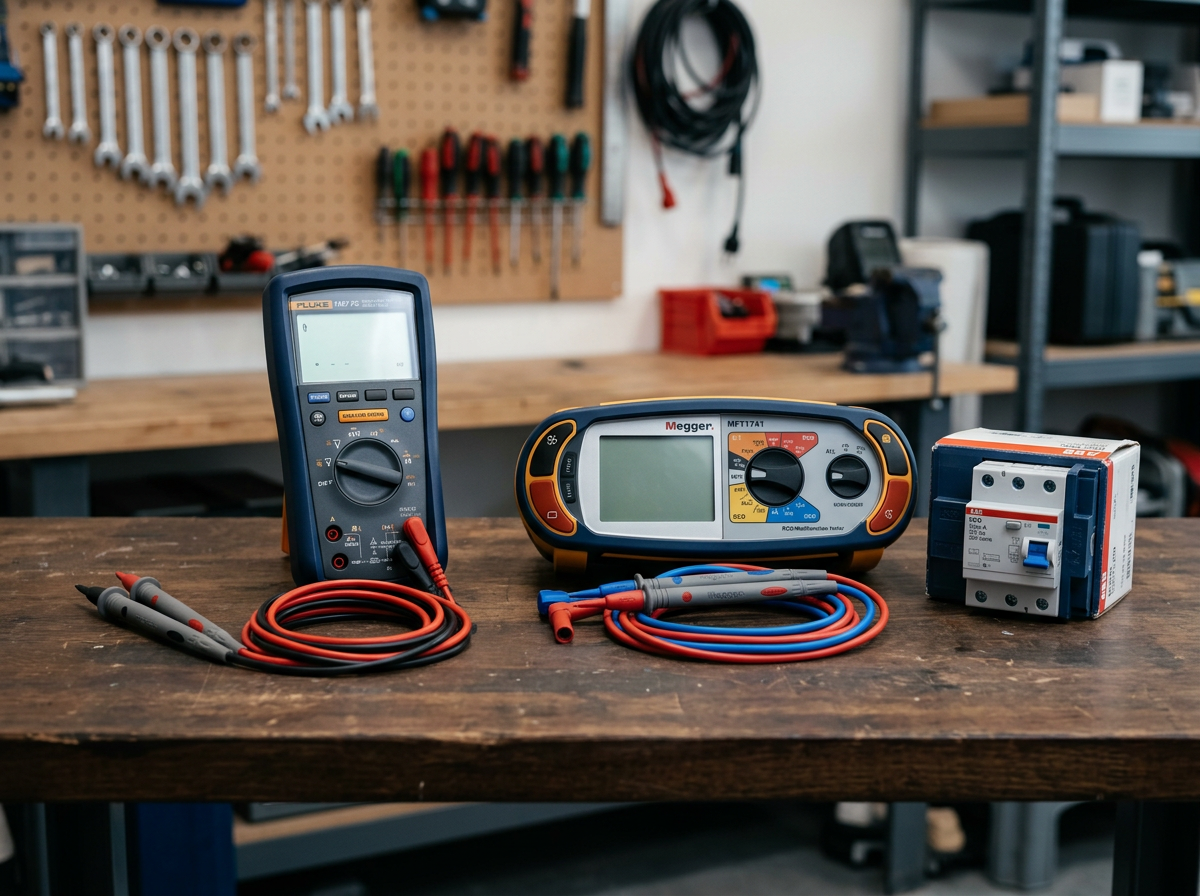
Before you book anyone, this elimination test tells you whether the problem is an appliance or the wiring. It costs nothing, and the answer changes what the electrician needs to bring.
- Work out which rooms lost power. That tells you the circuit involved.
- Unplug every appliance in those rooms, including phone chargers, the fridge, the microwave and any heater.
- At the switchboard, push the tripped switch firmly down to off, then back up to on.
- If it holds, plug appliances back in one at a time, two minutes apart, switching each on at the wall.
- The appliance that trips it is your fault. Tag it, leave it unplugged and do not use it again.
- If the switch will not hold with everything unplugged, stop. The fault is in fixed wiring, a light fitting or the board itself.
One caution. If the switch trips again the moment you reset it, or if you can smell anything hot or plasticky near the board, leave the circuit off and call an electrician straight away. Do not keep forcing it.
The appliances that top the Sydney list
Across winter callouts the same items keep appearing. Old bar heaters and fan heaters with frayed flex, kettles with water tracking under the base, front loader washing machines with worn door seals, second fridges in the garage, and electric blankets that have been folded rather than rolled. Dishwashers and clothes dryers sit close behind, usually failing on the element during the heat cycle.
When the trip has nothing to do with an appliance
Sometimes everything is unplugged and the switch still refuses to hold. In older Sydney homes that commonly points to water in an outdoor light or power point, rodent damage to cabling in a roof space, degraded rubber insulated wiring in houses wired before the mid 1960s, or a shared neutral between two circuits done during a past renovation. A failed RCD module itself is also possible after ten to fifteen years in service.
Nuisance Tripping Versus a Real Fault
Homeowners often ask whether the switch has simply become oversensitive. It happens, but it is far less common than people hope. Genuine nuisance tripping usually has a pattern.
- Cumulative leakage. Every modern appliance leaks a tiny amount to earth. Twelve devices on one circuit each leaking two milliamps adds up to a trip without any single item being faulty. The fix is splitting the load across additional circuits or moving to individual RCBOs.
- Shared RCD covering half the house. Boards from the 1990s often protect six or eight circuits with one RCD. One weak appliance anywhere takes out lights, power and the fridge together.
- Electronics and switch mode power supplies. Large TVs, computers, gaming setups and LED driver banks all contribute small standing leakage.
- A tired RCD. Mechanical parts wear. A switch that trips at 18 milliamps instead of 30 will misbehave long before anything else in the house does.
A licensed electrician measures this properly with a leakage clamp and an RCD ramp test. That result decides whether you need a repair, a board upgrade, or nothing more than one appliance retired.
What the Rules Require in NSW
Safety switch requirements sit in AS/NZS 3000, the Wiring Rules. Since 2018 every final subcircuit in a new or altered domestic installation must have RCD protection, which is why any switchboard work in Sydney now results in more RCDs than the house had before.
Three practical points follow from that for Sydney homeowners:
- Any work on fixed wiring must be done by a licensed electrician. You can verify a licence in a minute through NSW Fair Trading.
- You should receive a Certificate of Compliance for Electrical Work at the end of any switchboard or circuit repair. Keep it with your insurance documents.
- Rental properties carry extra weight. NSW landlords are expected to maintain electrical safety along with smoke alarms, and an RCD that fails its test button is a defect, not a maintenance nicety.
General home electrical safety guidance for owners and renovators is published by NSW Fair Trading electrical safety, and faulty appliance recalls are listed on Product Safety Australia, which is worth checking once you identify the offending heater or dryer.
Sydney Repair Costs in 2026
Pricing below reflects Sydney metro rates through the first half of 2026 for licensed work, including testing and certification. Weekend and after hours attendance sits above these figures.
- Fault finding callout, first hour. Around 180 to 320 dollars, covering isolation, circuit identification and leakage testing.
- Additional testing time. Around 110 to 180 dollars per hour where multiple circuits or a roof space inspection are involved.
- RCD or RCBO module replacement. Around 220 to 450 dollars supplied and fitted per module.
- Repair of a water affected outdoor power point or eaves light. Around 190 to 420 dollars depending on access and cable condition.
- Section of damaged cable replaced in a roof space. Around 350 to 900 dollars depending on run length and ceiling access.
- Full switchboard upgrade with individual RCBOs. Around 1,800 to 3,500 dollars, more where the mains or meter position also needs work.
The number that surprises people is how often the cheap outcome wins. Roughly half of winter tripping jobs end with a single appliance being retired and no electrical repair at all beyond the testing fee.
Should You Repair the Switch or Upgrade the Board?
If your board still has ceramic fuses, a mix of old rewireable fuses and one shared RCD, or handwritten circuit labels from a previous decade, replacing a single module is usually money spent twice. Individual RCBOs give each circuit its own protection, so a faulty heater in the garage no longer takes the fridge and the lights with it.
The other trigger is added load. Sydney homes adding an EV charger, a heat pump hot water unit, an induction cooktop or a battery are pushing boards that were designed for a 1990s household. Our guide to the signs you need a switchboard upgrade covers the warning list in detail, and the switchboard upgrades service page sets out what the work involves.
If the board is modern and only one circuit misbehaves, targeted electrical fault finding is the right call. There is no benefit in replacing hardware that tests correctly.
Related Winter Electrical Work Worth Bundling
An electrician attending a tripping fault already has the board isolated and the tools out. These jobs cost far less on the same visit than on a separate callout.
- Safety switch testing and replacement across the board. Details on the safety switch installation page.
- Smoke alarm replacement to 10 year sealed lithium units. Read the current rules in our Sydney smoke alarm laws guide.
- Full safety inspection with a written report. Covered in the home electrical safety inspection guide.
- Extra power points to stop double adaptors and piggybacked heaters. See power point installation.
- Rental compliance checks for landlords and property managers. See the NSW rental property electrical safety guide.
- Heated towel rail or bathroom circuit work. Winter is the peak season for both, covered in heated towel rail installation in Sydney.
When It Is an Emergency
Most tripping faults can wait until the next working day with the affected circuit switched off. Some cannot. Treat it as urgent when there is a burning smell at the switchboard, visible scorching around a power point, a switch that is warm to touch, water entering the meter box, or a shock felt from an appliance or a tap.
If the power is out across the street rather than inside your board, the fault belongs to the network. Check the Ausgrid outage map before booking anyone. Fire risk information for households, including what to do if an appliance starts smoking, is published by Fire and Rescue NSW. For everything inside the property boundary, our emergency electrical team attends across Sydney.
Frequently Asked Questions
Get the Fault Found Before the August Peak
August is the busiest month of the Sydney electrical year, and a tripping safety switch is the job most homeowners put off until it takes out the fridge overnight. Running the elimination test tonight costs you ten minutes and often identifies the appliance outright. If the switch still will not hold, book the testing while there are appointments available rather than during the next wet week.
The Tradetek Solutions team attends fault finding jobs across Sydney with full testing equipment, gives you a fixed price before any repair starts, and issues a compliance certificate on completion. Call for an emergency attendance or request a written quote for switchboard work, and we will tell you honestly whether you need a repair, an upgrade, or simply a new heater.