
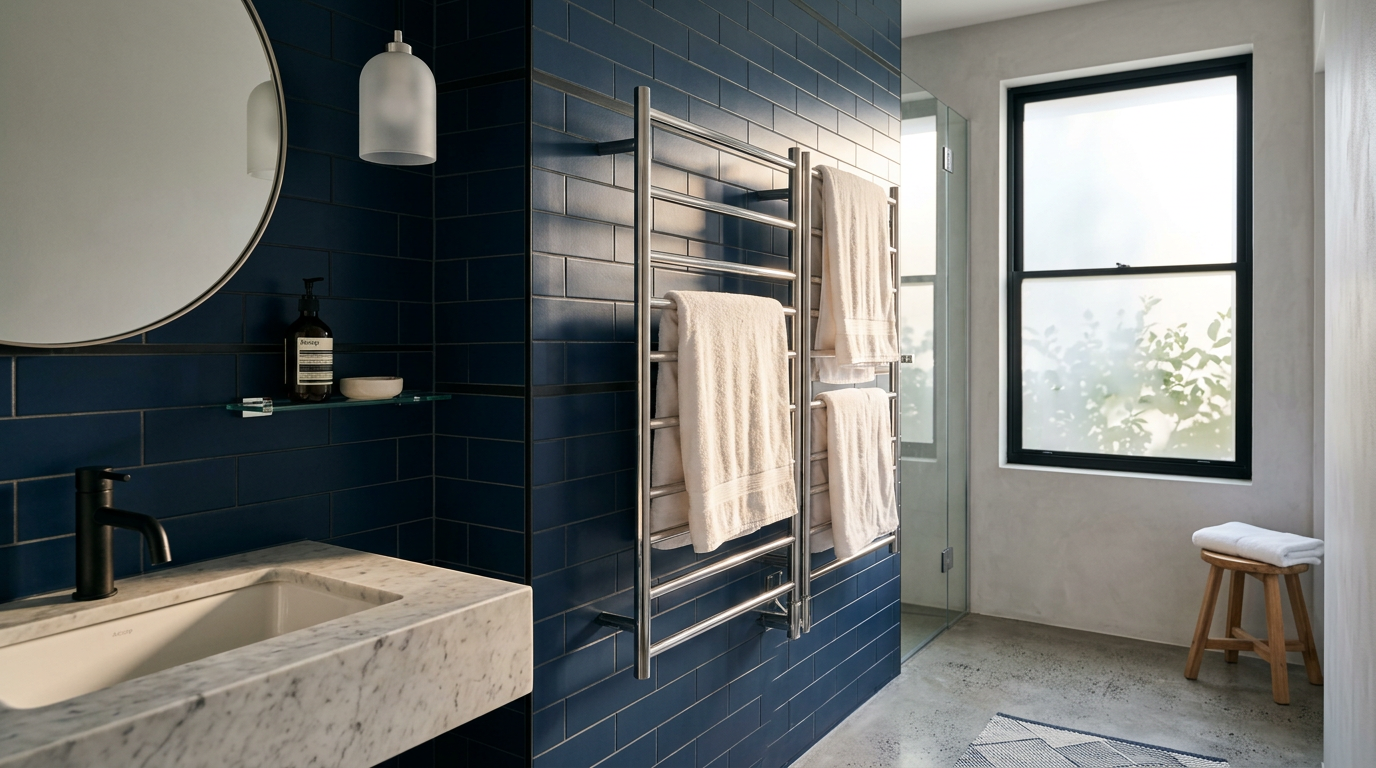
Heated Towel Rail Installation in Sydney: 2026 Winter Guide
By the team at Tradetek Solutions
The first cold Sydney morning of the year is always the same. The shower runs hot, the bathroom fogs up, and the towel you reach for is the same damp one from the night before. By the second week of June, half the homes in the Inner West are searching for a fix. A wall-mounted heated towel rail is the quietest, smallest, most-used upgrade most Sydney bathrooms can have, and it is one of the few jobs that pays back every single winter morning.
This guide covers what a heated towel rail actually costs to install in Sydney in 2026, the NSW electrical rules every homeowner should know, how to size and position the rail correctly, the common mistakes that cost owners later, and why May is the smart month to book the work before winter call-outs blow out lead times.
Why Sydney Bathrooms Need Heated Towel Rails in Winter
Sydney winters are mild on paper. The reality inside an older brick or weatherboard home tells a different story. Most homes built before 2010 have little to no bathroom heating, single-glazed windows, and tiled wet areas that hold the night-time chill long after the sun is up. A wet towel in that room takes eight to twelve hours to fully dry between uses, which is more than enough time for mould spores to take hold along seams and inside the linen press.
A heated towel rail solves three problems at once:
- Dry towels every morning, which kills the musty smell that returns every June.
- Lower humidity in the room, which protects grout, silicone seals, painted ceilings and timber vanities from winter mould.
- Gentle background warmth, which takes the bite out of tiled floors without running a noisy ducted system.
Sydney Water's public guidance on indoor humidity recommends keeping bathroom moisture down through ventilation and warm dry surfaces. A heated rail does both at once, and uses less electricity than a single LED downlight left on overnight.
Hardwired vs Plug-In: Which Is Right for Your Sydney Home?
Heated towel rails come in two electrical formats, and the choice changes the cost, the look and the rules that apply.
Hardwired Rails
The supply cable runs through the wall and connects directly inside the rail. There is no visible cord, no powerpoint behind the unit, and the finish looks built-in. Hardwired rails must be installed by a licensed electrician in NSW, and the work needs to be certified under NSW Fair Trading's Certificate of Compliance for Electrical Work rules.
Plug-In Rails
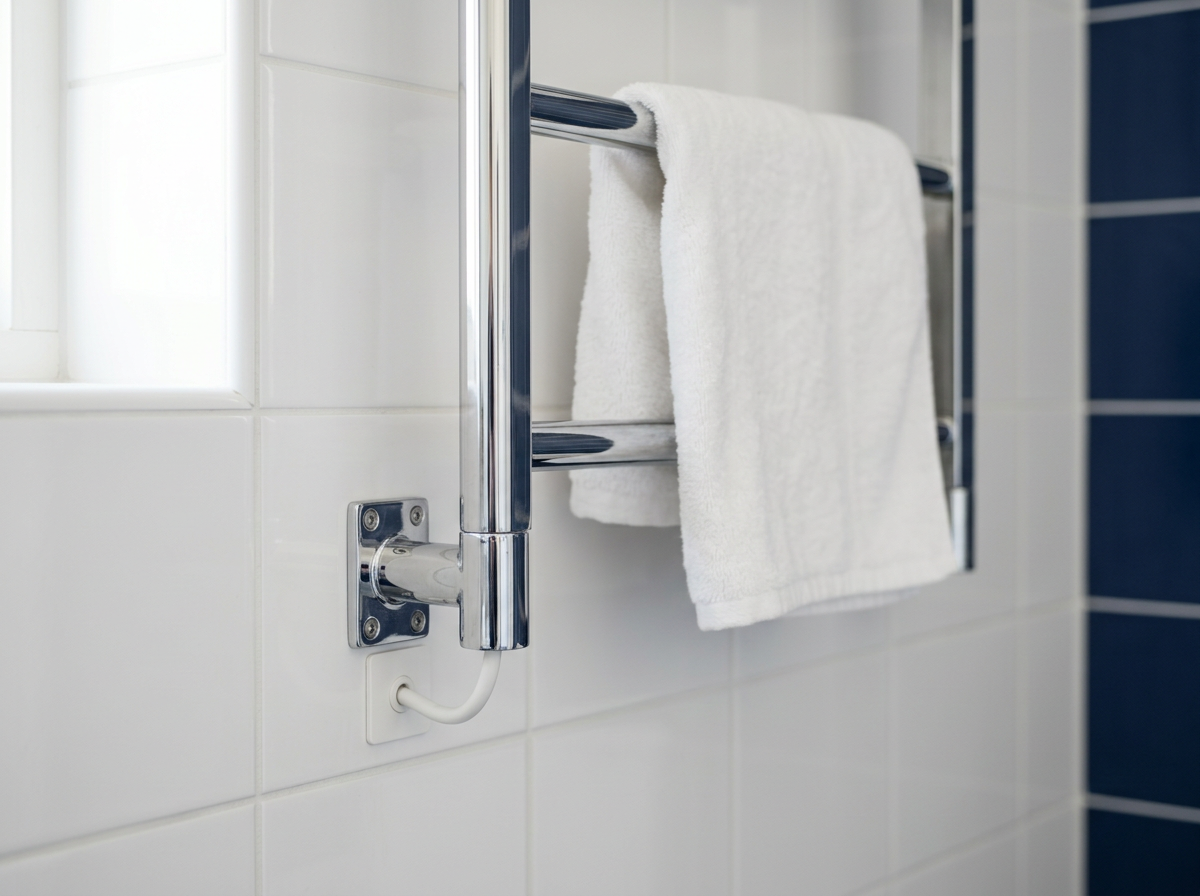
A flexible cord runs out the bottom of the rail to a standard powerpoint. The unit itself is the same heating element. The big difference is the powerpoint location. Australian Standard AS/NZS 3000 (the Wiring Rules) sets strict zones in wet areas, and a powerpoint added to make a plug-in rail work still triggers electrician-only work for almost every Sydney bathroom.
For most renovations, hardwired wins on safety, finish and resale value. Plug-in suits rentals and quick retrofits where wall access is limited.
2026 Installation Costs in Sydney
Prices below reflect what licensed Sydney electricians are quoting through May 2026 for standard residential jobs across the Inner West, Eastern Suburbs, Northern Beaches, Central Coast and Newcastle. Final pricing depends on switchboard age, wall construction and access.
The Rail Itself
- Entry chrome rails (4 to 6 bars): 180 to 350 dollars supply.
- Mid-range stainless or matte black (8 to 10 bars): 350 to 750 dollars supply.
- Premium designer rails with timer and smart control: 800 to 1,600 dollars supply.
Installation Labour
- Straight swap onto an existing circuit: 280 to 420 dollars.
- First-time hardwired installation with cable run: 450 to 750 dollars.
- New dedicated circuit and switchboard work: add 200 to 600 dollars depending on board age.
- Wall patching and tiling reinstatement: quoted separately by a tiler.
Running Costs
A typical 100 watt rail run on a timer for four hours each morning and three hours each evening uses around 0.7 kWh per day. At a Sydney residential rate of about 32 cents per kWh, that is roughly 22 cents a day, or 80 dollars across a full winter. Smart switches and built-in timers cut that further by skipping unused days.
NSW Electrical Rules Every Homeowner Should Know
Bathrooms sit under the strictest part of the Wiring Rules because water and electricity share the room. A few rules matter most for towel rails:
- Zone classification. AS/NZS 3000 divides bathrooms into Zones 0, 1 and 2 based on distance from the bath or shower. Most towel rails sit in Zone 2 or outside the zones, and each zone limits which IP-rated equipment can go where.
- RCD protection. Every new bathroom circuit in NSW must run through a residual current device (safety switch). If your switchboard still uses ceramic fuses or only has one shared RCD, an upgrade is usually needed before a new rail can be signed off.
- Equipotential bonding. Metallic fittings in older bathrooms sometimes need bonding to earth. An electrician checks this before connection.
- Certificate of Compliance. The installer must issue a CCEW. Keep the copy with your home records, because insurers and conveyancers ask for it at sale time.
If your home was wired before 2000, a switchboard upgrade is often paired with the rail install. The full reasons for that pairing are covered in our guide on 8 signs you need a switchboard upgrade.
Where to Position the Rail for Maximum Performance
The position is the single biggest decision after the model itself. Get it wrong and the rail looks like an afterthought and dries towels half as fast.
- Closest dry wall to the shower exit. Towels should reach the rail within a step of leaving the screen, not across the room.
- Bottom bar at least 150mm above the floor to allow air movement underneath and to clear skirting tiles.
- Top bar at shoulder height for the tallest user, usually around 1,200 to 1,400mm.
- Clear of swinging doors and the vanity drawer arc. Owners often forget about door clearance until the rail is on the wall.
- Away from direct shower spray. Even rated rails last longer when they are not constantly wet.
In a renovation, raise the position with the tiler before tiling starts so backing blocks can be fixed inside the wall. Retrofits use heavy-duty wall anchors when stud lines do not line up.
Choosing the Right Size and Wattage
Match the rail to the room and the household, not just the wall space.
- Small ensuite (under 4 square metres): a 4 to 6 bar rail at 60 to 80 watts is plenty.
- Family main bathroom (4 to 8 square metres): an 8 to 10 bar rail at 100 to 150 watts handles two or three towels at once.
- Large main bathroom or two-towel households: a wide ladder rail at 150 to 200 watts, or two smaller rails on a single circuit.
- Apartment bathrooms: check building rules first, then choose a low-wattage rail (60 to 80 watts) to suit the limited circuit capacity older blocks have.
A timer or smart switch pairs well with any wattage and is the single feature that pays back fastest. The Australian Government's energy.gov.au guidance on household heating recommends timed and zoned heating wherever possible.
Common Installation Mistakes That Cost Sydney Owners Later
Five mistakes show up again and again on call-outs:
- Wrong IP rating for the zone. A rail rated for outside the zone fitted within Zone 2 is a hazard and a CCEW will not be issued.
- No isolation switch outside the bathroom. Required when no other safe disconnect exists, and easy to forget on retrofits.
- Surface-mounted cable through tile. Looks rushed, voids many warranties, and traps moisture behind the cover plate.
- Sharing a kitchen powerpoint circuit. Overloads a circuit that is already busy with high-draw appliances and trips the RCD on cold mornings.
- Skipping the timer. Owners leave the rail on 24/7, see a higher bill in winter, and remove the rail the following year.
All five are easy to avoid when the install is planned with a licensed electrician up front. If your existing circuits trip, start with a fault finding visit before adding any new load.
Timing Your Installation Before June Frosts Hit
May is the right month to book. Sydney's first cold morning usually lands in the first or second week of June, and Bureau of Meteorology long-range guidance for winter 2026 is pointing to a colder-than-average start in the Sydney basin. As soon as the first cold snap hits, every electrician's diary fills with emergency call-outs, and a heated towel rail upgrade slips behind reactive work.
Booking now means:
- Choice of installation date instead of the next available slot in three weeks.
- Time to order the rail you actually want, not the one the supplier has in stock.
- Room to combine the work with related electrical upgrades on one call-out.
- The rail is on the wall and tested before the first frost, not after the first damp towel weekend.
If your bathroom is part of a wider renovation, also read our guide on home electrical safety inspections to plan the wider scope before the trades arrive.
Frequently Asked Questions
Book a Heated Towel Rail Install Before Winter
Tradetek Solutions fits and certifies hardwired heated towel rails across Sydney, the Central Coast and Newcastle. Lock in a May or early June slot before peak winter demand.