
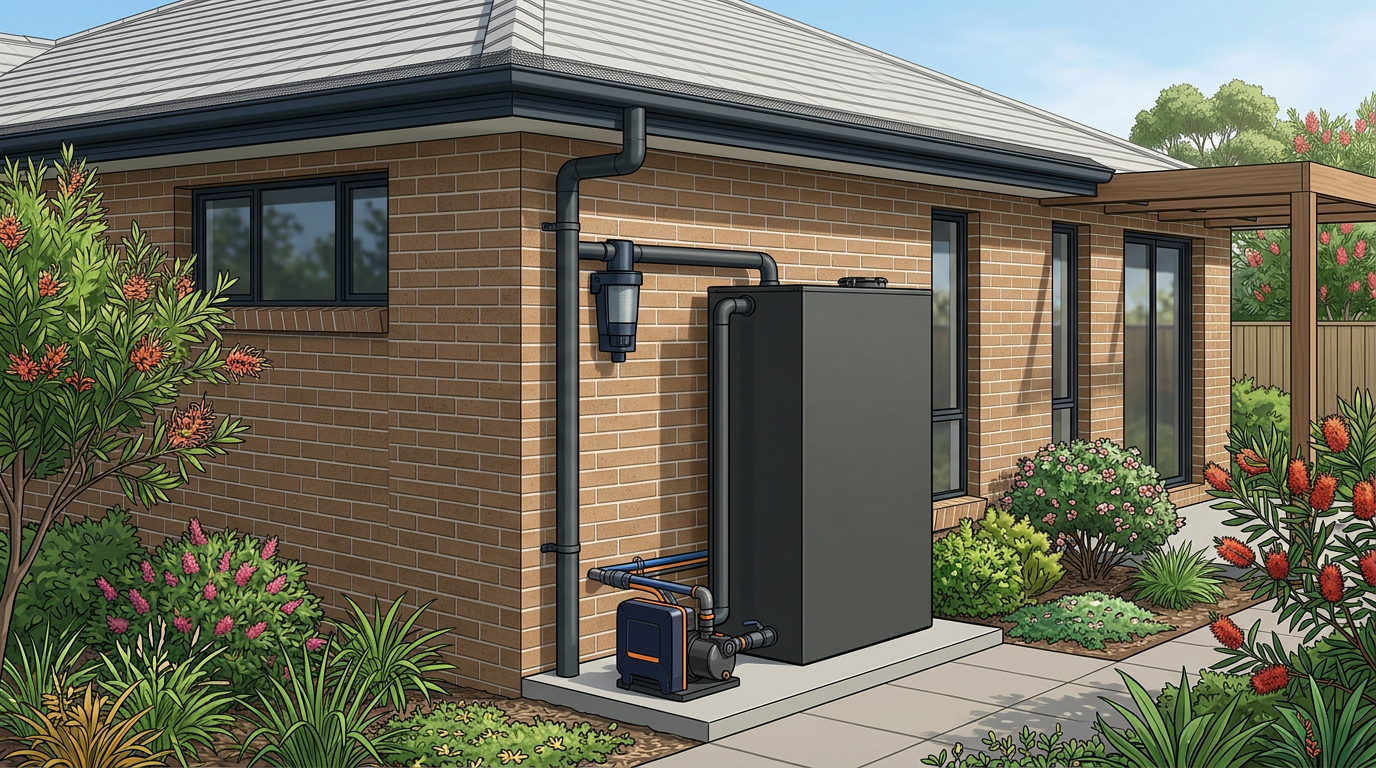
Rainwater Tank Installation in Sydney: Costs, Sizing and Rules
By the team at Tradetek Solutions
Every Sydney spring runs the same way. The tail of winter dumps a week of heavy rain across the catchment, thousands of litres run off suburban roofs into the stormwater system, and six weeks later the same households are standing in the garden with a hose watching a usage charge tick over. The gap between those two moments is exactly what a rainwater tank closes.
Late August is the practical month to act on it. Spring planting has not started, the ground is soft enough for a base, plumbers are not yet buried in December renovation work, and anything installed now is full and paying for itself before the first hot weekend. This guide covers what a rainwater tank installation actually costs in Sydney in 2026, how to size one properly from your roof rather than from a brochure, the plumbing and approval rules that catch people out, and the maintenance that decides whether the system still works in five years.
Why Sydney Homes Are Fitting Tanks Again
Rainwater tanks went quiet after the Millennium Drought and are back for a different reason. It is no longer mainly about restrictions. It is about the usage line on the bill and about roofs that shed a genuinely large volume of water.
- Usage charges only move one way. Every litre you supply yourself is a litre you never pay a usage charge on, and that saving grows with each price determination. Sydney Water sets out the current charges on its accounts and billing pages.
- Sydney roofs are productive. A typical 150 to 220 square metre suburban roof will shed well over 100,000 litres in an average Sydney year. Most of it currently goes down the street.
- New builds and major renovations already require it. Water targets under the NSW planning framework push most new dwellings toward a tank or an equivalent measure, which is why almost every new Sydney home has one.
- Storm runoff pressure. A tank buffers the first surge of a heavy fall, which matters on blocks that already struggle with overland flow.
Sizing the Tank From Your Roof, Not the Showroom
The single most common mistake is buying by tank appearance and available side gap. Size follows catchment and use.
The arithmetic is simple. One millimetre of rain on one square metre of roof gives about one litre, minus roughly ten to fifteen per cent for wetting, splash and first flush diversion. Measure only the roof planes that actually drain into the downpipe you intend to connect, because that is your real catchment, not the whole house.
- Garden and car washing only. 2,000 to 3,000 litres. A slimline tank against a side fence handles this and needs the least plumbing.
- Garden plus toilets. 3,000 to 5,000 litres. Toilets are the best year round load because demand never stops.
- Garden, toilets and laundry. 5,000 litres minimum, and 7,500 to 10,000 litres if you have the space and a four person household.
- Whole of house with treatment. 20,000 litres and up, and generally only worthwhile on acreage or unsewered properties outside the metro area.
Oversizing is not free. A tank that never fills carries stagnant water for months, and a tank that fills after every moderate storm is doing its job. In Sydney's rainfall pattern, a tank sized to fill and draw down several times a year outperforms a larger one that sits half empty.
What the Installation Actually Involves
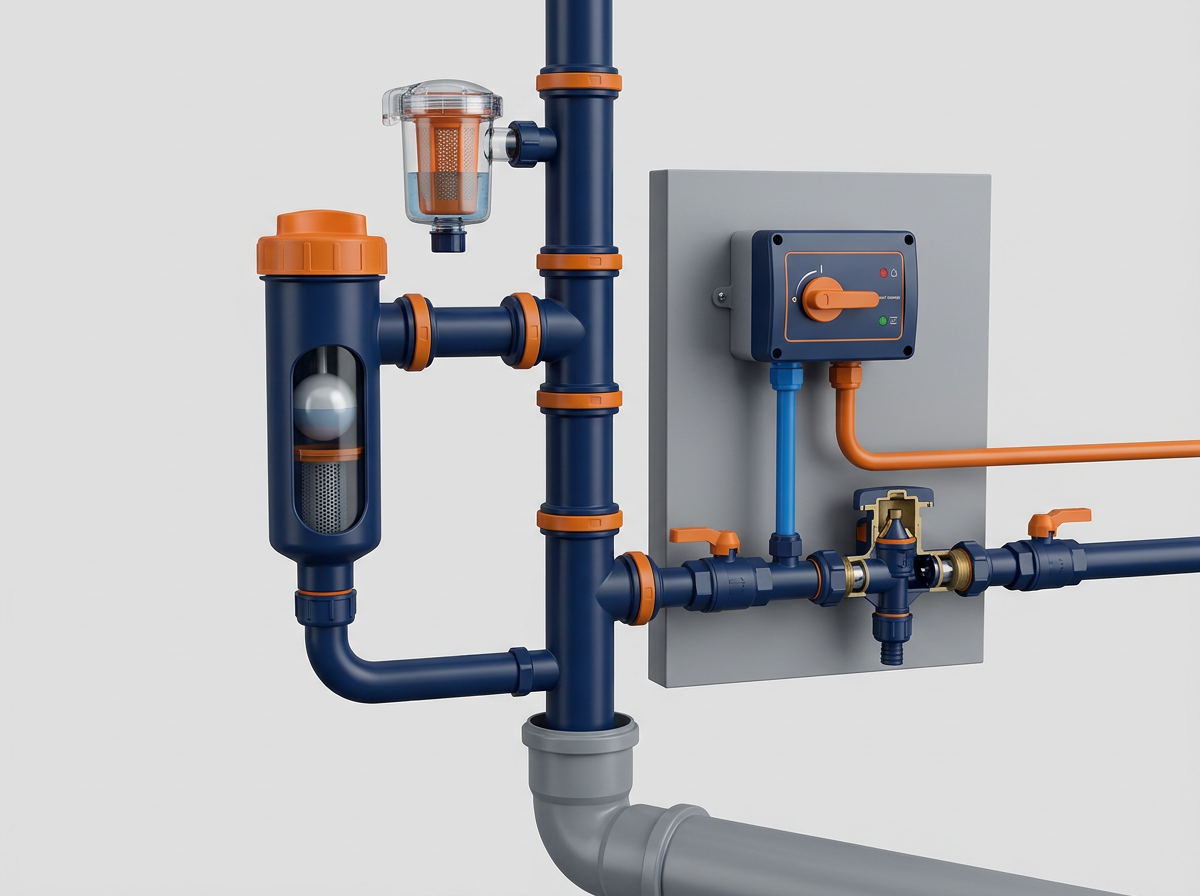
Delivery of the tank is the smallest part of the day. A proper installation is five separate pieces of work, and skipping any of them is what produces the neglected green tank you see in half the back yards in Sydney.
- The base. A full 5,000 litre tank weighs five tonnes. It needs a level compacted pad, a sand bed or a concrete slab, and clearance from footings and boundaries. Tanks fail at the base far more often than at the shell.
- The catchment. Gutters cleaned and repaired, leaf guard fitted, downpipes rerouted or wet system charged lines run underground where the tank is not next to the downpipe.
- The inlet protection. A leaf strainer at the inlet and a first flush diverter sized to the roof area, so the dirtiest water of each storm is dumped rather than stored.
- The overflow. Legally connected to stormwater. An overflow discharging onto the ground next to a footing is the most common defect we find on owner installed tanks, and in a wet Sydney spring it causes real damage.
- The supply side. Pump, automatic mains switching device, backflow prevention, identified rainwater pipework and clearly labelled outlets.
Points three to five are licensed plumbing work in New South Wales. The technical requirements sit in the plumbing provisions of the National Construction Code, and you can verify a tradesperson's credentials through NSW Fair Trading's guidance for plumbers, drainers and gasfitters.
Wet systems and charged lines
If the tank cannot sit beside a downpipe, the water travels underground in a charged line that stays permanently full and rises into the tank by pressure. Charged lines work well and look tidy, but they need a flush point at the low end and they must be laid to fall toward it. Without that, the standing water in the line goes anaerobic and every heavy storm pushes it into the tank first.
Rainwater Tank Installation Costs in Sydney in 2026
These are typical metropolitan Sydney ranges for standard access during business hours. Sloping blocks, tight side access, heritage properties and long charged lines push jobs to the upper end.
- Slimline 2,000 to 3,000 litre tank, garden use, gravity or small pump. 2,200 to 3,800 dollars supplied and installed.
- 5,000 litre round or slimline tank, pump, plumbed to toilets and laundry. 4,500 to 7,500 dollars.
- Concrete base or engineered tank stand. 700 to 2,200 dollars depending on size and ground conditions.
- Pressure pump supplied and fitted. 700 to 1,600 dollars, with quiet enclosed models at the top of the range.
- Automatic mains switching device. 450 to 900 dollars installed.
- First flush diverter and leaf strainer. 180 to 450 dollars.
- Weatherproof outdoor power supply for the pump. 250 to 600 dollars through a licensed electrician.
- Charged line from a remote downpipe. 900 to 2,500 dollars depending on trench length and surface reinstatement.
- Underground or concrete tank with excavation. 9,000 to 25,000 dollars.
Two decisions move the total more than anything else. Putting the tank next to an existing downpipe avoids the charged line entirely, and connecting toilets and laundry at the same time as the tank avoids opening the same walls twice. If the gutters need work anyway, doing that in the same visit is far cheaper than a separate gutter cleaning or gutter and downpipe callout later.
The Compliance Points That Catch People Out
A rainwater tank is one of the few home upgrades where the paperwork and the plumbing details matter as much as the hardware.
- Cross connection is the serious one. Rainwater must never be able to enter the drinking water supply. An approved backflow prevention device and a compliant switching arrangement are mandatory, and testable devices need periodic testing. Our backflow prevention page explains what that involves.
- Every rainwater outlet must be identified. Labelled taps and marked pipework, so nobody in the house or a future owner drinks from a garden line by accident.
- Overflow to legal stormwater. Not to the neighbour, not to the lawn against a footing, not into the sewer.
- Mosquito and vermin proofing. Screened inlets and overflows are a legal requirement, not an optional accessory.
- Position and approval. Most above ground residential tanks are exempt development, but heritage items, front setbacks, tall stands and underground tanks are not. Confirm with your council before the tank is delivered.
- Drinking water. If you intend to drink it, read NSW Health's advice on rainwater tanks first. Where a public supply is available, that is the recommended source for drinking and cooking.
The Pump, the Noise and the Electrical Side
The pump is the part homeowners regret choosing on price. A cheap pump on a boundary near a bedroom window is a genuine neighbour dispute, and a pump that cycles every time a toilet cistern trickles fails early.
- Flow rating. 30 to 45 litres per minute suits toilets, laundry and a hose. Anything less feels weak the moment two fixtures run.
- Quiet or enclosed models. Worth the extra several hundred dollars on a narrow Sydney block.
- Constant pressure control. Reduces cycling and gives a steadier hose and cistern fill.
- Weatherproof supply. An external power point or hard wired connection with RCD protection, installed by a licensed electrician. See our power point installation page for what that involves.
- Mains switching. The device that falls back to town water when the tank runs dry. Test it once a year, because a failed switch in January is discovered the hard way.
If your household already has weak flow at the fixtures before the tank goes in, the pump will not rescue it. Sort the underlying supply first, which our guide on low water pressure in Sydney and our water pressure services page both cover.
Maintenance: What Keeps a Tank Working for Twenty Years
A rainwater system is only as clean as the roof feeding it, and roofs in Sydney collect leaves, dust, blossom and bird droppings continuously. The maintenance load is light but not zero.
- Every three months. Clear the leaf strainer and empty the first flush diverter chamber. Ten minutes.
- Twice a year. Clean the gutters and check the leaf guard, ideally before spring storms and again after autumn leaf drop.
- Annually. Test the mains switching device, check the pump for leaks and unusual noise, and inspect the tank screens.
- Every two to three years. Inspect the tank base for sludge and desludge if it is more than a few centimetres deep.
- After any roof work. Divert the tank inlet during and after roof painting, repointing or repairs, then flush before reconnecting.
If the roof itself is shedding grit or the gutters are rusting through, the tank will collect the evidence. That is worth fixing at the same time, which is what our roof maintenance work is for.
Does It Pay for Itself?
Honestly, it depends on what you connect. A garden only tank is a drought insurance policy and a convenience more than a financial decision. A plumbed in tank serving toilets and laundry is a different proposition, because those loads run every day of the year regardless of weather.
A four person Sydney household typically uses somewhere around 40,000 to 70,000 litres a year on toilets and laundry combined. Displacing that with rainwater removes it from the usage side of the bill permanently, and the value of the saving rises each time usage charges do. On current pricing, a plumbed in 5,000 litre system generally pays back somewhere between seven and fifteen years, faster on larger households and slower on couples.
There is a second financial angle worth knowing. If your bill is already climbing and you suspect it is not just usage, run the overnight meter test before spending money on a tank. Our guide on the Sydney Water bill increase and hidden leak allowance walks through it, and a concealed leak found by professional leak detection will save more, sooner, than any tank.
Why Late August Is the Right Time to Install
Timing genuinely matters with tanks, more than with most plumbing work.
- The tank fills before you need it. Installed now, a Sydney tank is generally full within weeks and ready for the first dry spell.
- The ground is workable. Base preparation and trenching for a charged line are far easier in late winter soil than in baked summer clay.
- Lead times are short. From October, tank suppliers and plumbers move into spring renovation and storm season, and delivery slips.
- Spring planting lines up. A tank commissioned now covers the establishment watering that new plantings need in September and October.
Frequently Asked Questions
Get Your Rainwater Tank Installed Properly
Measure your roof catchment this weekend and decide what you actually want the water to do. That one decision sets the tank size, the pump, and whether the job is a half day or a full day of plumbing.
Tradetek Solutions carries out licensed rainwater tank plumbing, pump and mains switching installation, backflow prevention and gutter work across Sydney, the Central Coast and Newcastle, with fixed price quotes before any work starts. Call 0488 822 794 or request a quote online and we will size the system to your roof rather than to a catalogue. If a burst or an overflow needs attention today, our emergency plumbing team is available around the clock.