
Why Your Sydney Water Bill Just Jumped (And the Hidden Leak Allowance Most Homeowners Miss)
Sydney Water raised prices in July 2025 and is raising them again every year through 2030. Here is what changed, and the rebate most Sydney homeowners do not know they can claim.
Updated June 2026
Refreshed with current Sydney Water tariff data and 2026 leak detection pricing. See also our newer guides on finding hidden water leaks, burst pipe emergencies and leaking shower repairs.
The bill landed in the letterbox last week and the number did not look right. It rarely does this year. Across Sydney, from a terrace in Newtown to a brick four-bedder in Pymble, homeowners are opening Sydney Water bills that are 20 per cent higher than the same quarter last year, and many are hundreds of dollars higher than that. The price rise is real and it is approved by IPART. But the bill shock most homeowners feel is rarely just the new tariff. Underneath the headline increase, a quiet second culprit is at work: a hidden leak on the private side of your meter that you are paying for, drop by drop, every minute of every day. The good news is that Sydney Water has a little-known Hidden Leak Allowance that can refund part of that excess use, and the steps to claim it are simpler than most people think.
What this guide covers
- · What changed with Sydney Water prices in 2025–26
- · The real reason most bills are up more than 20%
- · How a 1 mm leak adds up over a quarter
- · The 10-minute meter test every homeowner should run
- · The Hidden Leak Allowance, line by line
- · How to qualify and what your plumber must document
- · The most common hidden leak locations in Sydney homes
- · When to call a licensed leak detection plumber
What actually changed with Sydney Water prices
On 1 July 2025, a new four-year price path took effect for Sydney Water customers. The Independent Pricing and Regulatory Tribunal of NSW approved the new prices in September 2025 after Sydney Water lodged a major capital investment plan to fund desalination, network resilience and dam upgrades. For a typical household, the changes look like this:
- Service charges rose in a single step on 1 July 2025, then continue rising each year through 2030.
- Usage charges moved to a tiered structure that penalises higher consumption brackets more heavily.
- Wastewater charges, which most homeowners forget are calculated as a fixed proportion of usage, climbed in lockstep.
The headline figure most Sydney households are seeing on their first full quarter under the new pricing is an increase of around 18 to 22 per cent compared with the same quarter last year. That is the official rise. Anything beyond that, and there is a strong chance the extra cost is not the tariff at all. It is water that is leaving your system before you ever turn on a tap.
The real reason most bills are up more than 20%
Sydney Water meters everything that passes through your meter, then bills you for both the supply and the wastewater that supply implies. There is no asterisk for water that disappeared into a slab leak or dripped out of a corroded copper joint behind a wall cavity. Once it crosses the meter, you own it. That is why a slow, silent leak is so financially dangerous. It does not flood your hallway or trip an alarm. It simply meters away in the background, twenty-four hours a day, until a quarterly bill makes it visible.
Inner Sydney suburbs are particularly exposed. Most homes built before 1980 have copper supply lines that have spent decades carrying chlorinated, slightly acidic Sydney Water. Pinhole corrosion is now common, especially in homes around Mosman, Cremorne, Chatswood and the lower North Shore where Federation and post-war homes dominate. On the Central Coast, slab leaks are more common in 1990s and 2000s builds where copper was run directly through the slab.
How a 1 mm leak adds up
- A 1 mm pinhole leak under mains pressure leaks roughly 90 litres per hour.
- That is 2,160 litres a day.
- Over a 90-day Sydney Water billing cycle, that is 194,400 litres.
- You pay for the supply and the wastewater portion of every one of those litres.
A leaking toilet cistern is even sneakier. There is no puddle, no dripping sound, and the water flows quietly into the bowl and down the drain. A typical silent toilet leak wastes 200 to 400 litres a day, which alone can add 18,000 to 36,000 litres to a single quarterly bill.
The 10-minute meter test every Sydney homeowner should run
Before you call anyone, run this test. It costs nothing, takes about ten minutes, and tells you with near certainty whether a silent leak is contributing to your bill.
- Shut off every water source inside and outside. That means every tap, the dishwasher, washing machine, ice maker, evaporative cooler, and any irrigation timers.
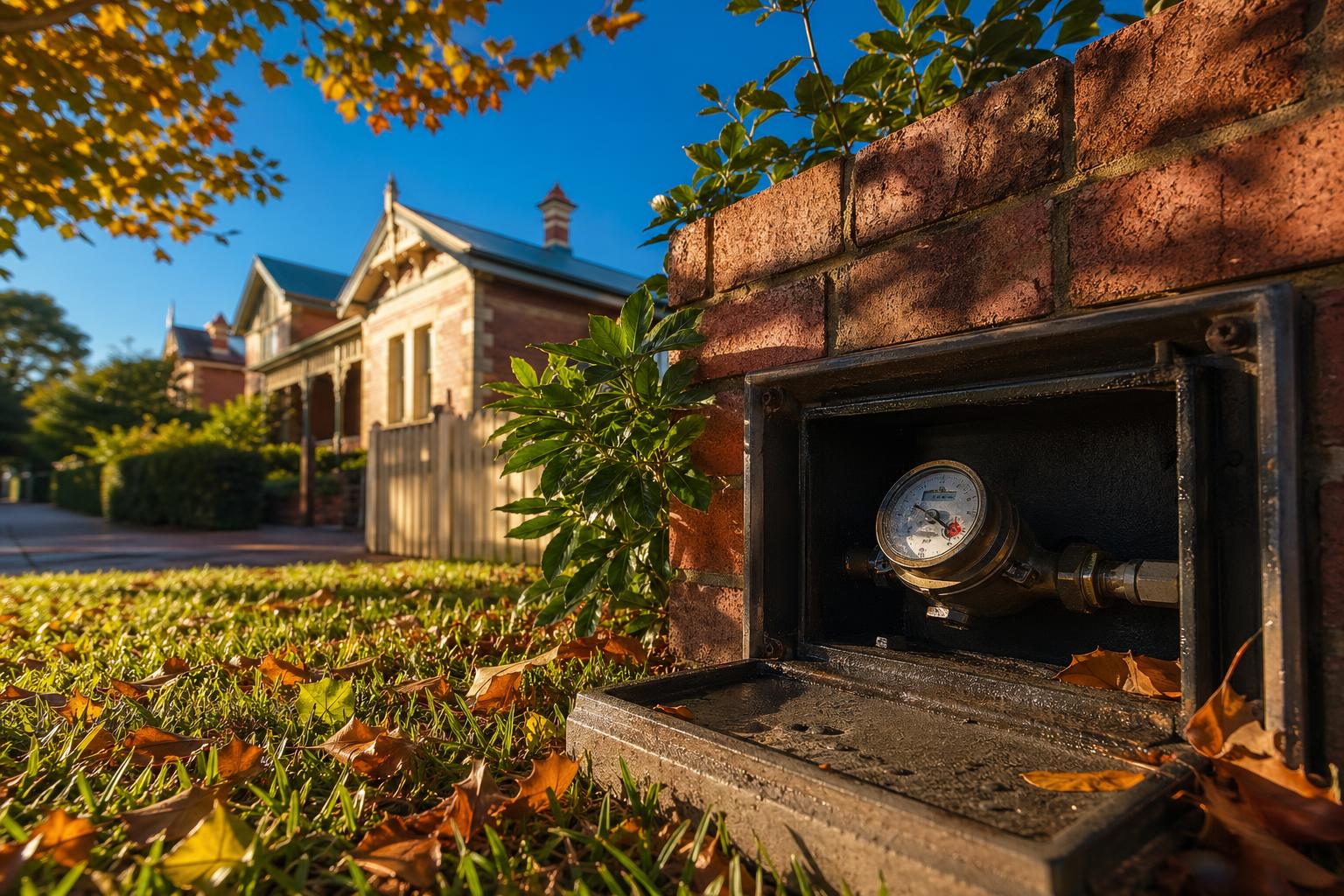
- Find your water meter. It is almost always at the front boundary of the property in a small ground box. Lift the lid and clear away leaves or dirt.
- Watch the leak indicator. On most Sydney Water meters this is a small red or black triangle, star wheel or dial. If it spins, twitches or creeps in either direction with everything off, water is moving somewhere on your side of the meter.
- Take a photo of the full reading. Wait one hour with no water use, then photograph it again. Any change in the numbers is a confirmed active leak.
- Note the result. If the indicator moved, the next call should be to a licensed leak detection plumber. If it did not, your bill increase is most likely tariff, irrigation overuse, or a guest using more water than usual.
For a more complete walk-through of detection methods, including thermal imaging and acoustic listening, see our deeper guide on how to find hidden water leaks at home.
The Sydney Water Hidden Leak Allowance, explained
The Hidden Leak Allowance is the most underused rebate in Sydney residential plumbing. It is a credit Sydney Water can apply to your bill when a concealed leak on your private pipework caused your usage to spike. It exists because regulators recognise that a homeowner cannot reasonably be expected to detect a leak inside a slab or behind a wall before it shows on a bill. The allowance is not automatic. You have to apply, and you have to meet specific conditions.
What Sydney Water typically requires
- The leak must be on the private side of the meter, in pipes you own.
- It must be concealed, meaning underground, in a slab, behind a wall, or in a roof void. Visible drips from a tap or a spa do not qualify.
- Your usage during the affected billing period must be materially higher than your normal historical usage.
- You must provide a licensed plumber's report stating the leak location, the date the leak was found, the repair date, and confirmation that the leak was concealed.
- You must apply within the timeframe Sydney Water sets, which is generally within twelve months of the affected bill.
Sydney Water's own page on help paying bills and concealed leak adjustments lists the current process and contact path. The exact percentage of the excess usage that is credited varies, but a successful claim typically refunds a meaningful portion of the abnormal water and wastewater charges, often hundreds of dollars on a single quarterly bill.
What your plumber's report must include
The single most common reason a Hidden Leak Allowance application is rejected is an incomplete plumber's report. Sydney Water needs specific facts on the page. When we attend a leak in a Sydney home, the report we issue for an allowance claim always covers:
- The licensed plumber's name, NSW Fair Trading licence number and contact details.
- The property address and meter number.
- The date the leak was located and the method used to find it (acoustic, thermal, pressure test, etc).
- The exact location of the leak (for example, "20 mm copper supply line, slab leak under kitchen, 1.8 m from northern wall").
- A clear statement that the leak was concealed and not detectable from visible inspection.
- The repair date, the repair method, and confirmation the system was tested and is now leak-free.
All NSW residential plumbing must be performed by a contractor licensed by NSW Fair Trading. If your report does not name a licensed plumber, Sydney Water will not accept it.
The most common hidden leak locations in Sydney homes
After thousands of leak detection jobs across Sydney and the Central Coast, the same culprits show up again and again. If your meter test confirmed an active leak, these are the places we check first.
1. Slab leaks in the kitchen and bathroom
The most common slab leak we find is on the hot water supply line where it loops up out of the slab to feed the kitchen sink. The first sign is often a warm patch on a cold tile floor. Slab leaks are concealed by definition, which makes them strong candidates for the Hidden Leak Allowance once repaired.
2. Toilet cistern outlet valves
A worn cistern outlet washer lets water trickle past the flush valve and straight down the bowl. There is no visible drip, no sound, and the only sign is a faint shimmer on the back of the bowl above the water line. A two-dollar food-dye test in the cistern will confirm it within fifteen minutes.
3. Buried garden mains and irrigation lines
Older PVC garden mains crack at solvent-welded joints, especially after a hot summer followed by sudden autumn cold. Tree roots in established Sydney suburbs like Lane Cove and the leafy parts of Hornsby push joints apart over years. Irrigation solenoids that fail open are another big offender, and they often only run a few minutes a night so the leak hides in the noise.
4. Hot water unit pressure relief valves
A pressure and temperature relief valve on a hot water unit is supposed to weep occasionally, not stream. If yours is dripping continuously into the overflow drain, it is wasting hot water you are paying twice for, once at the meter and once on the gas or electricity bill. Our hot water system service page covers how this is diagnosed and repaired.
5. Concealed copper joints in wall cavities
The hardest leaks to find are the slowest ones, where a pinhole in a copper joint inside a wall cavity drips a few millilitres an hour. The water tracks down the timber stud, evaporates, and never reaches the floor. Acoustic and thermal scanning are the only reliable ways to find these without opening walls.
When to call a licensed leak detection plumber
Call a professional the same day if any of the following are true:
- Your meter leak indicator moves with all water sources off.
- Your bill is more than 30 per cent higher than the same quarter last year.
- You can hear running water in a wall, ceiling or under the floor when no taps are on.
- You see unexplained warm spots, damp paint, or rising damp on internal walls.
- Your hot water unit relief valve is dripping continuously.
Our team uses non-invasive acoustic correlators, thermal imaging cameras and pressure testing to pinpoint a leak to within a few centimetres before any cutting or excavation begins. That is the difference between repairing a 200 mm patch of slab and tearing up a kitchen. For a full breakdown of the technology and the process, see our professional leak detection service page.
A short word on protecting yourself going forward
Once the immediate leak is found and repaired, two small habits prevent the next bill shock. First, do the ten-minute meter test once a quarter, ideally the day your Sydney Water bill arrives. Second, take a photo of the full meter reading on the same day every month and keep them in an album on your phone. Twelve photos a year is enough data to spot a creeping leak months before a bill makes it obvious. The Insurance Council of Australia's guide to the insurance recovery and claims process makes clear that early detection is the single biggest factor separating a small repair bill from a five-figure damage claim.
The Bureau of Meteorology's National Water Account for Sydney also makes it clear that water is going to keep getting more expensive in Sydney, not less. Every litre you stop losing today is a litre you will not pay an even higher tariff for tomorrow.
Frequently asked questions
Stop paying for water you never used
Our licensed Sydney leak detection team locates concealed leaks without unnecessary digging and provides the exact plumber's report Sydney Water needs for a Hidden Leak Allowance claim.