
Ceiling Fan Installation in Sydney: Costs and Rules
By the team at Tradetek Solutions
Sydney's first 35 degree day usually lands before anyone has thought about cooling. The north westerly comes through, the house holds the heat overnight, and every electrician in the metro area suddenly has a three week wait for ceiling fan work. The households that booked in late winter are already sleeping comfortably.
A ceiling fan is still the cheapest cooling upgrade a Sydney home can get. Running one costs a few cents an hour, it drops the felt temperature by two to four degrees, and paired with open windows it handles most of a Sydney summer without touching the air conditioner. This guide covers what ceiling fan installation costs in Sydney in 2026, how to size a fan properly for each room, the DC versus AC motor decision, and the licensed wiring rules that make this a job for an electrician rather than a weekend project.
Why Sydney Homes Book Fans Before Spring
Sydney's climate has a particular pattern: mild winters, then humidity that builds from November and peaks in February. The Bureau of Meteorology's Sydney climate data shows average summer highs around 26 degrees at Observatory Hill, but western suburbs regularly sit six to ten degrees hotter on the same day.
- The lead time trap. Fan installation bookings spike with the first heatwave. Late winter appointments are often available within days.
- Fans earn their keep for eight months. In Sydney's climate a ceiling fan runs from October through May, and the winter reverse setting helps push warm air down in open plan rooms.
- Whole house effect. Bedrooms are where fans change lives. Sleeping through a humid January night without running air conditioning is the real payoff.
- Resale and rental appeal. Agents consistently list ceiling fans among the small upgrades tenants and buyers notice first.
Ceiling Fan Installation Costs in Sydney (2026)
These are typical metropolitan Sydney prices for standard ceiling heights and reasonable roof access. Complex wiring runs, cathedral ceilings and switchboard limitations push jobs toward the upper end.
- Straight replacement onto existing wiring. 250 to 450 dollars labour, fan not included.
- New installation with a dedicated circuit and wall controller. 350 to 650 dollars labour, 550 to 1,100 dollars with a quality fan supplied.
- Fan supply only. 150 to 300 dollars for a basic AC model, 300 to 700 dollars for a quiet DC model with remote and light.
- Extension downrod for high or raked ceilings. 80 to 250 dollars supplied and fitted.
- Smart module or wall controller upgrade. 60 to 200 dollars.
- Outdoor rated alfresco fan, supplied and installed. 550 to 950 dollars, because these need weatherproof fittings and corrosion resistant hardware.
- Switchboard work if the board is full or lacks RCD protection. Priced separately, and worth reading our page on switchboard upgrades if your home still has ceramic fuses.
The cheapest quote is rarely the cheapest job. A fan hung on a plaster anchor or wired without proper isolation fails early and can be dangerous. Ask every quoting electrician whether the price includes a fan-rated bracket, balancing, and the compliance certificate. If you are planning broader electrical work, bundling jobs into one visit saves real money, and our electrical services team can scope it in a single quote.
What Moves the Price Up or Down
Four factors decide where your quote lands. Knowing them before you call saves a round of phone tag.
Wiring and circuits
Replacing an existing light or fan uses the cabling already in the ceiling, which keeps labour to an hour or two. A brand new position means running cable from the switchboard or a nearby circuit, sometimes through a tight roof cavity full of insulation. Older Sydney homes with brittle rubber insulated wiring can need a partial rewire before any new load is added, which is exactly the kind of thing our home electrical safety inspection guide helps you spot early.
Ceiling height and structure
Standard 2.4 to 2.7 metre ceilings are straightforward. Anything above three metres needs a downrod so the blades sit in the zone where moving air actually reaches you, and raked or cathedral ceilings need an angled mount. Double storey homes without roof access above the room can add an hour of fiddly cable work.
Fans with lights
A fan with an integrated light replaces two fittings with one, which suits bedrooms and rentals. It also means the existing light wiring often transfers directly. If you are upgrading fittings at the same time, pairing the job with LED lighting across the room trims the total labour.
Controllers and smart features
Remote controls come standard with most DC fans. Wall controllers add a small amount of wiring, and smart modules that tie into Google Home or Alexa add a little more. Decide before the install, because retrofitting a wall controller later means opening the wall again.
Sizing the Fan to the Room
Undersizing is the most common buying mistake. A fan that is too small runs at full speed all summer, makes more noise and moves less air than a larger fan on a lower setting.
- Small bedroom or study, up to 10 square metres. 112 to 122 centimetre blade span.
- Standard bedroom, 10 to 15 square metres. 132 centimetres, the most common size in Sydney homes.
- Main bedroom or living room, 15 to 25 square metres. 142 centimetres.
- Open plan living, 25 square metres and up. 152 centimetres or two well placed smaller fans, which often outperform one large one in L shaped rooms.
- Alfresco and covered outdoor areas. Outdoor rated models sized to the area, with stainless or polymer blades that survive coastal air.
Clearances are safety requirements, not suggestions. Blades need at least 2.1 metres from the floor, about 50 centimetres from walls and sloping ceilings, and clearance from bunk beds in kids' rooms. The CHOICE ceiling fan buying guide has useful independent test data on airflow across sizes if you want to compare models before buying.
DC vs AC Motors: What Actually Matters
The motor is the one spec worth paying attention to. Everything else is styling.
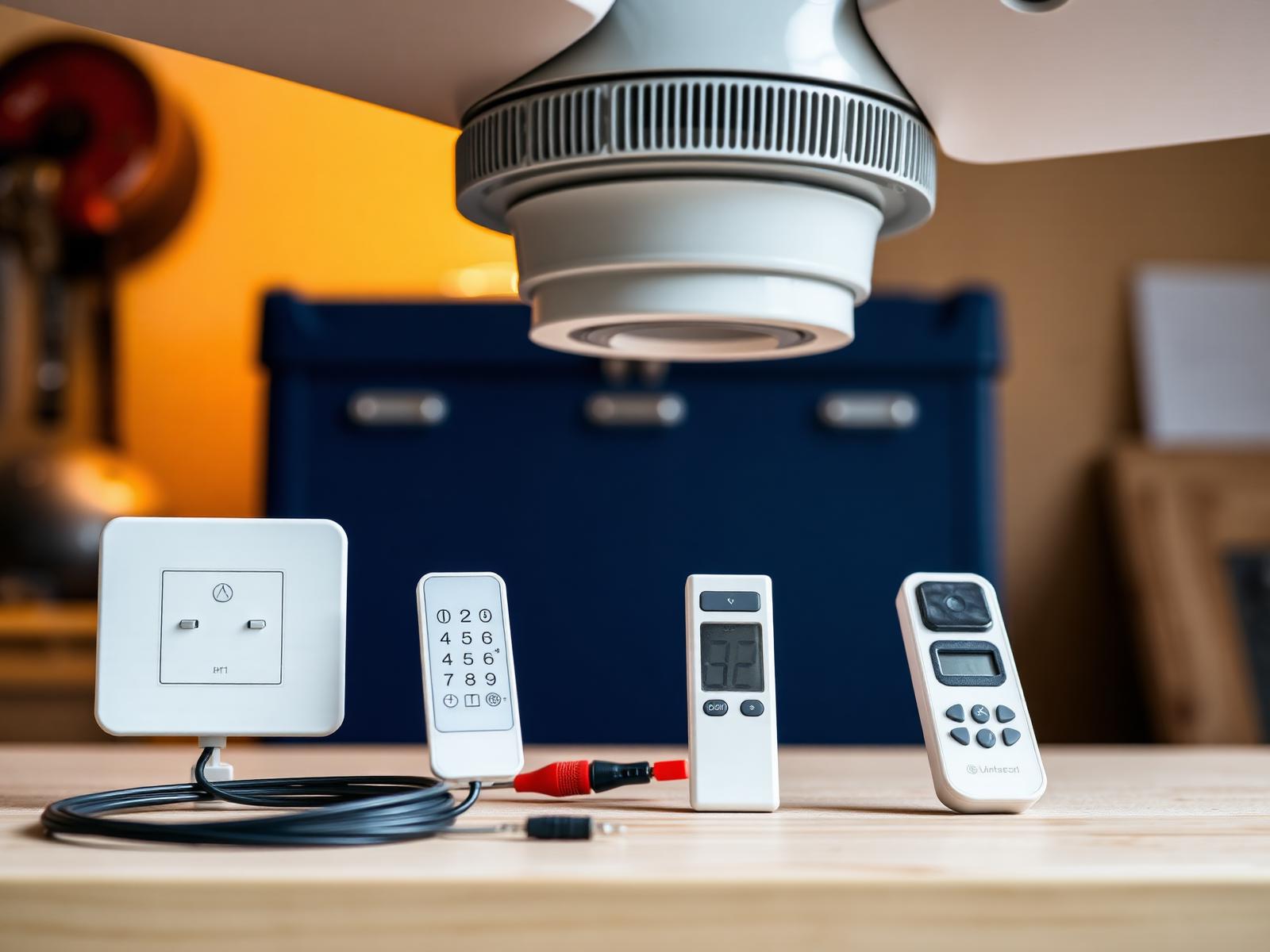
- Energy use. A DC fan on low speed draws as little as 3 to 5 watts, roughly 70 per cent less than an equivalent AC motor. Across a Sydney summer of nightly bedroom use, that is a visible difference on the bill.
- Noise. DC motors are close to silent at sleep speed. AC fans have a soft hum that some people find soothing and others cannot sleep through.
- Speed control. DC fans offer five to six speeds plus a natural breeze mode and timers, all from the remote. AC fans typically give you three speeds at the wall.
- Price. Expect to pay 100 to 250 dollars more for DC. In bedrooms, the quiet alone usually justifies it.
- Winter reverse. Most DC models reverse direction at the touch of a button, pushing warm air down from the ceiling in winter. Handy in open plan rooms with high ceilings.
Fans vs Air Conditioning: The Running Cost Maths
A ceiling fan costs between one and three cents an hour to run. A split system air conditioner cooling the same room costs somewhere around 40 to 80 cents an hour depending on size and tariff. That gap is why the smartest Sydney cooling strategy uses both.
The fan handles the mild nights and shoulders of summer on its own. On genuinely hot days, running the fan alongside the air conditioner lets you set the thermostat two to three degrees higher with the same comfort, which cuts the compressor's workload meaningfully. If you are weighing up a full cooling upgrade, the independent CHOICE air conditioner buying guide is a solid starting point for sizing and efficiency.
There is a winter angle too. Homes investing in efficient cooling often benefit from checking the rest of the lighting and power load at the same time. Our guide on the LED downlight upgrade and winter energy savings covers the other side of that equation.
Why Ceiling Fans Are Licensed Electrical Work in NSW
This is the part that matters most, and the part hardware store packaging glosses over. In New South Wales, connecting a ceiling fan is fixed electrical wiring work, and the law requires it to be done by a licensed electrician. NSW Fair Trading's electrical licensing guidance sets out exactly which work is restricted.
- DIY wiring is illegal and uninsured. Unlicensed electrical work can void your home insurance. If a fire traces back to an owner installed fan, the claim is in real trouble.
- Fans are a mechanical load, not just an electrical one. A five to eight kilogram motor spinning overhead needs a bracket fixed to structure. Plaster anchors in gyprock are how fans end up on beds.
- RCD protection is mandatory. Circuits need safety switch protection under the wiring rules. If your safety switch trips repeatedly after any electrical change, our guide on why safety switches keep tripping in Sydney explains the usual causes.
- You get paperwork. A licensed electrician issues a Certificate of Compliance for Electrical Work, which is your proof the job was done legally.
Working in roof spaces carries its own risks, from heat to live cabling hidden in insulation. Ausgrid's electrical safety guidance is blunt about the consequences, and it applies to homeowners crawling into the roof just as much as trades. When you are choosing an electrician, membership of an industry body such as the National Electrical and Communications Association is a reasonable extra tick alongside the licence itself.
Where Fans Earn Their Keep in a Sydney Home
Not every room justifies a fan, and the order of priority surprises people.
- Bedrooms first. Sleep quality is where a fan pays for itself. A quiet DC fan on speed one or two moves enough air to sleep through most Sydney summer nights.
- Living rooms second. Especially west facing rooms that hold afternoon heat. One 152 centimetre fan changes how the whole family uses the room.
- The alfresco area third. Outdoor rated fans turn a covered deck into usable space through January, and they keep flies and mosquitoes off the table as a bonus.
- Home offices. A small fan over the desk avoids running ducted air conditioning for one person all day.
Coastal suburbs need a specific warning: salt air corrodes standard fan motors and blade finishes within a few years. Homes within a kilometre or two of the water should use marine grade or fully sealed outdoor rated models even indoors. It is one of the details we check automatically on jobs across the Sydney service area, because a corroded fan is a wobbling fan.
What a Professional Installation Looks Like
A standard single fan install takes one to two hours. Knowing the sequence helps you spot whether a quote covers the whole job or just the easy parts.
- Isolate the power and assess the ceiling. The electrician switches off and tests the circuit, then checks the ceiling cavity for joist position, existing wiring condition, insulation clearance and whether a fan-rated mounting point already exists.
- Fit the fan-rated mounting bracket. A ceiling fan vibrates under load, so it mounts to a structural member or an approved fan brace, never to a plaster anchor. High or raked ceilings get a downrod sized to keep the blades in the useful airflow zone.
- Assemble and hang the motor. The motor housing is hung on the bracket, blades are attached and torqued evenly, and any integrated light kit is fitted according to the manufacturer's instructions.
- Connect the wiring and controller. Active, neutral and earth are connected at the ceiling rose or a new circuit is run back to the switchboard. A wall controller, remote receiver or smart module is fitted, and everything is RCD protected.
- Test, balance and certify. The fan is run through every speed, checked for wobble and noise, and balanced if needed. The electrician issues a Certificate of Compliance for Electrical Work and registers any warranty requirements.
If the job is part of a bigger renovation or you are fitting fans through the whole house, it is worth treating it like any other trade contract. NSW Fair Trading's building and renovating essentials page explains what a proper quote and contract should contain.
Frequently Asked Questions
Book Your Fan Installation Before the Heat Does
Every year the pattern repeats: the first humid weekend arrives, and every licensed electrician in Sydney is suddenly quoting December lead times. A fan installed in late winter costs the same as one installed in a panic in January, but it is working from day one of summer.
Tradetek Solutions installs ceiling fans across Sydney, the Central Coast and Newcastle, from single bedroom swaps to whole house fit outs with smart controls. Every job is done by a licensed electrician, RCD protected, balanced, and certified. Call 0488 822 794 or book online and we will confirm a fixed quote before anyone picks up a tool.