
Backflow Prevention Testing in Sydney: 2026 Compliance Guide
By the team at Tradetek Solutions
Every June and July, the same email lands in the inbox of Sydney café owners, strata managers, dental practices and property managers across Mosman, Surry Hills, Parramatta and the Hills District. It is a polite reminder from Sydney Water that the annual backflow prevention test on the device protecting their water service is due, and that an accredited test certificate must be lodged. The mid-year cluster is not random. Most Sydney commercial fit-outs and strata buildings were originally commissioned in winter, so the twelve-month renewal lands in winter forever after.
Backflow testing is the quiet compliance item that no one thinks about until a notice arrives. It is also one of the cheapest and fastest annual obligations a Sydney property owner can clear, provided it is booked with a plumber accredited to test and lodge under the Sydney Water scheme. This guide explains what a backflow device actually does, who in Sydney is required to test one, what the 2026 cost looks like, and how to avoid the small but avoidable penalty of letting the certificate lapse.
What a Backflow Prevention Device Actually Does
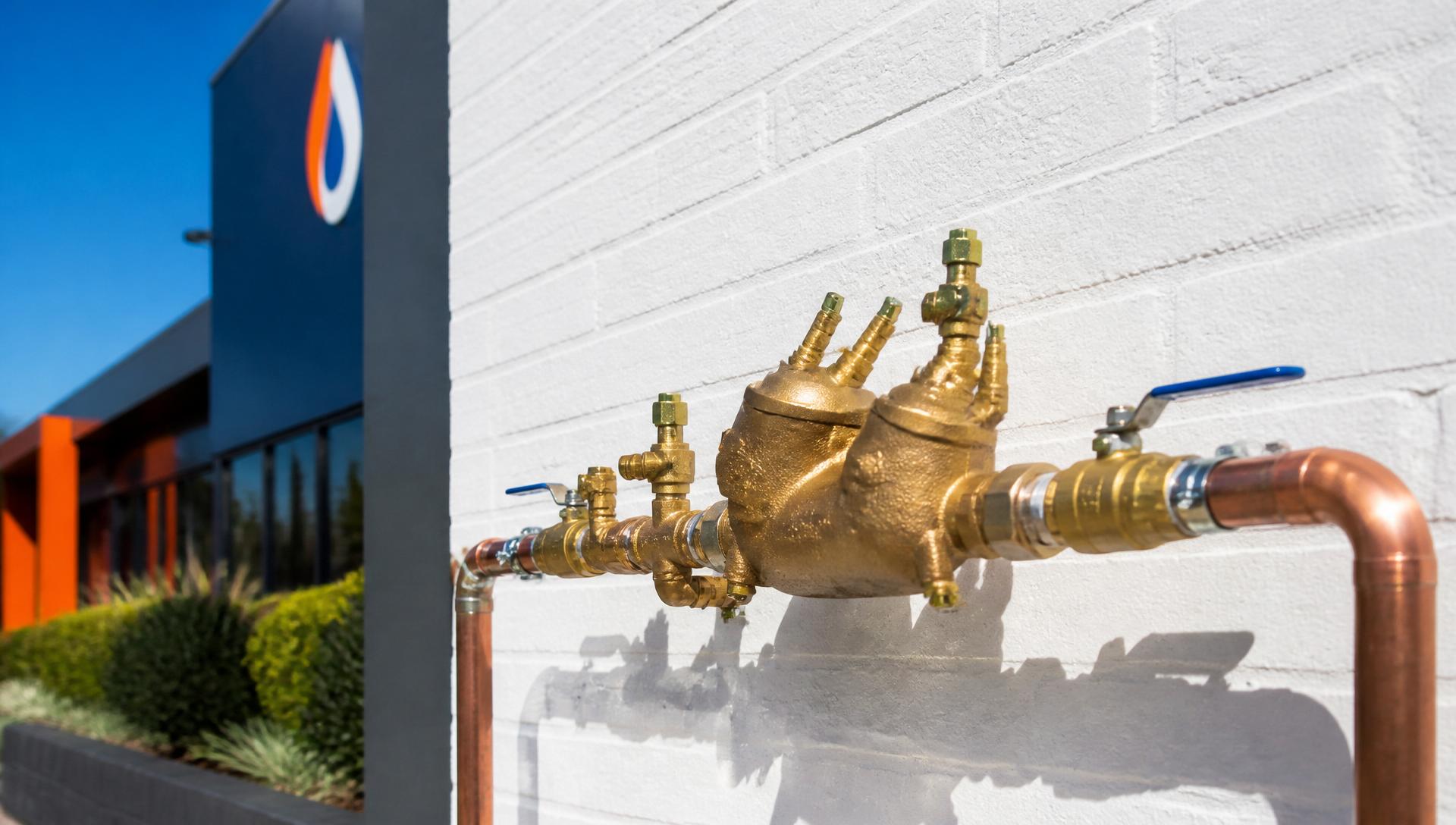
A backflow prevention device is a one-way valve assembly fitted to your incoming water service. Its job is to stop water that has already entered your property from being sucked or pushed back into the public drinking water main. That reverse flow is called backflow, and it happens any time the pressure in the street main drops below the pressure inside your property. A burst main two streets away, a fire brigade pumping from a nearby hydrant, or a water carter filling from your stand-pipe can all create that pressure inversion.
The risk is not theoretical. If your property has irrigation, a rainwater tank cross-connection, a commercial kitchen, a hairdresser basin, a medical suite, a swimming pool auto-fill or a chemical dosing line, the water inside your pipes is not the same water the neighbours drink. Without a tested device, that water can re-enter the main and travel to the next twenty homes on the same street.
Who in Sydney Has to Test a Device Each Year
Sydney Water classifies properties as low, medium or high hazard based on the activities on site. Each class is matched to a device type and a testing rule. The rule that catches most owners by surprise is that medium and high hazard devices must be tested every twelve months by an accredited tester, and the certificate must be lodged with Sydney Water.
- High hazard. Hospitals, dental and medical clinics, mortuaries, laboratories, commercial laundries, car washes, chemical plants, mortuary cool rooms. Requires an RPZ device, tested annually.
- Medium hazard. Cafés, restaurants, commercial kitchens, hairdressers, panel beaters, irrigation systems tied to mains, multi-storey buildings, fire services. Requires a double check valve or RPZ, tested annually.
- Low hazard. Most standalone homes, small offices, retail without a kitchen. A dual check valve fitted at the meter by Sydney Water covers the property and does not require annual testing.
- Strata and mixed-use buildings. The owners corporation is responsible for the common boundary device. Individual tenancies with a hazard activity, such as a ground-floor café in a residential tower, often have a separate testable device of their own.
If you have ever been asked for a backflow certificate during a building or pest inspection, a fit-out handover or a strata audit, your property has a testable device. The certificate is what the auditor wants to see.
The Three Device Types You Will See on a Sydney Property
Reduced Pressure Zone (RPZ)
The brass body with a vent at the base that drips visibly when the device is doing its job. RPZs are the high hazard standard and the most common device on Sydney medical, dental and food premises. They are also the device most likely to fail a test, because the relief valve diaphragm is the part that wears.
Double Check Valve (DCV)
Two independent check valves in a single brass body, used on medium hazard sites such as cafés, hairdressers and irrigation systems. Cheaper to install and rebuild than an RPZ, and the workhorse of Sydney commercial fit-outs.
Dual Check Valve at the Meter
The small, non-testable device Sydney Water fits to most new residential meters. It covers low hazard properties and does not require annual testing. If a homeowner adds an irrigation system, a pool auto-fill or a workshop later, the property may need to upgrade to a testable device.
What the 2026 Annual Test Actually Involves
The annual test is short, non-invasive and almost never disruptive. A typical single-device visit in Sydney runs to about thirty minutes on site.
- The tester checks that the device matches the hazard rating and that the isolation valves operate.
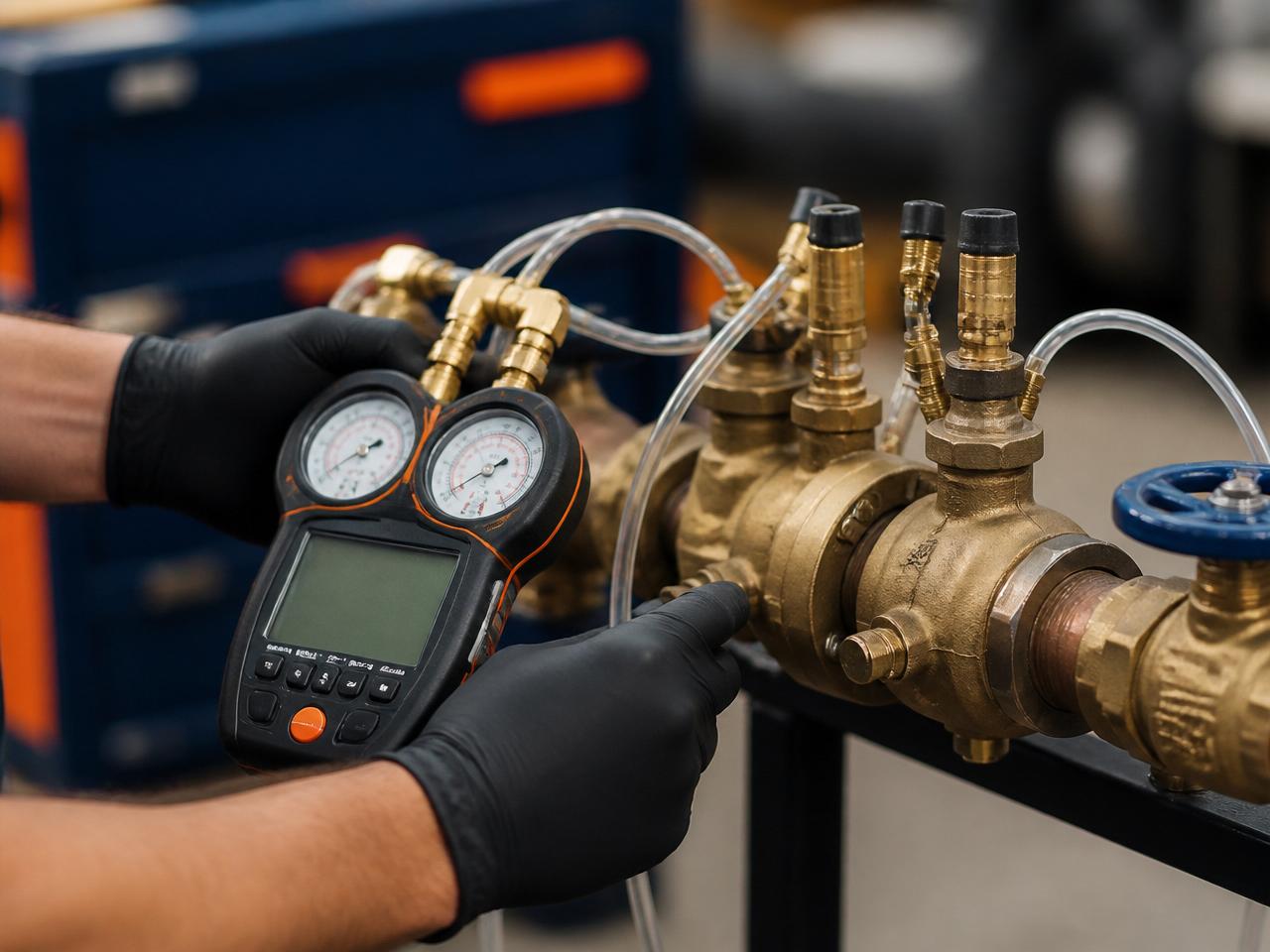
- Calibrated differential pressure gauges are connected to the test cocks on the device.
- The tester runs the check valve and relief valve sequence prescribed by AS 2845.3, recording each pressure reading.
- Pass or fail is determined on the spot. A pass is lodged with Sydney Water within ten business days. A fail triggers a repair quote and a retest.
- The owner receives a copy of the certificate and the next due date.
The water service is typically isolated for two to five minutes during the test sequence. For a café or medical practice this is scheduled outside trading or appointment hours.
2026 Sydney Backflow Testing Costs
Pricing has been broadly stable across Sydney metro through 2025 and into 2026. The figures below are a guide for budgeting and should be confirmed with a written quote.
- Single device, annual test and lodgement. Around 180 to 320 dollars including travel within Sydney metro.
- Each additional device on the same site. Around 90 to 160 dollars per device once the tester is already on site.
- Failed device kit rebuild. Around 280 to 650 dollars depending on device size and brand.
- Full device replacement (20 mm DCV). Around 850 to 1,400 dollars supplied and installed.
- Full device replacement (50 mm RPZ). Around 2,800 to 4,800 dollars supplied and installed.
- New installation including isolation, drain line and commissioning test. Quoted per site after a survey.
What Goes Wrong When You Miss the Annual Date
Missing the renewal does not trigger an instant shutoff. It triggers a sequence that quietly gets worse the longer it is ignored.
First, Sydney Water issues a reminder. Second, an overdue notice arrives, sometimes with an administrative fee. Third, the property goes on a non-compliance list that can show up in due diligence searches, strata audits and lease renewals. In repeat cases, Sydney Water has the power to restrict supply until the device is tested and lodged. Insurers also routinely ask for the current certificate after any water damage claim involving a commercial premises, and a lapsed certificate is the easiest way for an assessor to reduce a payout.
The fix is always cheaper than the chase. Booking the test two weeks before the due date avoids every one of these outcomes.
How Backflow Testing Fits the Rest of Your Compliance Calendar
For most Sydney commercial properties and stratas, backflow testing sits alongside three other annual checks that share a winter scheduling window. Bundling them with the same trades reduces site visits and downtime.
- Hot water tempering valve service. Required on most healthcare and aged-care sites, often on the same plumbing visit. See our water heater service page.
- Annual drain and trap inspection. Especially for food premises, where a winter blockage is far more likely. Pair the visit with a CCTV drain inspection and read why Sydney drains keep blocking every winter.
- Smoke alarm and electrical compliance. For strata and rental properties, the annual electrical inspection often falls in the same quarter. See the NSW rental electrical safety guide.
- Gas heater service. Where the kitchen or amenity gas appliances also need their annual safety check before peak winter use. See the gas heater safety checklist.
How to Choose an Accredited Backflow Tester in Sydney
Only a plumber accredited under the relevant NSW backflow scheme can issue a certificate that Sydney Water will accept. Ask three questions on the first call.
- Are you accredited to test and lodge backflow devices with Sydney Water, and can I see your accreditation number?
- Do you lodge the certificate electronically through the Sydney Water portal, or do I need to handle paperwork?
- If the device fails, do you carry rebuild kits on the truck so the retest can be done the same day?
You can verify a plumbing licence in seconds against the NSW Fair Trading public licence check. The technical standard the test is run against is AS/NZS 2845.3, the testing and maintenance standard for water supply backflow devices. The Sydney Water customer site explains the property owner obligations under their backflow prevention page.
When a Sydney Home Suddenly Needs a Testable Device
The most common trigger for a Sydney homeowner is adding an irrigation system, a rainwater-to-mains top-up, a pool auto-fill, a workshop sink with chemical use or a granny flat with its own kitchen. Any of these turn a low hazard property into a medium hazard one, and the meter dual check is no longer enough.
A new double check valve installed at the boundary is usually the cheapest path back to compliance. The install is a half-day job, the device is commissioned with a test, and the property is placed on the Sydney Water annual schedule from that date forward. See our backflow prevention page for the install and testing process, and the emergency plumbing page if the issue surfaced after a water main event.
Frequently Asked Questions
Get Your Annual Backflow Test Done Before the Notice Arrives
Booking ahead of the due date keeps the certificate current, keeps Sydney Water out of your inbox and keeps your insurer comfortable if a water event ever happens. Our accredited testers cover Sydney metro, the Central Coast and Newcastle, lodge electronically and carry rebuild kits on the truck for same-day retests.
Book a Sydney Backflow Test
Accredited testers, electronic lodgement, written certificate.
Call 0488 822 794