
Why Sydney Drains Keep Blocking Every Winter
By the team at Tradetek Solutions
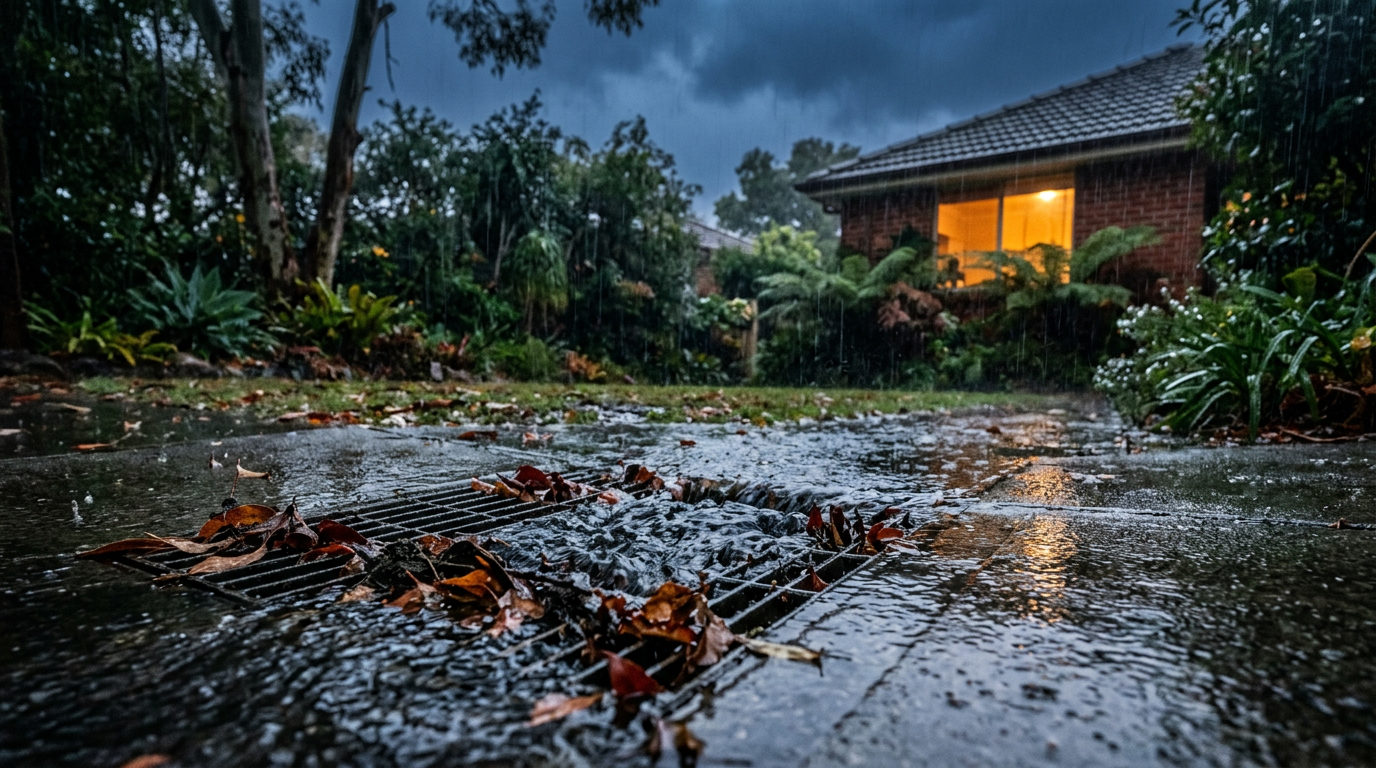
The first 50 mm rain dump of a Sydney winter has a sound. It starts as gravel hitting the colorbond, then becomes a steady roar across the street, and somewhere between hour two and hour four a homeowner in Mosman, Ryde, Hornsby or the Northern Beaches walks barefoot into a flooded laundry. The drain that "had a bit of a slow gurgle in March" has now backed up across the tiles, the kitchen sink will not empty, and the gully at the side of the house is rising. Every winter, our phones run hot with the same five suburbs and the same five sentences.
The truth most Sydney homeowners are never told is this: a drain that blocks in winter is almost never blocked by what is in it today. It is blocked by something that has been growing or breaking inside the pipe for years, and the rain is just the tipping point. Clearing it with a plumber's snake buys six to ten months. Fixing it properly buys three decades. This guide walks you through why it happens, how to tell which problem you have, and the permanent fixes that stop the same drain ending up on next winter's call sheet.
Why Sydney Drains Block in Winter and Not in Summer
Three things change between February and June in a Sydney drain, and all three push a borderline pipe over the edge at the same time.
The first is rainfall intensity. The Bureau of Meteorology's east coast low climatology shows that Sydney's wettest 24-hour totals fall reliably between May and August, and the city's stormwater design standards published by the Australian Building Codes Board assume a clear pipe at full bore. A 25 percent root intrusion that a clean summer load handles without a hiccup will surcharge the moment a winter cell drops 30 mm in an hour.
The second is tree-root behaviour. Sydney's most common root intruders, including liquidambar, jacaranda, camphor laurel and the native eucalypts that dominate the North Shore and Hills District, slow their canopy growth in winter and push their root mass toward the warmest, wettest target available. That is your sewer line. The roots find a hairline crack in a 70-year-old vitreous clay joint and fan out inside the pipe within weeks.
The third is household load. Long hot showers, more cooking, more dishwasher cycles and more laundry all push more fat, soap scum and food fibre through the same compromised pipe in the same window.
The Five Causes Behind Almost Every Recurring Blockage
When a Sydney drain blocks for the second or third time, the cause is almost always one of five things. Knowing which one you have is the difference between a $300 clear and a permanent repair.
- Tree root intrusion. The single biggest cause across Sydney's older suburbs. Roots enter at joints in clay pipe and at any pinhole in PVC, then fan out and trap everything that follows.
- Collapsed or cracked clay pipe. Common in homes built before 1980. Ground movement, traffic vibration and tree roots all open the joint until a section drops out of alignment.
- Fat, oil and grease build-up. Mostly affects the kitchen branch. Hot fat poured down the sink cools, hardens and lines the pipe wall over years.
- Wet wipes and sanitary product blockages. Even wipes labelled "flushable" do not break down like toilet paper. They snag on a single root strand and become a dam.
- Bellied or back-fallen pipe. A section of pipe sags below the correct fall, usually because of subsidence under a slab or driveway. Water sits in the belly and silt collects at the low point.
You cannot diagnose any of these from the surface. You can guess based on the age of the house and the smell coming out of the gully, but a guess is what gets you another blockage next July.
How to Tell What You Are Actually Dealing With
Before you call anyone, walk the property and check three things. The answers tell a plumber more than a 20-minute phone call ever will.
1. Which fixtures are slow?
If only the kitchen sink is slow, the blockage is in the kitchen branch and is probably fat. If only the upstairs shower is slow, it is hair and soap in a hair trap. If both toilets gurgle when the washing machine drains, your main sewer line is restricted and that is the one to worry about.
2. Is the boundary trap surcharging?
Find the boundary trap. It is usually a round concrete or PVC inspection pit near the front fence, sometimes hidden under a garden bed. Lift the lid in dry weather. If it is dry, your blockage is somewhere between the trap and the house. If it is full of grey water or sewage, the blockage is between the trap and the Sydney Water main in the street, and the repair zone is on your side until the connection point.
3. Did the smell start before the slow drain?
A sewer smell at a gully or floor waste that started weeks before any actual blockage is a classic sign of a cracked or back-fallen pipe. The crack lets sewer gas escape into the cavity long before the solids cause a backup. If you ignore it, you usually pay twice: once for the clear and once for the repair after the next storm.
Why a Plumber's Snake Alone Is Not the Answer
An electric eel or drain snake clears the immediate obstruction. It is fast, it costs less than the alternatives on the day, and it is the right tool for a one-off blockage caused by an obvious foreign object. For a recurring winter blockage, it is a temporary fix and a misleading one.
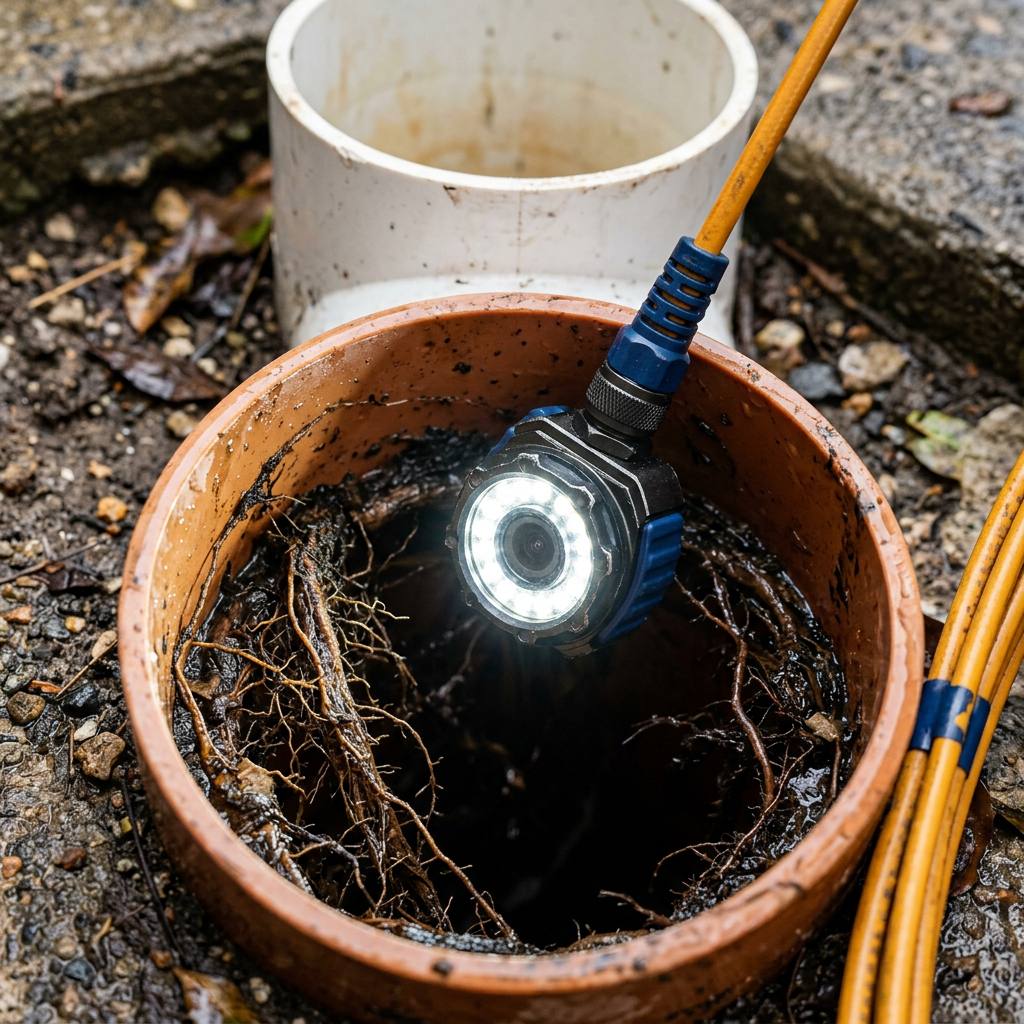
The eel cuts a hole through the centre of a root mass. The roots regrow within months, often thicker than before. The eel cannot tell you whether the pipe behind the obstruction is intact, bellied, cracked or collapsed. We have lifted footage from drains in Pymble and Epping where six eel visits over two years cleared the same root ball and never once revealed the 200 mm crack feeding it.
The right sequence for a recurring drain is hydro-jet, then camera, then permanent repair. Get any other order from a quote and ask why.
The Permanent Fix Sequence Sydney Plumbers Use
When you book a licensed plumber for a recurring drain, this is the workflow that ends the cycle.
- Hydro-jetting first. A purpose-built hose at 4,000 to 5,000 psi cuts roots, scours fat off the pipe wall and flushes silt out of bellied sections. A clean pipe wall is the only surface a camera can read accurately. Read more about hydro-jetting and how the pressures are matched to pipe age and material.
- CCTV camera survey. A self-levelling camera with a sonde transmitter shows you the cause, the location and the exact distance from the access point on screen. The transmitter lets the plumber paint an X on the lawn directly above the defect. See what is involved in our CCTV drain inspection guide, or book a survey on the CCTV inspection page.
- Pipe relining. A resin-impregnated felt liner is inserted through the existing access, inflated against the inside of the host pipe and cured. The result is a smooth, jointless, watertight pipe inside the old one with a 35 to 50 year design life. It is non-destructive, so driveways, slabs and gardens stay intact. See pipe relining for the materials we use and the access requirements.
- Excavation only where relining cannot reach. Fully collapsed sections, sharp bends or junctions sometimes need a short open dig. We keep this surgical. See sewer line repair and pipe repairs for context on when each method applies.
- Post-repair CCTV verification. A second camera pass confirms the new pipe wall is smooth and continuous. We hand the homeowner the footage and the written report, both of which become evidence for insurance, conveyancing and future buyers.
Stormwater vs Sewer: Two Different Problems on the Same Property
A surprising number of Sydney homeowners think their "drain problem" is one system. It is two, and they fail in different ways.
Sewer drains carry waste from toilets, sinks, showers and the laundry to the Sydney Water connection in the street. They run under pressure during use, are sealed, and fail with smell, gurgle and backup.
Stormwater drains carry rainwater from the roof, the gutters and the surface grates to the kerb or to an absorption pit. They are gravity only, are open to leaves and silt at every entry point, and fail with overflow at the gully, ponding against the slab and water tracking back along the wall plate.
If your gutters are pouring over the eaves in moderate rain, the blockage is upstream and the fix is at roof level, not underground. Start with a gutter clean and consider a service of the gutters and downpipes. If the surface gully at the side of the house is overflowing while the gutters are clear, the blockage is in the in-ground stormwater line and a drainage solutions review is what you need.
What It Means When the Boundary Trap Surcharges
A surcharging boundary trap is the one symptom that should never be ignored. It means raw sewage has nowhere to go and is finding the lowest open point on your property, which is usually a floor waste in the laundry, an outdoor gully or, in worst cases, a shower base.
Sydney Water's own guidance to property owners on overflow situations is published on their customer support pages. The short version is that the wastewater main in the street is their responsibility, but everything on your side of the boundary is yours. If the trap is surcharging and the main in the street is flowing freely, the blockage is between the trap and the house and you need a licensed plumber the same day.
Until the plumber arrives, stop using water inside the house. Every flush, every shower and every wash cycle adds to what is already trying to come back up the line. If you have already had water enter living areas, treat any standing water as contaminated, keep children and pets clear, and document everything for an emergency response claim.
The Insurance Angle Most Homeowners Miss
Sydney home and contents policies generally cover the resultant damage caused by a sudden drain failure, such as ruined floorboards, soaked carpets and damaged contents. They generally do not cover the cost of repairing the pipe itself, because the policy classes pipe deterioration as wear and tear or gradual damage.
The trick is the documentation. A CCTV drain inspection report and a written quote from a licensed plumber give you the two pieces of evidence the assessor needs to separate "pipe condition" (your cost) from "sudden event damage" (the insurer's cost). Without that paperwork, the assessor will often class the whole loss as wear and tear and decline the contents portion as well.
The Insurance Council of Australia outlines the wear-and-tear definition and your right to a written claim decision in their consumer information. If a claim is reduced or denied unfairly, the free escalation pathway is the Australian Financial Complaints Authority, whose decisions bind the insurer.
How to Choose a Plumber Who Actually Solves It
Three questions on the first phone call separate the trades who fix winter drains permanently from the ones who clear them every winter.
- Do you provide a CCTV inspection as part of the quote, and do I keep the footage?
- Are you licensed by NSW Fair Trading, and what is your plumbing licence number?
- Do you offer pipe relining in-house or do you sub-contract it?
You can verify any plumbing licence in seconds against the NSW Fair Trading public register. A licensed plumber working under a current Plumbers Licence is also bound by the Plumbing Code of Australia, which sets the minimum standards for any work on the sanitary drainage system.
What We Recommend Doing Before the Next East Coast Low
Sydney's wet pattern usually peaks in June and July, and an east coast low can arrive on 48 hours' notice. If you have had any of the warning signs this year, do these four things in the next two weeks.
- Lift the boundary trap lid and check it is dry. Replace any damaged lid before storm season.
- Book a CCTV drain inspection on any drain that has cleared more than once in the past 24 months.
- Have your gutters cleaned before the May leaf drop ends, not after the first storm.
- If a previous report flagged any cracks, joints or root intrusion, get the relining quote in writing now while the trade is quieter.
Frequently Asked Questions
Stop Clearing the Same Drain Every Winter
A drain that has cleared more than once is not bad luck. It is a piece of evidence. The next step is a CCTV survey that turns the symptom into a diagnosis, and a written quote that ends the cycle for the next 30 years instead of the next six months.
Book a CCTV Drain Inspection in Sydney
Licensed plumbers, full video report, fixed-price relining quote.
Call 0488 822 794