
Pipe Relining Sydney: Cost, Process and When to Use It
By the team at Tradetek Solutions
Three wet months have just finished soaking the clay under Sydney, and the phone calls follow a pattern every August. A gully overflows in Marrickville. A downstairs toilet in Hornsby gurgles when the washing machine drains. A Concord homeowner has now paid for the same drain to be jetted three times since May. Winter rain softens the ground, old earthenware joints shift a few millimetres, and every liquidambar and camphor laurel planted in the 1960s sends roots straight at the moisture.
At that point you have two real options. Dig the drain up, or reline it from the inside. Relining has moved from a specialist niche to standard practice across Sydney in the last decade, mostly because so much of the city sits on narrow blocks with paved side passages, heritage brickwork and mature trees that nobody wants to lose. This guide sets out what the work actually involves, what it costs in 2026, the cases where digging is still the right answer, and the questions that separate a proper structural liner from a cheap patch that fails in five years.
What Pipe Relining Actually Is
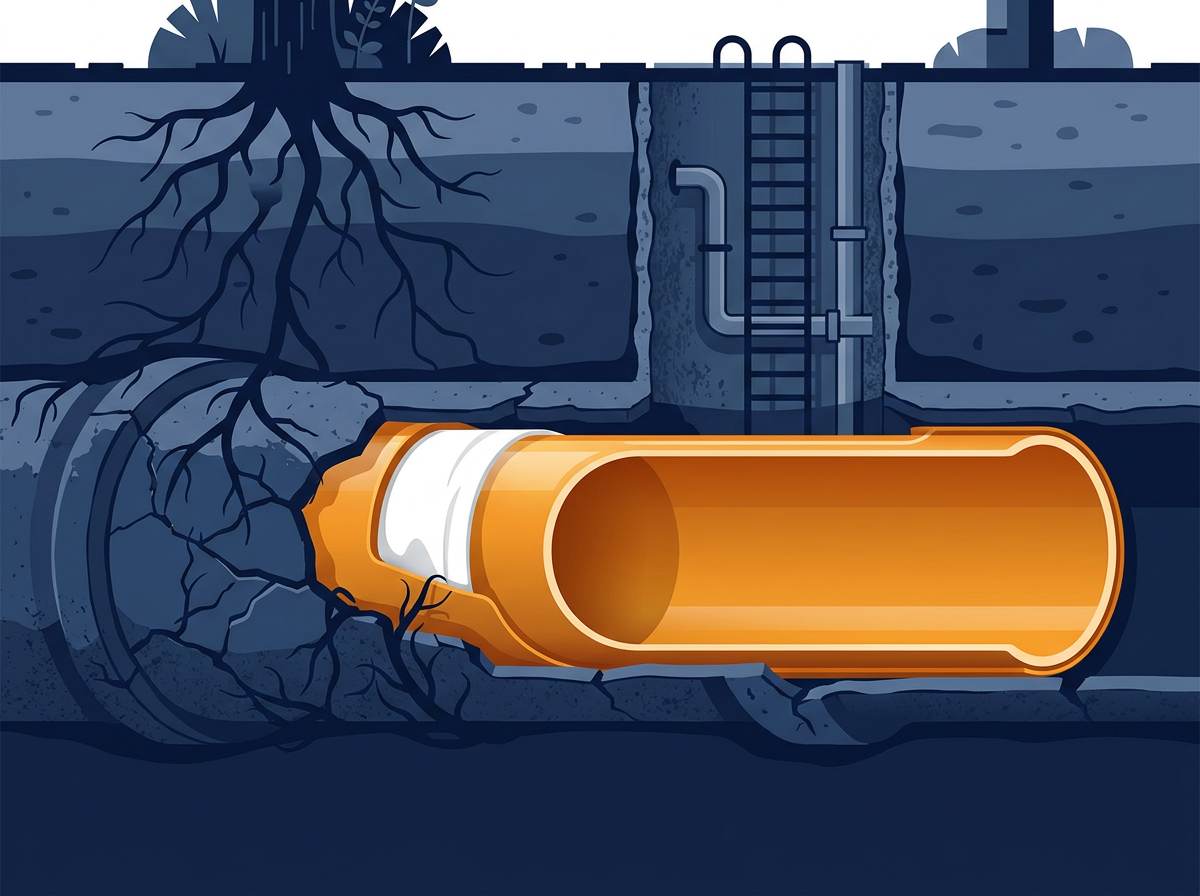
Pipe relining, known in the trade as cured in place pipe or CIPP, creates a new pipe inside the old one. A flexible sleeve is soaked in epoxy resin, pulled or inverted into the damaged section, then held hard against the host pipe by an inflated bladder while the resin sets. What comes out is a jointless plastic pipe roughly three to six millimetres thick, bonded to the inside of the original line.
The key word is structural. Once cured, the liner carries the load on its own. It does not rely on the cracked clay around it, which is why installers can offer 50 year design lives on a pipe that was laid in 1958. It also has no joints, and joints are where almost every Sydney root intrusion starts.
Where it fits alongside other drain work
Relining is a repair for a pipe that is damaged but still holding its shape and its fall. It is not a substitute for clearing a blockage, and it is not a fix for a drain that was laid at the wrong grade. Most jobs start as a blocked drain callout, become a CCTV drain inspection once the blockage repeats, and end as a reline once the camera shows why.
Why Sydney Drains Fail in the First Place
The city has a specific mix of problems that makes relining unusually useful here.
- Vitrified clay and earthenware pipe. Anything laid before about 1980 is likely to be short clay lengths with mortar or rubber ring joints. The pipe is durable, the joints are not.
- Reactive clay soil. Large parts of the inner west, the Hills and the south west sit on soil that swells and shrinks with the seasons, dragging rigid pipe joints apart over decades.
- Street trees with aggressive root systems. Roots do not break into sound pipe. They follow vapour escaping from a hairline joint and then expand.
- Sandstone and rock shelves. On the north shore and eastern suburbs, excavation costs jump the moment the machine hits rock.
- Built out blocks. Side passages, decks, pools, driveways and heritage paving sit directly over the line on thousands of Sydney properties.
Sydney Water maintains a wastewater network of more than twenty five thousand kilometres of pipe, described in its overview of the wastewater network. Everything from your house to the boundary connection is yours to maintain, and that is the section that fails most often.
Signs Your Drain Needs More Than Another Jetting
One blockage is bad luck. A pattern is a structural fault. Book a camera inspection rather than another clean when you see any of these.
- The same drain blocks two or more times in twelve months, especially after rain.
- Toilets gurgle or drop their water level when a bath or washing machine empties.
- The overflow relief gully outside spills during heavy use rather than during a storm.
- A patch of lawn stays green and soft through a dry spell.
- Sewage smell around the side of the house on still mornings.
- The jetting contractor keeps pulling out fine root hair rather than fat or wipes.
- Paving or a path over the drain line has settled or cracked.
Our guide on why Sydney drains keep blocking every winter covers the seasonal causes in more depth, and what happens during a CCTV drain inspection explains what the plumber is looking at on the screen.
What Pipe Relining Costs in Sydney in 2026
Pricing is quoted per metre, but the metre rate hides most of the story. Cleaning, root cutting, access and junction reinstatement drive the final figure as much as the liner does. These are realistic Sydney ranges this year.
- Patch or short section liner, 1 to 2 metres. 1,500 to 2,800 dollars, suitable for a single cracked joint.
- Typical section reline, 3 to 6 metres. 2,500 to 5,500 dollars including jetting and the final camera pass.
- House to boundary reline, 15 to 25 metres. 8,000 to 18,000 dollars depending on diameter, bends and access.
- Junction reinstatement. 350 to 700 dollars per branch cut and sealed.
- Robotic root or intrusion cutting before lining. 400 to 900 dollars.
- CCTV inspection and report. 330 to 550 dollars, usually credited against the reline.
- High pressure jetting to clear and prepare. 350 to 700 dollars.
Compare that to excavation. Digging and replacing the same six metre section runs roughly 4,000 to 9,000 dollars in open lawn, and 9,000 to 20,000 dollars once a concrete driveway, rock or a retaining wall sits over the line. The plumbing is rarely the expensive part. Reinstating the surface is.
What makes a quote go up
- Multiple bends or a change of diameter in the section being lined.
- Limited access, which forces the crew to run hoses through the house or lift pavers.
- Sagged sections that must be excavated even if the rest is lined.
- Strata or commercial work requiring after hours attendance and stack staging.
- An unlined junction that keeps letting roots back in and needs its own liner.
The Relining Process, Start to Finish
A single section job is normally one working day on site. Knowing the sequence makes it much easier to judge whether a quote has left something out.
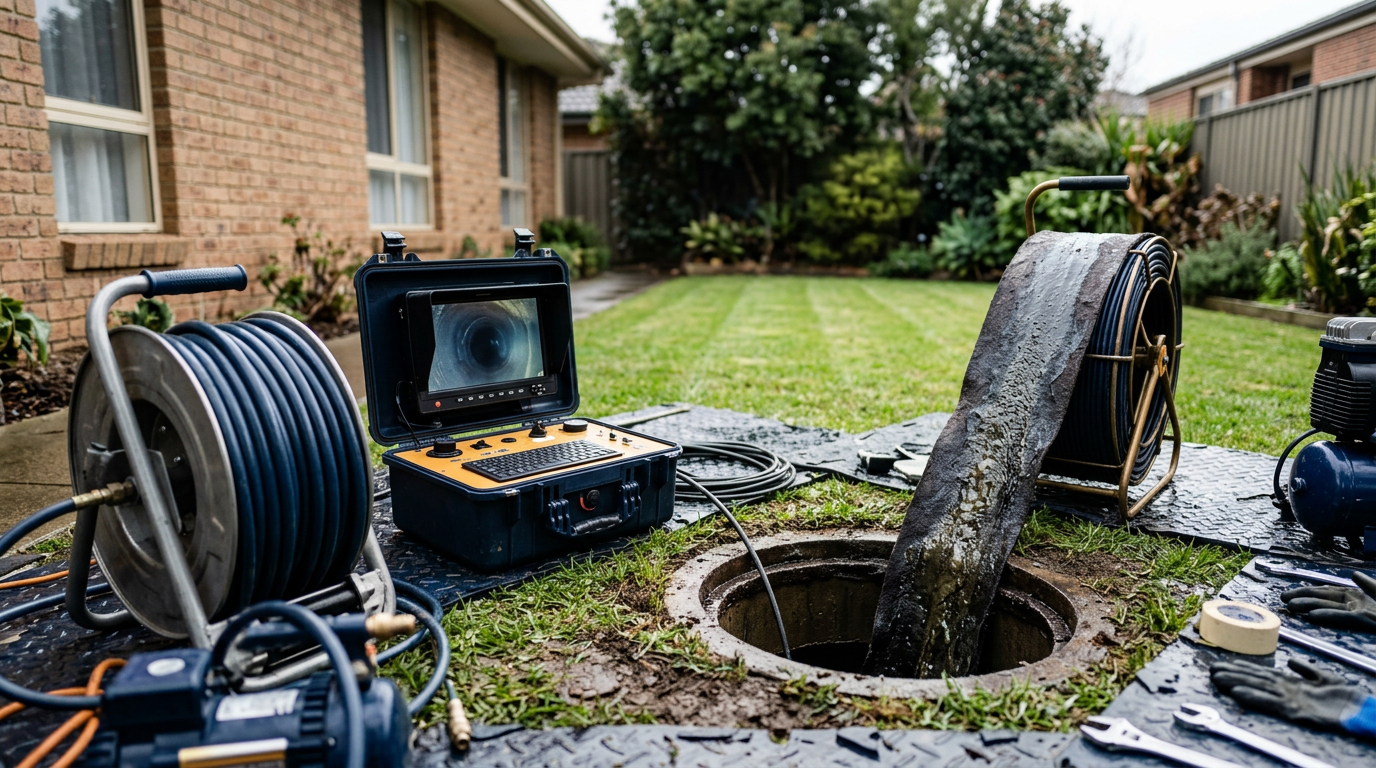
- Camera survey and measure. The plumber locates the fault, sonde marks its position above ground, and records the length, diameter and condition either side.
- Clean. High pressure jetting removes roots, scale, fat and debris so the resin can bond to bare pipe wall.
- Cut. A robotic cutter shaves off intruding roots, protruding junctions or old concrete so the liner sits flat.
- Wet out. The felt or fibreglass sleeve is saturated with two part epoxy on site, then rolled to spread the resin evenly.
- Install and inflate. The sleeve is inverted or pulled into place and a bladder presses it against the host pipe.
- Cure. Ambient, hot water or steam curing sets the resin, typically one to four hours. Cold Sydney mornings in August lengthen ambient cure times, so most crews run hot water cure through winter.
- Reinstate and verify. Junctions are cut open, the bladder is removed, and a final CCTV run is recorded and handed over.
Ask for the before and after footage in writing. It is the only proof that the liner covers the full defect and that every branch was reopened.
When Digging Is Still the Right Answer
A good plumber will talk you out of relining in these situations.
- The pipe has collapsed. There is nothing left to line against, so the section has to be excavated and replaced.
- The line has a belly or sag. A liner follows the shape of the host pipe. Line a sag and you keep the sag, along with the standing water that caused the blockages.
- The grade is wrong. Drains laid at insufficient fall need relaying to meet AS/NZS 3500.2, not sealing.
- The pipe is badly undersized for a renovated home with extra bathrooms.
- The fault sits under a slab addition where a new line can be routed around the problem more cheaply than lining the old one.
Where excavation is unavoidable, our sewer line repair and drainage solutions teams handle the dig, replacement and reinstatement. Hybrid jobs are common in Sydney: dig two metres to correct a sag, line the remaining twenty.
Choosing a Relining Contractor Without Getting Burnt
Relining is unregulated in the sense that anyone with a licence and a kit can offer it, and quality varies. Use these checks.
- Licence. The contractor must hold a current NSW plumbing and drainage licence, which you can confirm through NSW Fair Trading licence checks for plumbers and drainers.
- Written warranty. Twenty five to fifty years on the liner, plus a separate workmanship period. Get the resin and liner brand named on the quote.
- Standards compliance. Work must meet AS/NZS 3500.2 for sanitary plumbing and drainage and the Plumbing Code within the National Construction Code.
- Footage both ways. Refuse a quote based only on a photo of roots. Ask to see the camera run past the defect.
- Junction plan. The quote should say how many branches will be reinstated and how.
- Boundary clarity. If the defect is at or past the connection point, responsibility may shift. Sydney Water sets out asset and approval rules in its plumbing, building and developing guidance.
Industry guidance on network condition assessment and rehabilitation practice is published by the Water Services Association of Australia if you want to read how utilities approach the same decision at scale.
Insurance, Strata and Selling the House
Home insurance rarely pays for a worn out drain, because gradual deterioration and tree root damage are standard exclusions. What policies often do cover is the resulting damage, such as water entering under the slab, and sometimes the cost of locating the fault. Keep the CCTV report, the invoice and the warranty certificate together, because insurers ask for exactly that.
In strata, a drain serving more than one lot is usually common property, and the owners corporation carries the cost. Relining suits these buildings because the work can be staged without closing the whole block. Getting the camera survey done before the annual budget is set gives the committee a real number instead of a guess.
If you are selling, a relined drain with documented footage is a genuine asset at inspection time. Buyers in Sydney increasingly commission their own drain camera survey, and a recurring blockage discovered during the cooling off period costs far more in price negotiation than the repair would have.
Timing the Work: Why August Suits Sydney
Late winter is the practical window. The ground is still moist so root activity is visible on camera, which means the survey shows you the worst case rather than a dry season snapshot. Spring brings the growth surge that turns a hairline intrusion into a full blockage, and the storm season that follows fills damaged lines with silt and stormwater.
There is also a scheduling reality. Relining crews book out from September as renovation season starts, and emergency work jumps the queue. A job booked now is usually attended within a week or two. The same job in late spring waits.
If your immediate problem is an overflowing gully rather than a planning decision, our emergency plumbing team clears the line first, then quotes the permanent fix once the camera has been through.
Frequently Asked Questions
Book the Camera Before the Spring Rush
A drain that has blocked twice this winter will block again, and the third clean costs more than the inspection that would have explained the problem. The order is simple. Clear the line, put a camera through it, get the footage in writing, then decide between a liner and a dig with real information in front of you.
The Tradetek Solutions team runs CCTV surveys, high pressure jetting and structural pipe relining across Sydney, the Central Coast and Newcastle, with a fixed price given before any work starts and the inspection fee credited against the repair. Call us or request a written quote and we will tell you honestly whether your drain needs lining, a short excavation, or nothing more than a proper clean.